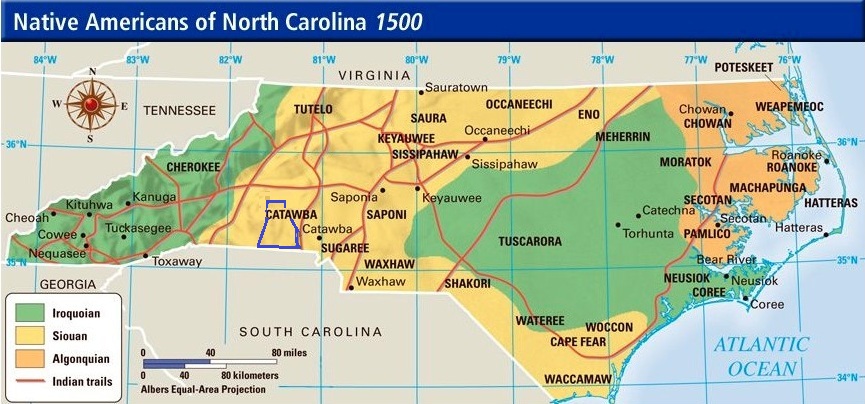
Before European contact, the native peoples of North Carolina belonged to three distinct language families: the Algonquian, Siouan, and Iroquoian (often called Iroquois). Each group occupied a different geographic region of the state and had its own unique culture and dialect. The Catawba language is a member of the Siouan language family, historically spoken in North and South Carolina. It is considered the most divergent branch of the Siouan family, meaning it was the first to separate. The Catawba language is now extinct. The Catawba people, who spoke this language, inhabited the territory around the Catawba River. The language itself is also referred to as Catawba. The land that would become Cleveland County was home to the Catawba people.
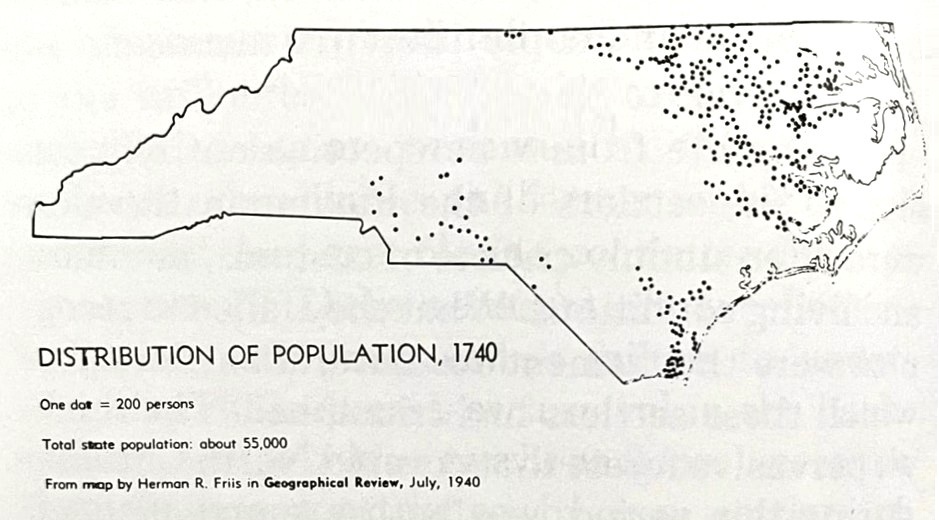
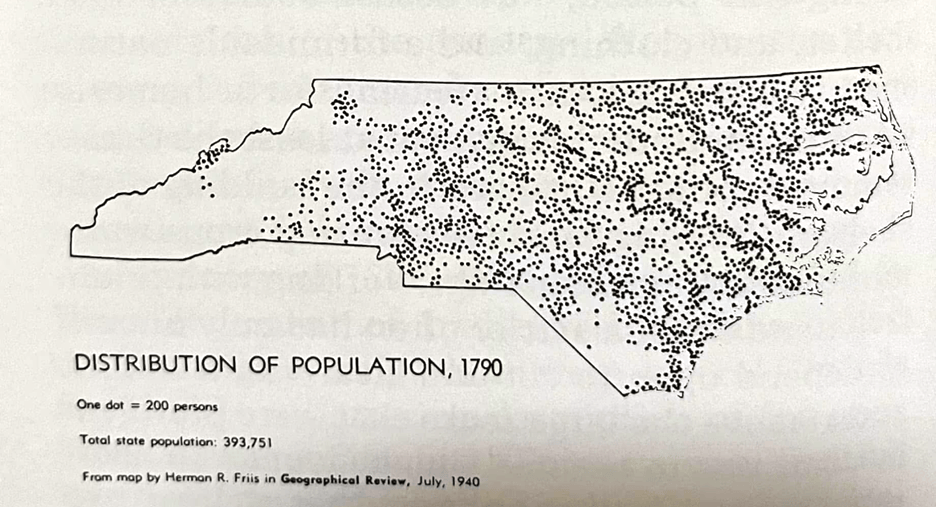
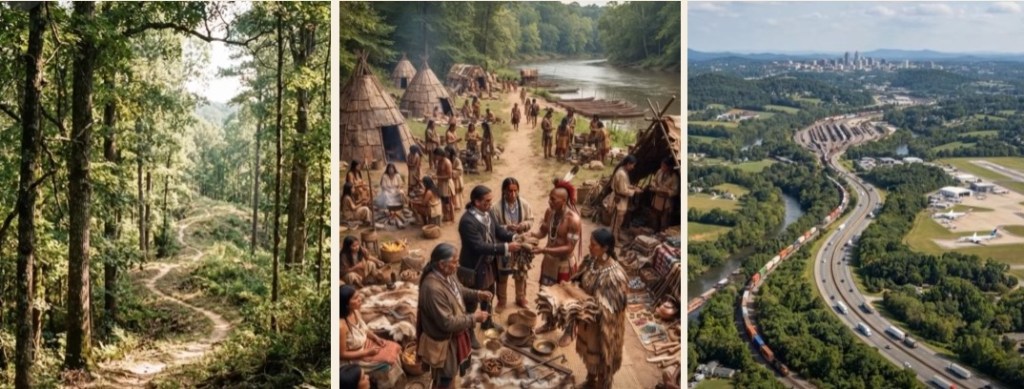
The earliest settlers to western North Carolina began arriving in the mid-18th century. Most of these settlers were Scots-Irish, as well as German, French, Dutch and other nationalities. Their point of entry to the colonies was most frequently Philadelphia. Over time they began to migrate further west and south. The old colonial roads began as buffalo paths, then Native American paths, then wagon trails. The four main roads from the Pennsylvania area south are shown in the map below.
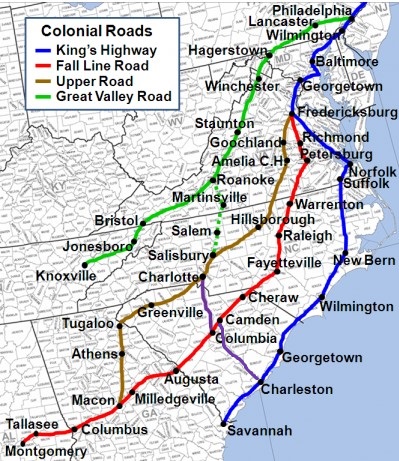
For other immigrants, the port of Charleston was their entry point. Those settling in our area probably took the Charleston-Camden route to the Occaneechi Path into North Carolina.
Local historian, Larry Simpson, wrote a paper entitled “From Scotland to the Carolinas: The Scots-Irish Road to the Carolina Piedmont, A Five-Part Historical Series.” All five parts are included in the PDF document below.
See how North Carolina counties evolved over time at the “NC Counties Over Time” tab.
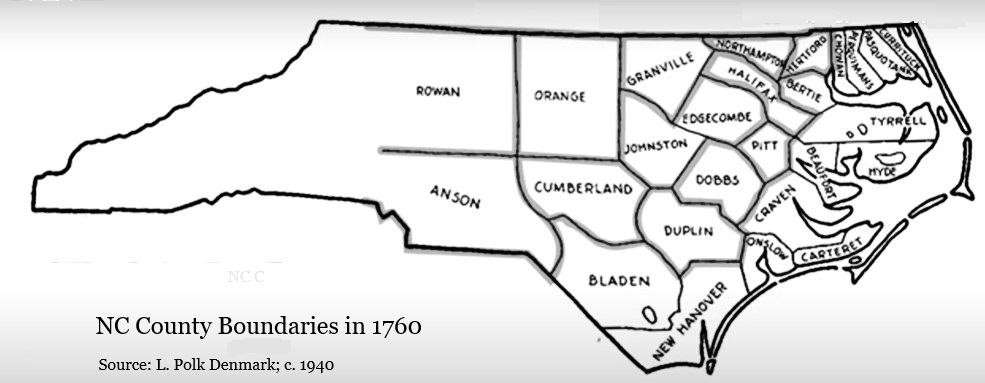
In 1760, the area that is now Cleveland County was part of Anson County. As the map below shows, it had no western boundary.