Pre-1900 information on Cleveland County schools is scant due to poor record keeping, the ravages of time, and at least two fires that destroyed school records. But according to Lee Weathers, author of The Living Past of Cleveland County, the county began addressing the educational needs of its citizenry early after the formation of the county. The first school districts were created in 1844 with ten superintendents: W. W. Gold, John R. Logan, Joseph G. Devinny, Lewis Gardner, W. J. T. Miller, John Carpenter, Beatty Goforth, Christopher Carpenter, James W. Cabiness, and Franklin Oates.
The schools were mostly one-room schoolhouses where a single teacher instructed all children (roughly ages 6 to 14) together in the same room. Students worked at their own pace through basic “reading, writing, and arithmetic” books rather than being placed in separate grades according to age. These first schools were very rudimentary, few, and in the case of the rural schools, far between. And because there were no paved roads, it was difficult for most aspiring teachers to pursue a formal education, so most did not have a college degree. As long as they could teach “reading, ‘righting, and ‘rithmetic” they could teach youngsters those basic life skills.
On January 27, 1849, the North Carolina General Assembly passed legislation that authorized the construction of a Male and Female Academy in the county seat, each one not to exceed $1,000 in cost. Named the Shelby Male and Female Academies, they were incorporated the same day and would eventually evolve into the Shelby Public School System. (The charter was repealed in 1874 and the use of the funds from its sale to build a new school was authorized.)
Any progress made during the 1850s was wiped out during the Civil War. During the war most schools were deserted and closed. In 1863 William Roberts opened a private school at his home, perhaps trying to fill a void. Known as the Roberts Seminary, Tillman R. Gainer (Garner?) was hired as headmaster. After the war, statistics recorded in the 1870 census show that 30% of the white population and 50% of the Black population of Cleveland County could not read or write.
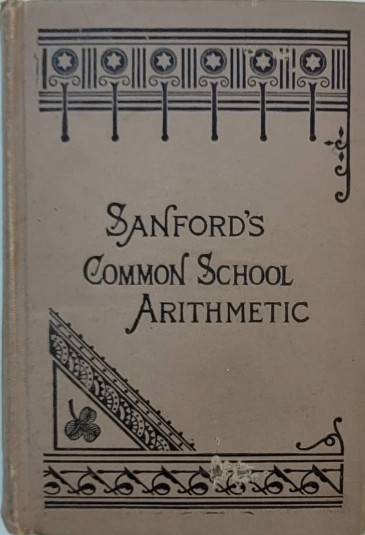
School text books were made available by the generosity of parents and other donors. The source for text books from the 1880s until 1930 was Ebeltoft’s Book Store in Shelby.
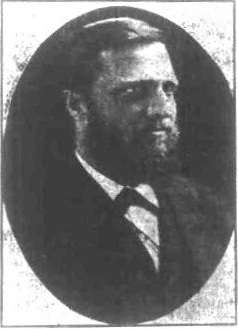
Theodore W. Ebeltoft was a second generation Norwegian immigrant who came to Shelby in 1884 to open a grocery store. He soon realized the need for a bookstore and became the go-to merchant for textbooks and school supplies for almost 50 years. Just two years before his death, the state of North Carolina began allocating funds for school text books.
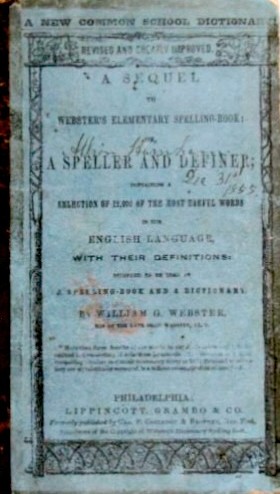
Commonly referred to as the “blue-backed speller,” Noah Webster’s spelling book was used for over 100 years in schools all over the country beginning in 1783. It went through 385 editions in Webster’s lifetime.

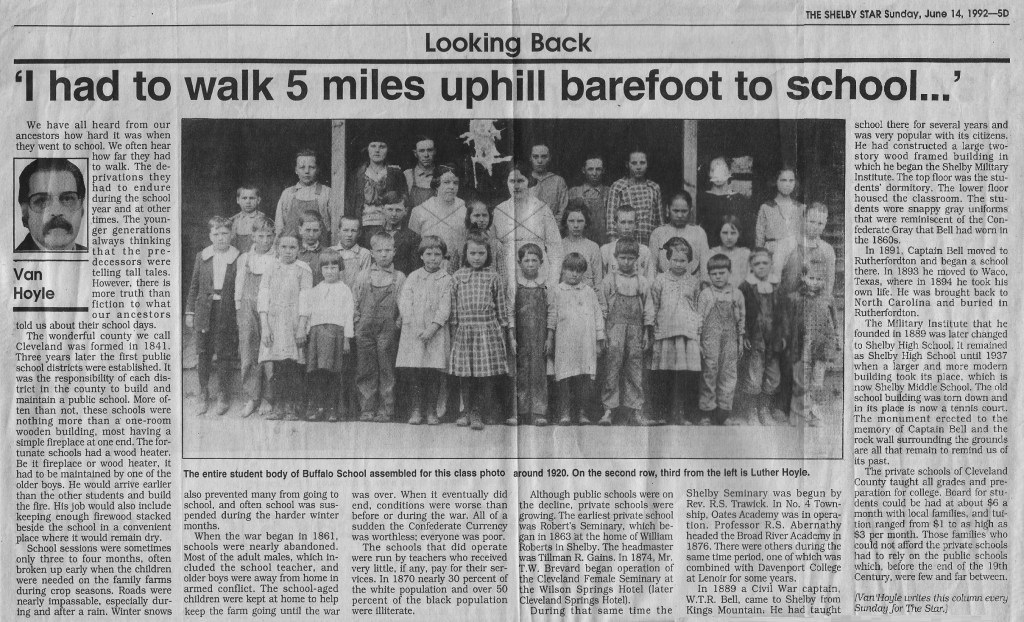
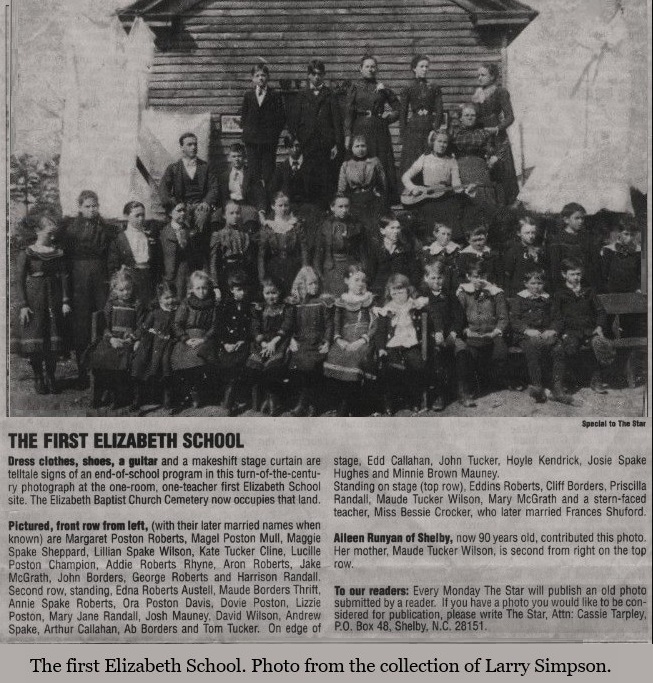
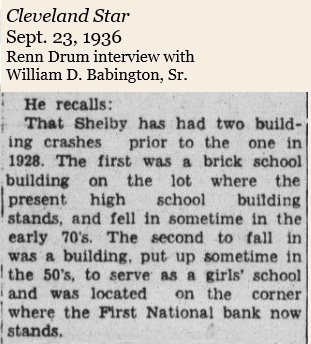
The late Van Hoyle, a local historian, wrote the article below for The Shelby Star in 1992. In it he details the rugged conditions that accompanied the old one-room schoolhouses.
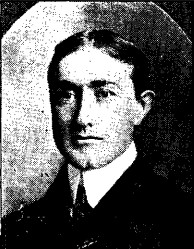
was Van Hoyle’s uncle.
In 19th century North Carolina, “academies” were private, secondary-level tuition schools that filled the gap before public high schools existed. A list of Cleveland County’s academies was compiled by Lee Weathers; summarized in the table below. Additional information is at the “19th Century Academies” tab.
| Belwood Academy/Institute | 1880s-1893, 1894-191x |
| Boiling Springs High School | 1907-1928 |
| Broad River Academy | 1876-x |
| Cleaveland Female Seminary | 1874-x |
| Davenport Female College | c. 1890-1892 |
| Kings Mountain Military Institute | 1876-1878 |
| Lattimore Academy | c. 1900 |
| Oates Academy | mid-1870s |
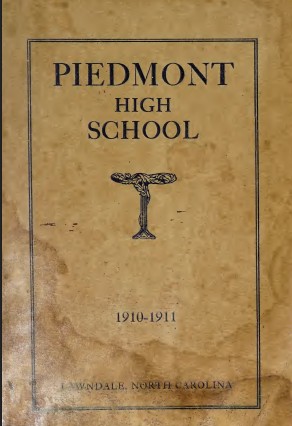
| Piedmont High School | 1896-1924 (became a public school in 1924) |
| Roberts Seminary | 1863-x |
| Shelby Female College | 1882-1890 |
| Shelby Male and Female Academies | 1849-1874 |
| Shelby Military Institute | 1887-1892 |
| Shelby Seminary | 1876-x |
| Sylvanus Erwin Institute at Waco | 1889-x |
As the Reconstruction Era progressed, things began to improve rapidly. Sometime in the 1870s or early ’80s, Cleveland County hired its first County Superintendent of Schools–Professor Horace T. Royster, father of Dr. Stephen S. Royster.
While information about rural schools rarely made the newspapers, school news began to be published more frequently in the 1890s, with news of one or two-room schools being included starting in the early 1900s. School information could also be found in the form of promotional pamphlets and directory ads.
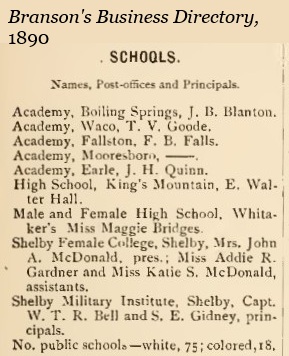
The 1890 Branson’s Business Directory listed nine schools by name; it is unclear whether they were listed because they were private or because they were high schools.
One of the most important surviving documents with regard to Cleveland County school history is the 1906 Superintendent’s report to the school board.
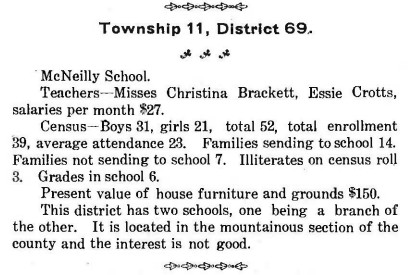
Compiled by Superintendent B. Thurman Falls, this report provides a snapshot of Cleveland County’s rural schools just after schools had begun transitioning to grouping students together into grades based on age.
Superintendent Falls made entries like the one below for each of Cleveland County’s 93 schools. Most schools had six to eight grades being taught by one to three teachers. Only two schools offered 10th grade: Piedmont High School and the Shelby Graded School. The entire report is here.
North Carolina enacted its first statewide compulsory attendance law in 1913, requiring children aged 8 to 12 to attend school for at least four months per year. Completing eight grades was a prerequisite for admission to the high schools.

The North Carolina General Assembly had established public high schools in 1907, but in Cleveland County, there were only two high schools with 10th grade; 11th grade was added in the 1920s. It would not be until 1942 that 12th grade would be added as a requirement for a high school diploma.
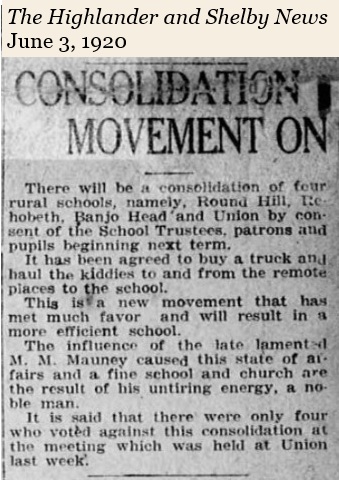
Soon after World War I, school consolidation began trending throughout North Carolina as a means of improving the quality of rural public schools. Numerous small rural schools began to close and merge together. Facilitated by improvements in roads, the move sought to provide rural students with better resources. 1923 consolidation plan.
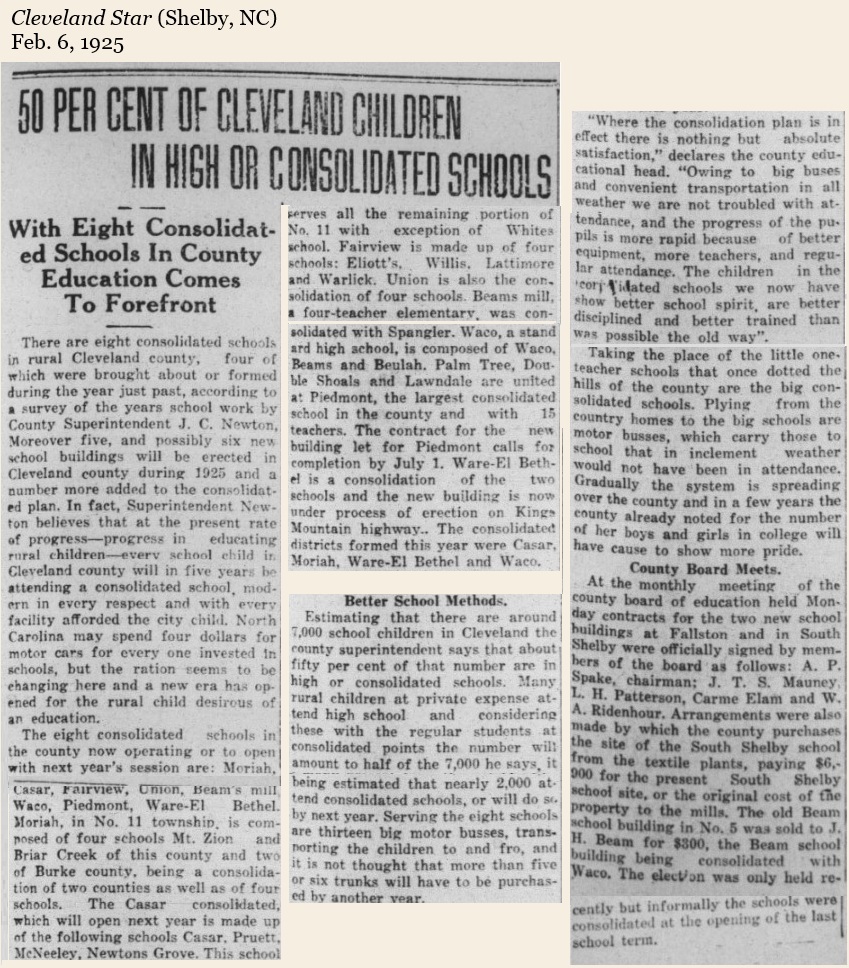
The school consolidation movement was further accelerated by state-level actions. In 1931 the NC General Assembly passed legislation penalizing schools with fewer than 22 students. This spurred additional closures, reducing the number of small, rural schools.
Also in the 1930s, efforts were underway to bring all the county’s schools up to state standards.
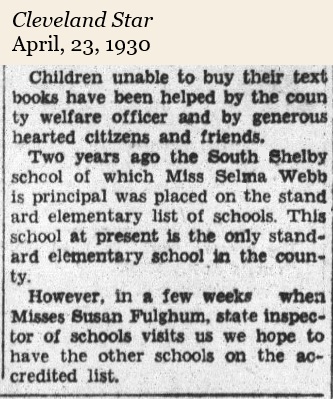
In 1933, laws were passed that called for the state to take control of all public schools, further enforcing the consolidation of small districts to save money during the Great Depression.

Probably exacerbated by the economic impact of the Great Depression, schools that had closed due to consolidation were sold at public auction.
From 1934 to 1952, the NC Superintendent of Public Schools was one of Cleveland County’s own–Waco native, Dr. Clyde A. Erwin.
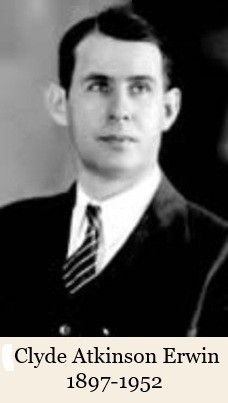
According to Waco historian, John E. Barrett, “On Erwin’s watch the state textbook rental plan was established, free textbooks were provided for grades 1 through 7, and the twelfth grade was added. In addition the state supported school term was extended to nine months, the compulsory school attendance age was extended from 14 to 16, and the first state bond funds for public school construction were made available.“

By 1935, Cleveland County schools serving the African American students were making progress as well.
After the Civil Rights Act of 1964 passed, another wave of school consolidation ensued. According to local historian Doyne Allison, in 1960 there were 20 public high schools in Cleveland County. In a matter of eight years, after constructing four “super high schools,” the county was down to just four.
The section below illustrates the dramatic reduction of schools when the number of former schools is compared to the number of current schools.
Cleveland County Schools Past to Present
Below is an alphabetized list of all known former Cleveland County schools along with a time frame of operation and their location by historic township number. Current schools are included as well; those are set in boldface print.
The following resources were used to compile the data in the following section:
- Cleveland County newspapers from the 1800s to 1936 digitized at DigitalNC
- the 1906 annual report of Cleveland County School Superintendent B. T. Falls
- a 1918 soil survey map showing the location of schools in the county; the 1886 Kyser map shows the location of schools using the abbreviation “Acy” for academy.
- the 1982 book, Heritage of Cleveland County, Vol. I. This volume contains several articles detailing the history of a few of these schools.
- the Ezra Bridges collection on the history of CC Black schools
- local residents who shared information and photos of schools and students on Cleveland County Genealogy and Local History. These photos were collected by their ancestors who went to these schools.
Because Cleveland County early schools were organized by township, that organization has been maintained in the section below.

Schools that served African American students prior to desegregation have a superscript number 1 or 2. The corresponding footnote provides the link to the digitized sources.
A-E
| school | time period | township/vicinity |
| 3 B | 1904-x | 4; see 1918 map |
| Banjo Head | x-1920 | 8 |
| Beam | 1904-1922 | 5; see 1918 map |
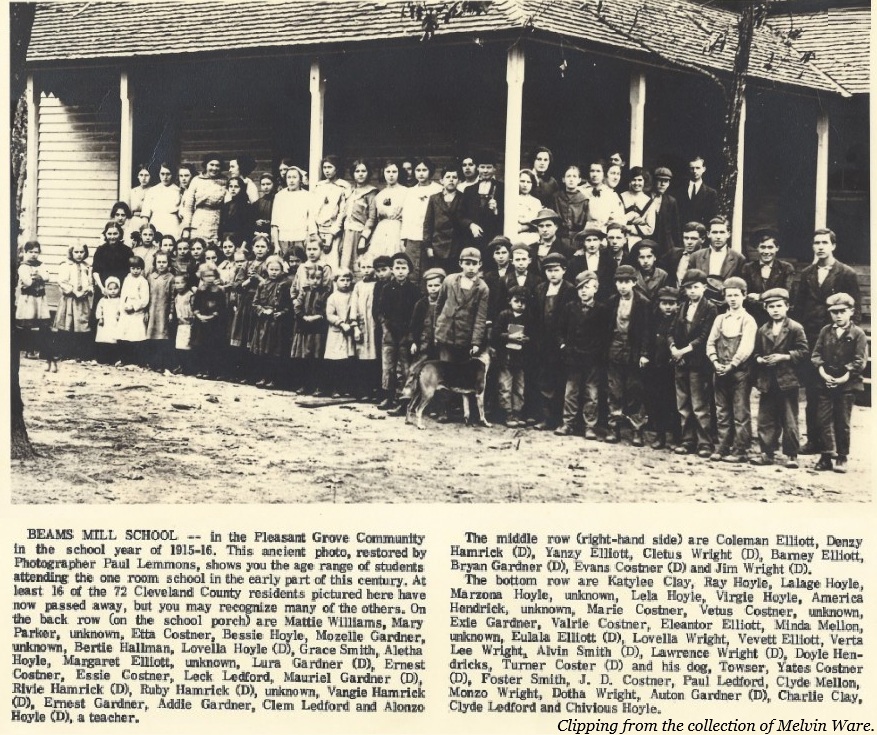
| Beam’s Mill | x-1936 | 9; behind Pleasant Grove Bapt. Church |
| Beaver Dam | x-1936 | 6; also listed in 7; see 1918 map |
| Beaver’s | x-1902-x | 4 |
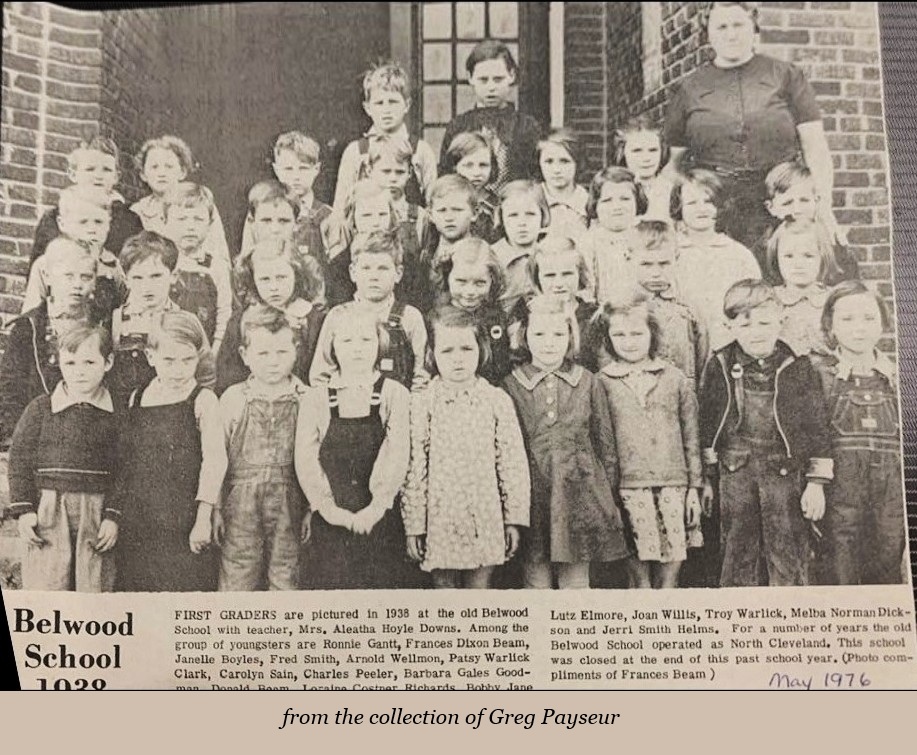
| Belwood | x-1926 | 9 |
| Beulah | x-1924 | 5 |
| Bethlehem | 4; corner of Bethlehem and McDaniel Roads | |
| Bethware Elementary | 1925-present | 4; 115 Bethware Drive, Kings Mtn. |
| Big Hill1 | x-1906-x | 10 |
| Blanton | x-1903 | 3 |
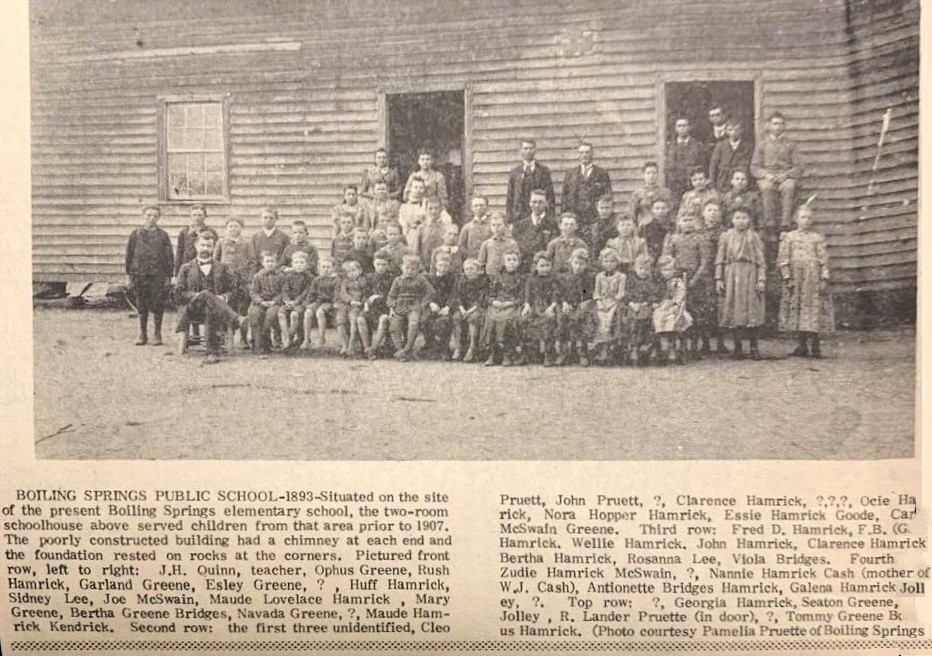
| Boiling Springs1 | x-1906-1916 | 2 |
| Boiling Springs | 1901-1960 | 2; Hwy. 150 S. |
| Boiling Springs Elementary | 1990-present | 2; 1522 Patrick Av., Boiling Springs |
| Boiling Springs High (became Gardner-Webb) | 1905-1928 | 2 |
| Borders2 | x-1923 | 4; Stony Point Rd. |
| Bostic Grove1 | x-1906-x | 8 |
| Botts | 11 | |
| Briar Creek | x-1924 | 11 |
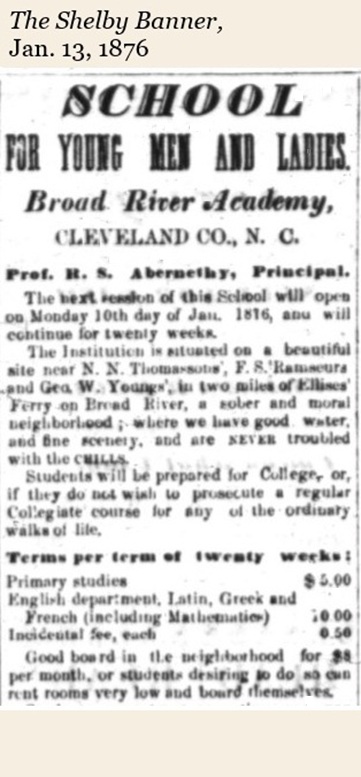
| Broad River Academy | 1875-x | 3; see 1918 map |
| Brooks Chapel1 | x-1906, 1923-x | 8; near the Rutherford County line; see 1918 map |
| Buffalo | 5 | |
| Burns High; BHS tab | 1967-present | 9; 307 E. Stagecoach, Lawndale |
| Burns Middle | 1976-present | 9; 215 Shady Grove Rd., Lawndale |
| Burns at Fallston | 1960-1967 | 9 |
| Burns at Polkville | 1960-1967 | 8 |
| Bynum AME Zion Church School | 188x-1926 | 4 |
| Cabaniss | 1900-x | 7 |
| Cabaniss2 | 7 | |
| Camp (renamed South Cleveland)2 | 1942-1968 | 3; Mt. Sinai Ch. Rd. just west of Hwy. 18 S |
| Cedar Grove | x-1923 | 3 |
| Central Cleveland Jr. High | x-1972-x | 4 |
| Carpenter’s Knob2 | 1929-x | 10 |
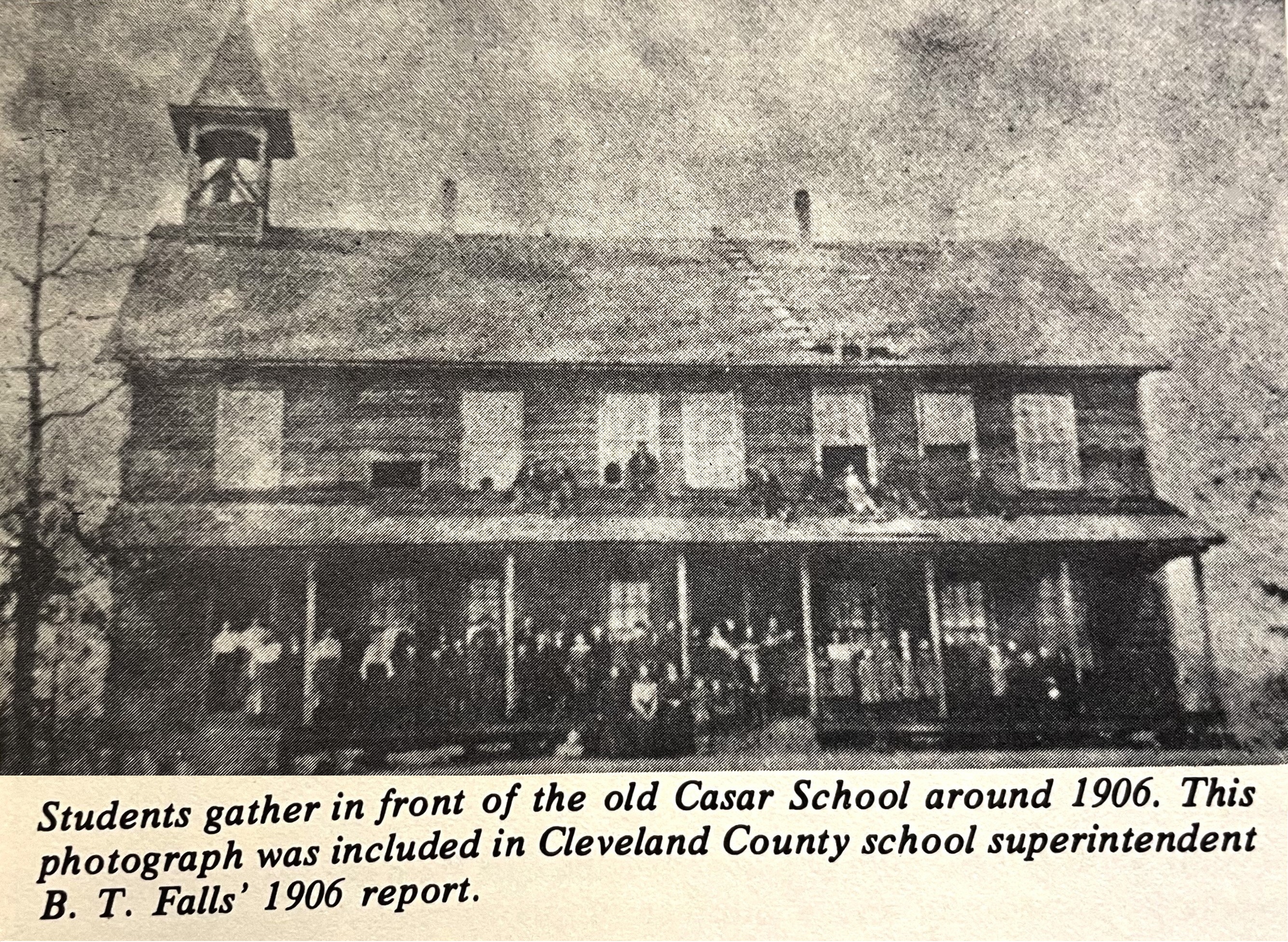
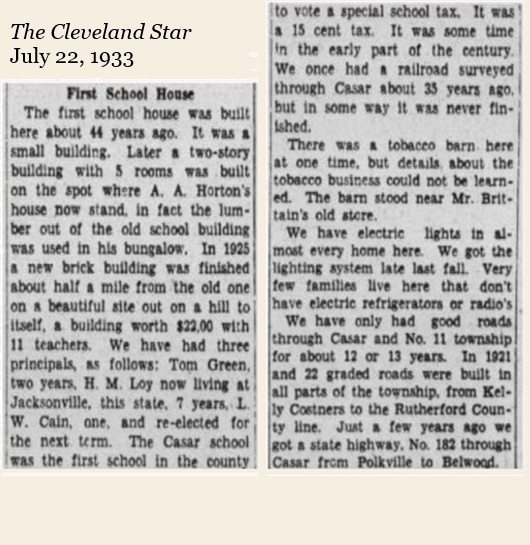
| Casar (Old Casar Sch) | 1889-1924 | 11 |
| Casar Elementary | 1926-present | 11; 436 School House Rd., Casar |
| Central | 4 | |
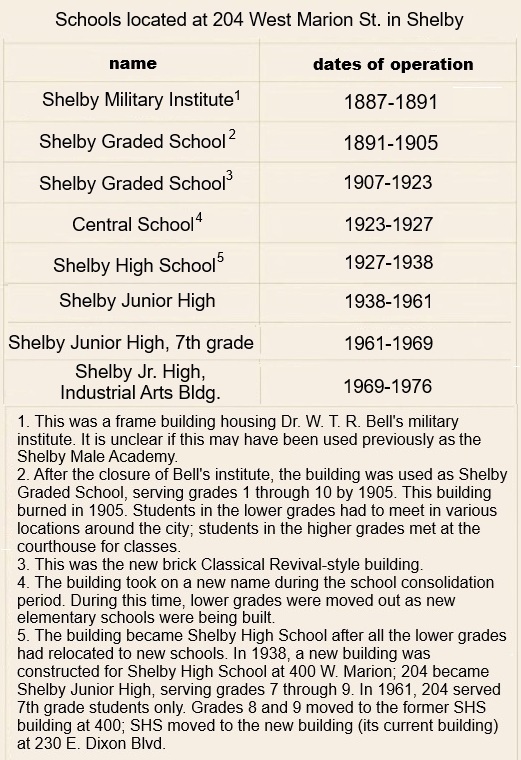
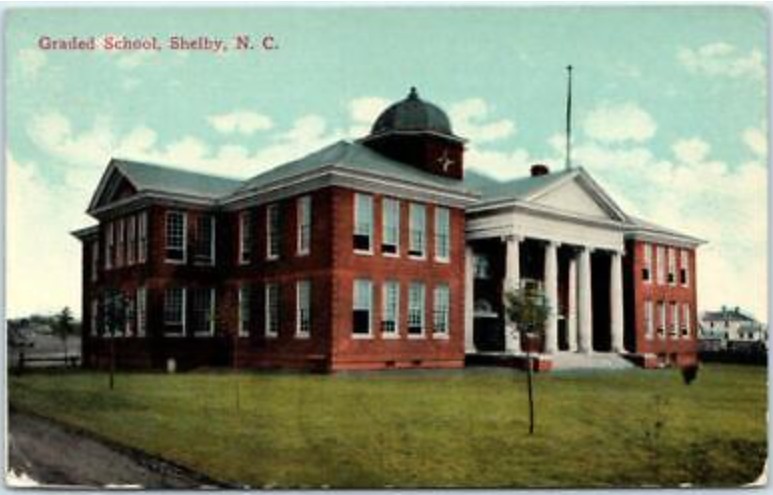
| Central/Shelby Graded School | 1920-1927 | 6; 204 W. Marion St. |
| Children’s Center | 1975-1990 | 6; 1205 Northside Dr., Shelby |
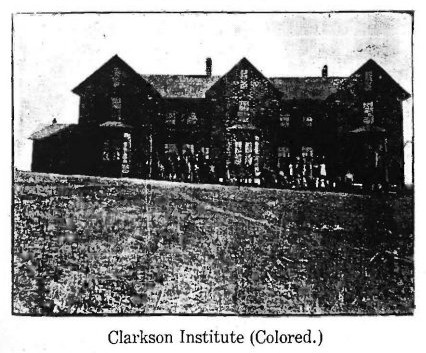
| Clarkson Institute | x-1906-x | (photo in 1906; listed as “Colored” with no other information) |
| Cleveland Early College High | 2008-present | 6; 1800 E. Marion St., Shelby |
| Cleveland Innovation Virtual Acd. | x-present | 6; 400 W. Marion., Shelby |
| Cleveland Mills | x-191x | 9; merged with Douglas in the 1910s |
| Cleveland Training School/ High School | 1895-1967 | 6; 341 Hudson St., Shelby |
| Cleveland School (6th grade) | 1971-1977 | 6; 341 Hudson St., Shelby |
| Crest High; CHS tab | 1960-1967 1967-present | 2; 141 Hwy. 150 S Boiling Springs 6; 800 Old Boiling Sprgs. Rd., Shelby |
| Crest Middle | 1976-present | 6; 315 Beaver Dam Ch. Rd., Shelby |
| Cobb | 1 | |
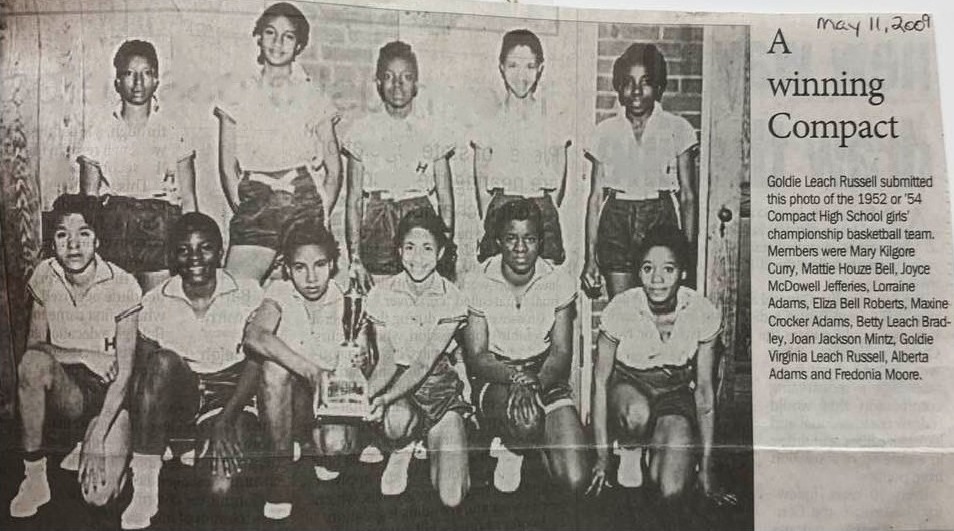
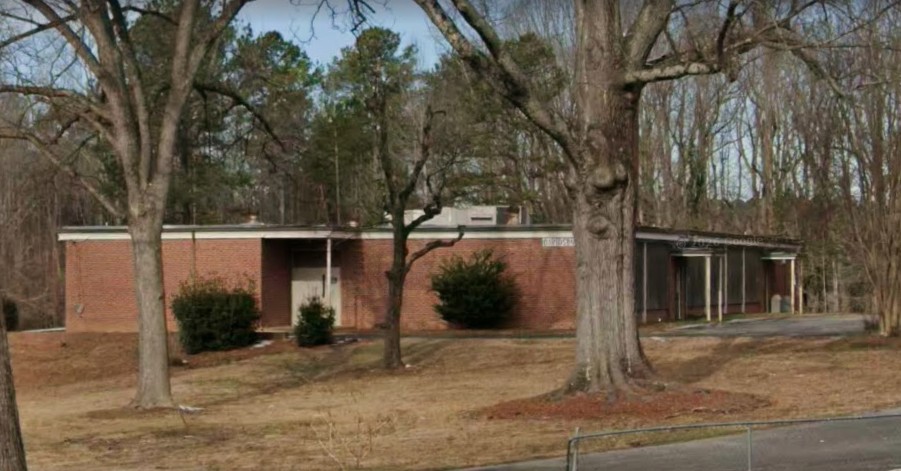
| Compact1 | 1872-196x | 4; 150 Dixon School Rd., Kings Mt. |
| Cornwell2 | x-1940 | 6 |
| Dameron | 1904-x | 5 |
| Davidson2 | 1934-1954-1967 (new building, ’54) | 4; formerly KM Graded School |
| Delight | x-1923 | 8 |
| Dixon | x-1992 | 4; see 1918 map |
| Double Shoals | 1903-1923 | 9 |
| Double Springs | 1904-x | 7 |
| Douglas1 | 1898-1967 | 9; Douglas St., Lawndale |
| Dover | x-1932-x | 6 |
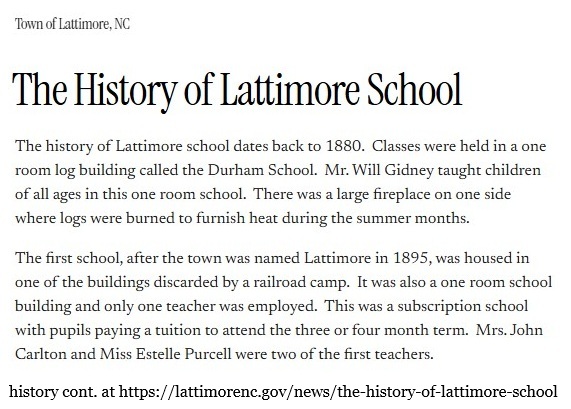
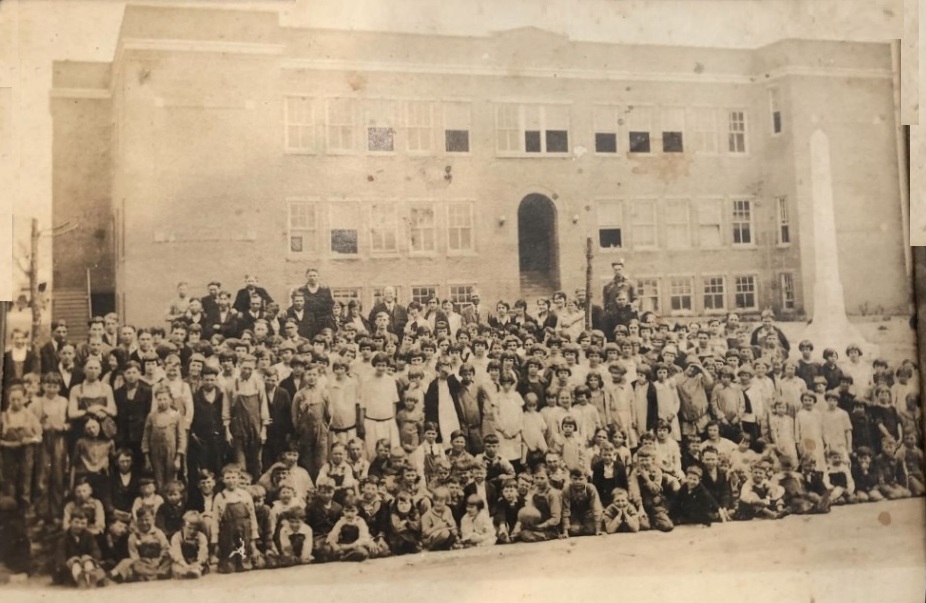
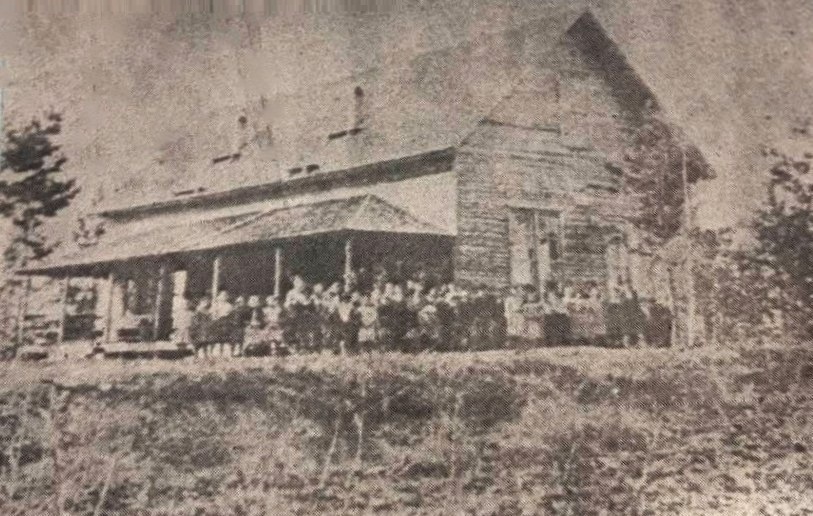
| Durham (renamed Lattimore) | x-1888-x | 7 |
| East Elementary | 1956-present | 4; 600 N. Cleveland Av. Kings Mt. |
| Earl (old) | 1850-1906 | 3 |
| Earl (new) | 1906-x | 3 |
| Earl Elementary2 | 1923-1967 | 3; west of RR line near Fairview AME Zion Church; moved two miles east in 1935 |
| Ebenezar1 | 5 | |
| Edwards | x-1905-x | 8 |
| Edwards | x-1904 | 11 |
| Elbethel | x-1906-x | 4 |
| Eli Roberts1 | 6 | |
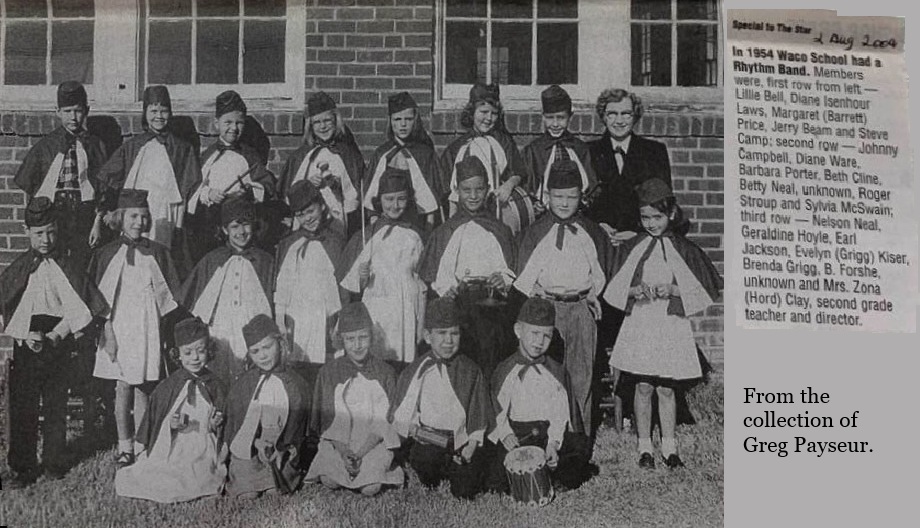
| Elizabeth Elementary | 1950-1998; 2022-present | 6; 220 S. Post Rd., Shelby |
| Elizabeth/Shelby Intermediate | 1998-2022 | 6; 220 S. Post Rd., Shelby |
| Elliott | 1904-1925 | 8 |
| Ellis Chapel2 | x-1942 | 3; 180 S, south of Patterson Springs |
| Eskridge Grove1, 2 | 187x-1906-1940 | 6; Washburn Switch Rd. |
F-J
| school | time period | township/address |
| Fairview | 1911-x | 10 |
| Fallston | 1904-x | 9 |
| Fallston Elementary | x-present | 9; 112 Gary St. Fallston |
| Flat Rock1 | x-1940 | 9; see 1918 map |
| Flint Hill | 1903-1932-x | 2; see 1918 map |
| Gaston Street | 1874-x | 4 |
| Gold Mine2 | 1901-1951 | 4 |
| Graham (1st building; became Oak School, then Twelve Oaks Academy) | 1927-1956 | 6; 701 W. Oak St., Shelby |
| Graham (2nd bldg.) | 1956-2022 | 6; 1100 Blanton St., Shelby |
| Grassy Branch | 8; see 1918 map | |
| Green Bethel2 West Cleveland | 2 | |
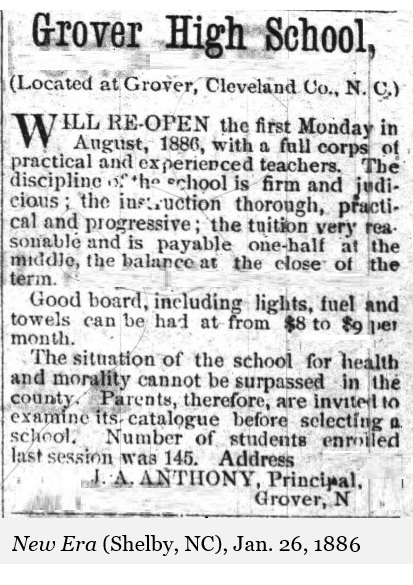
| Grover | 4 | |
| Grover Elementary | 1974-present | 4; 206 Carolina Ave., Grover |
| Grover High | 1886-1960 | 4; 206 Carolina Ave., Grover |
| Grover (grades 1-8) | 1960-1974 | 4; 206 Carolina Ave., Grover |
| Hardin | x-1925 | 4; see 1918 map |
| Harmon | x-1905-x | 4 |
| Hayes | x-1923 | 9 |
| Hicks | x-1932 | 6 |
| Holland | early 1800s-x | 2; south of Boiling Springs |
| Holly Springs | 1904-1936 | 1, see 1918 map |
| Hopewell2 | 1892-1940 | 6; see 1918 map |
| Hopkin Hill | 8; in Delight | |
| Hoyle | 1904-x | 10 |
| Hunt1 | x-1905-x | 11 |
| Hunter Elementary | 1957-1969 | 6; 403 Pinkney St., Shelby |
| James Love Elementary | 1968-present | 6; 309 James Love School Rd., Sh |
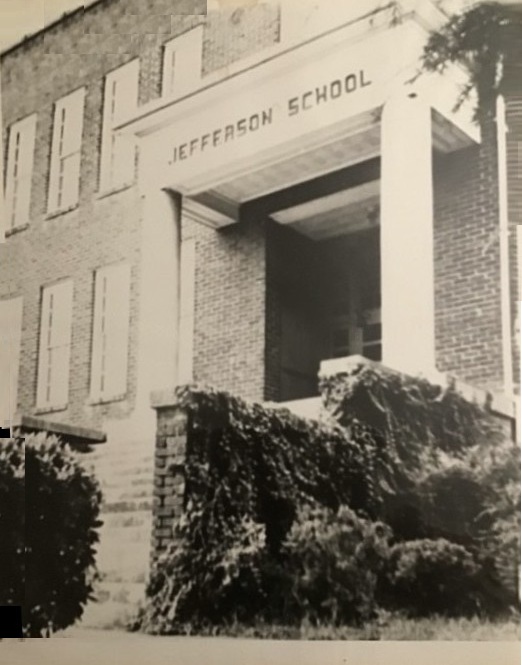
| Jefferson Elementary (1st bldg; demolished) | 1926-1969 | 6; 915 Buffalo St. |
| Jefferson Elementary | 1969-present | 6; 1166 Wyke Rd. |
K-O
| school | time period | township/address |
| Kadesh | 1860-x | 9; near Kadesh Ch. |
| Kings Mountain Colored School2 (renamed Kings Mountain Graded) | 1901-x | 4; Ridge St., Kings Mountain |
| Kings Mountain Graded | 1905-x | |
| Kings Mountain Graded; aka Lincoln Academy1, 2 | 1926-1934 | 4; renamed Davidson School |
| Kings Mountain High; KMHS tab | 1965-present | 4; 500 Phifer Rd., Kings Mountain |
| Kings Mountain Middle | 1975-present | 4; 1000 Phifer Rd., Kings Mountain |
| Kings Mountain Military Institute | 1876-1905 | 4 |
| Kings Mountain Intermediate | 2002-present | 4; 227 Kings Mountain Blvd., KM |
| King/Piedmont Street | 1874-1876 | 4 |
| Knob Creek | x-1940 | 10 |
| Lackey | x-1906-x | 5 |
| Lafayette Street Elem. (bldg. demolished) | 1923-1956 | 6; 518 S. Lafayette St., Shelby |
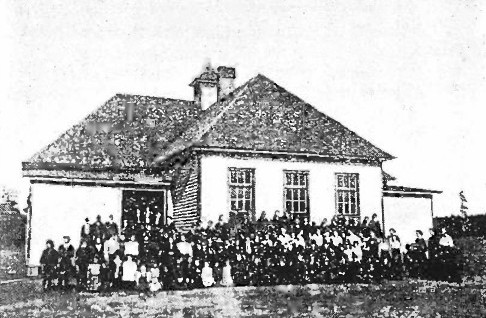
| Lattimore (previously Durham) | 1903-1960 | 7 |
| Lattimore2 | x-1940 | 7 |
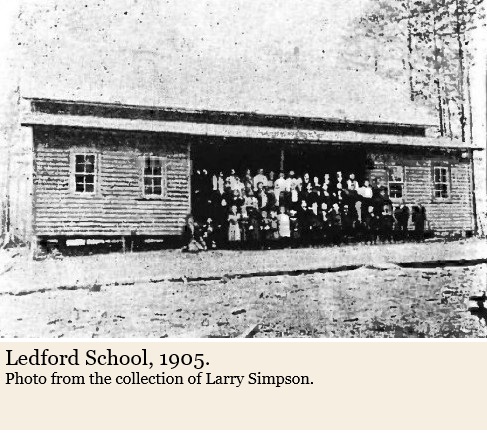
| Ledford | 1904-x | 10; see 1918 map |
| Little Zion | 10; see 1918 map | |
| Logan | 1904-x | 11 |
| Long Branch1 | x-1952 | 4 |
| Love | x-1903-x | 6 |
| Macedonia2 | 1915-1947 | 5 |
| Magness | x-1904 | 11 |
| Maple Springs2 | x-1925-1940 | 2 |
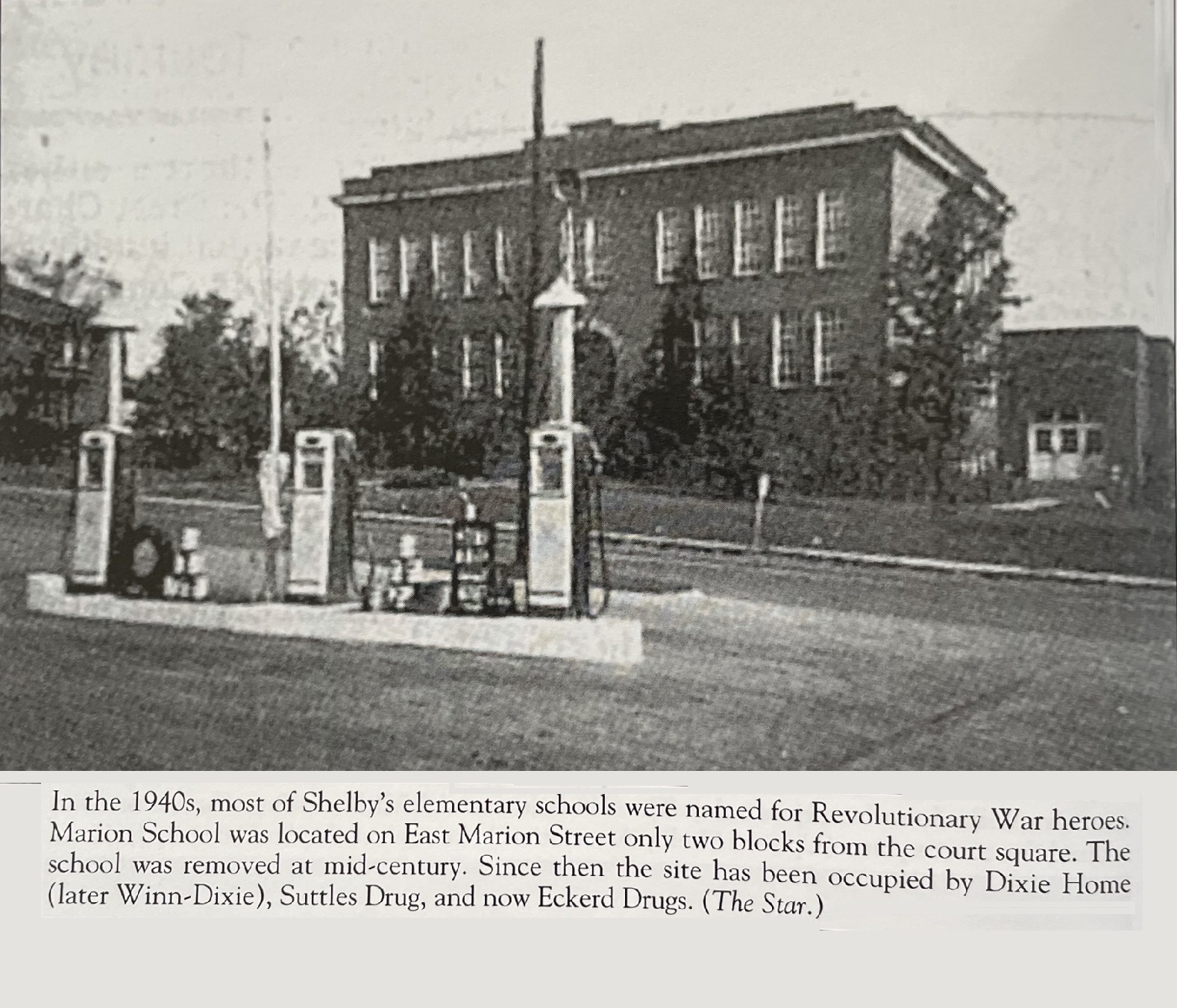
| Marion Elem. (1st bldg; demolished) | 1923-1951 | 6; E. Marion St., Shelby |
| Marion Elem. (2nd building) | 1951-2022 | 6; 410 Forest Hill Dr., Shelby |
| Mary’s Grove | 5 | |
| McBrayer | 3; Hwy 18 S and Shoal Creek Ch. Rd. | |
| McNeilly | x-1926 | 11 |
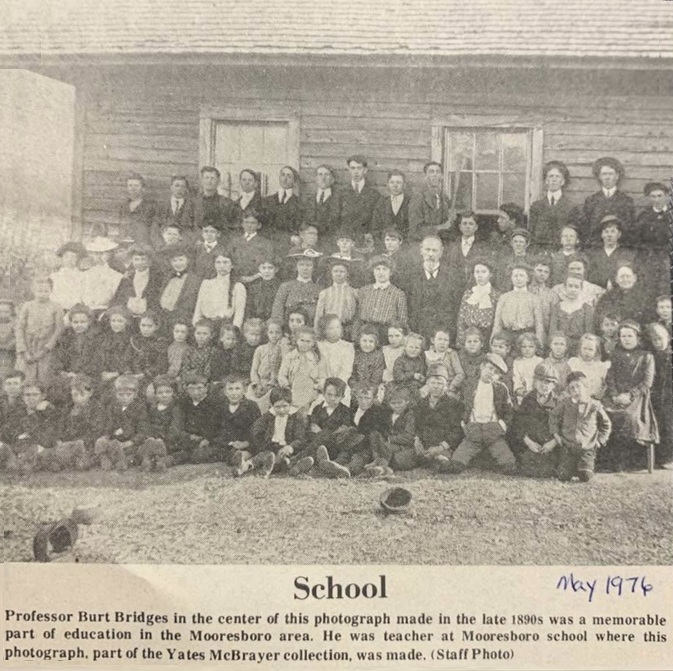
| Mooresboro | 1904-1960 | 7 |
| Mooresboro1 | x-1906-1940 | 7 |
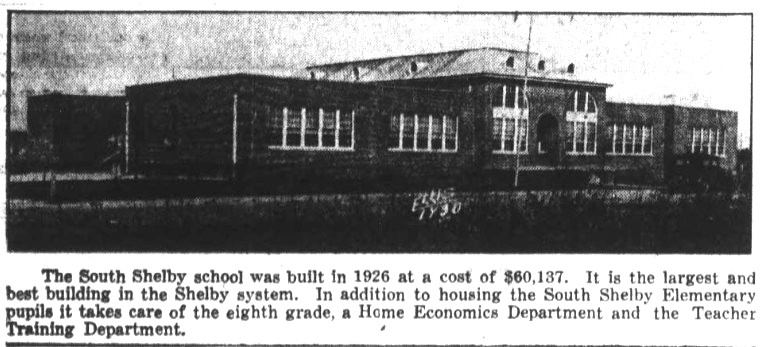
| Morgan Elem. | 1925-19xx | 6; 1300 Dodd St., Shelby |
| Moriah | 1924-1962 | 11 |
| Mount Pleasant | x-1936-x | 2 |
| Mt. Zion | x-1924 | 11 |
| Mull | x-1923 | 10; see 1918 map |
| New House | 8 | |
| Newton’s Grove | 11 | |
| North Cleveland Jr. Hi | x-1972-x | |
| North Elementary | 1956-present | 4; 900 N. Ramseur St., Kings Mtn. |
| North Shelby | 2018-present | 6; 1701 Charles Rd., Shelby |
| Northside2/North Shelby | 1966-1972-2018 | 6; 1205 Northside Dr., Shelby |
| Number 3 | 3 | |
| Number 8 | x-1932-x | 8 |
| Number 16 | 11 | |
| Oak | 6; 701 W. Oak St., Shelby location of the first Graham School | |
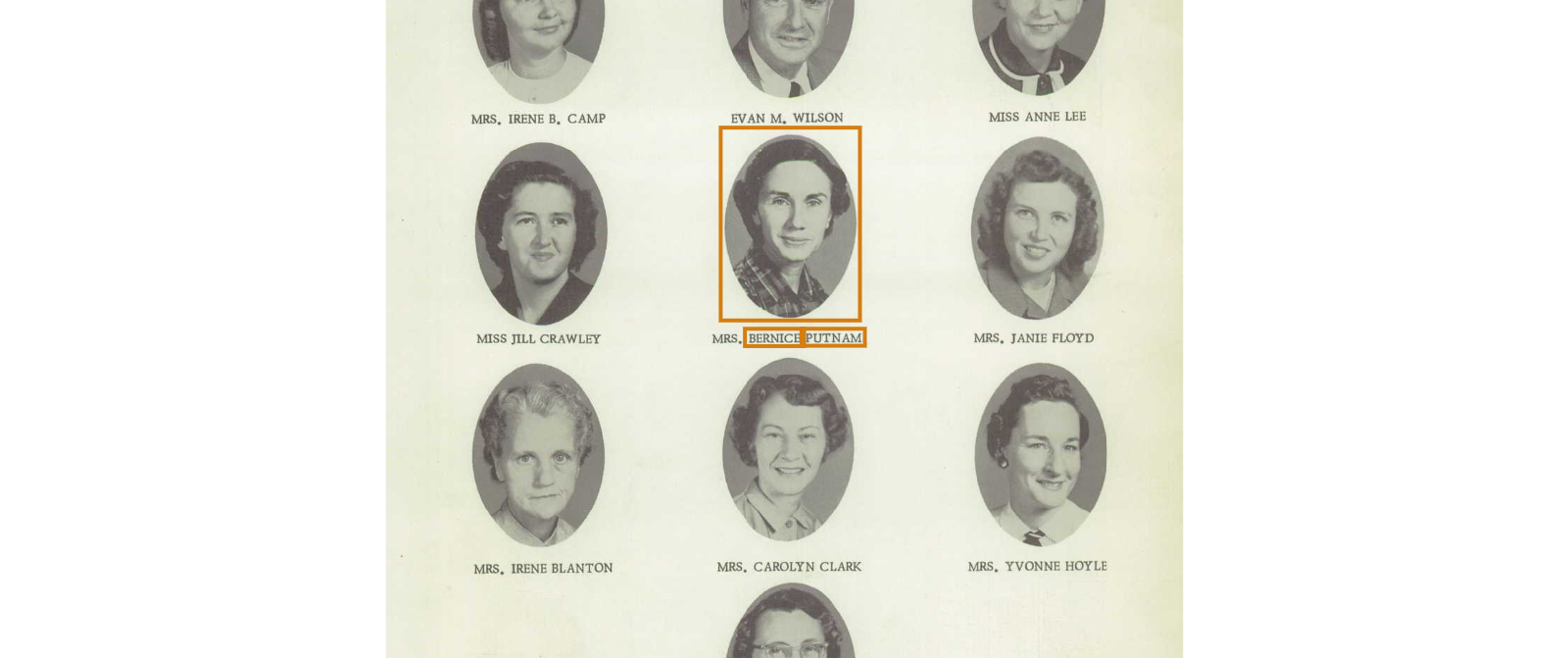
| Oak Grove(aka Putnam) | 1904-x | 5; near the same named church |
| Oak Grove | 8; was at “Bead,” near Polkville | |
| Oates | 4 | |
| Old Field | c. 1850 | 5; near Capernaum Church |
P-S
| school | time period | township/address |
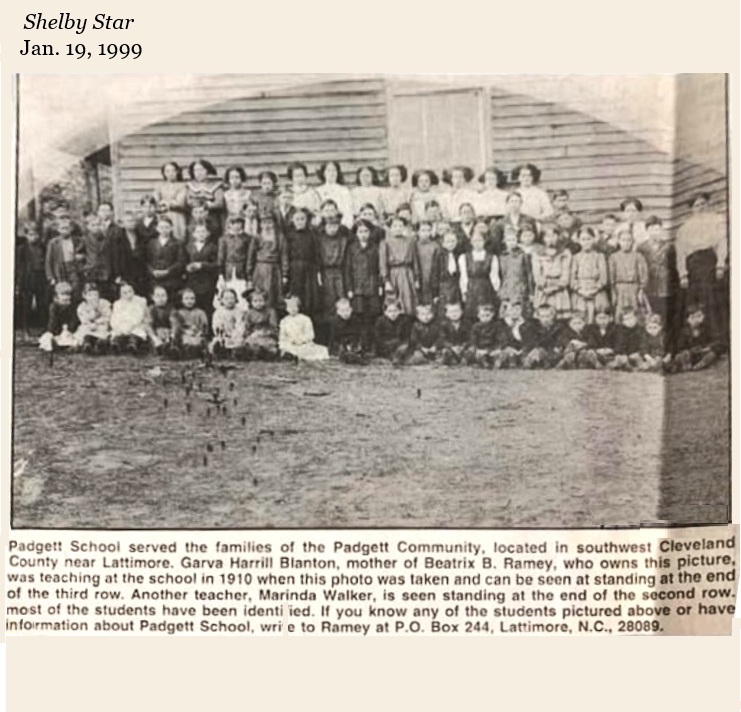
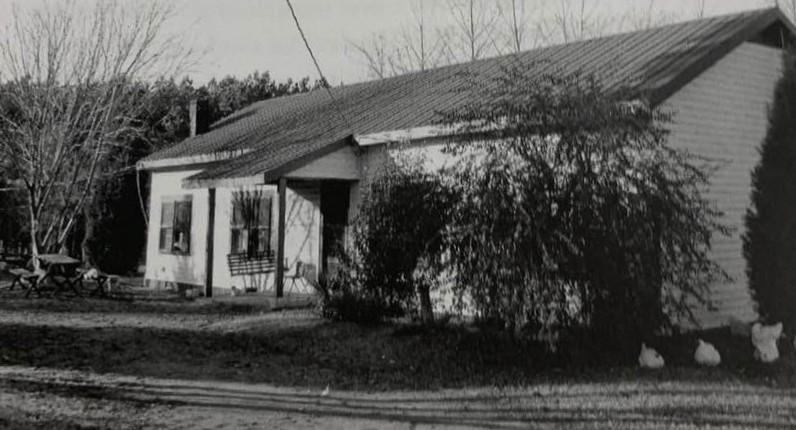
| Padgett | 7 | |
| Palm Tree | 8; former Lee property between Polkville and Lawndale | |
| Palmer Grove/Elliott2 | 1903-1936 | 1; see 1918 map |
| Park Grace | 4 | |
| Parker Street | 4; 500 W. Parker St., Kings Mtn. | |
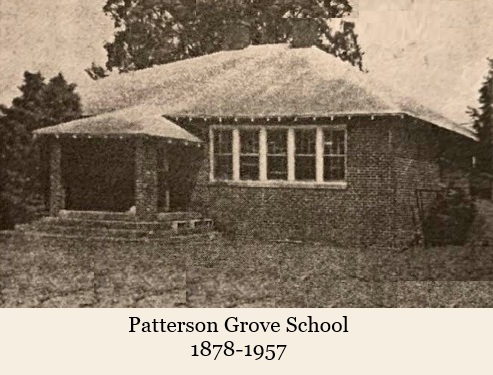
| Patterson Grove | 4; Oak Grove and Putnam Lake Road next to the church | |
| Patterson Springs | x-1924-1930-x | 3 |
| Patterson Springs1 | 3 | |
| Peeler2 | x-191x | 9; merged with Douglas in the 1910s |
| Philadelphia1 | x-1940 | 9; Lawndale |
| Philbeck | x-1932-x | 11; see 1918 map |
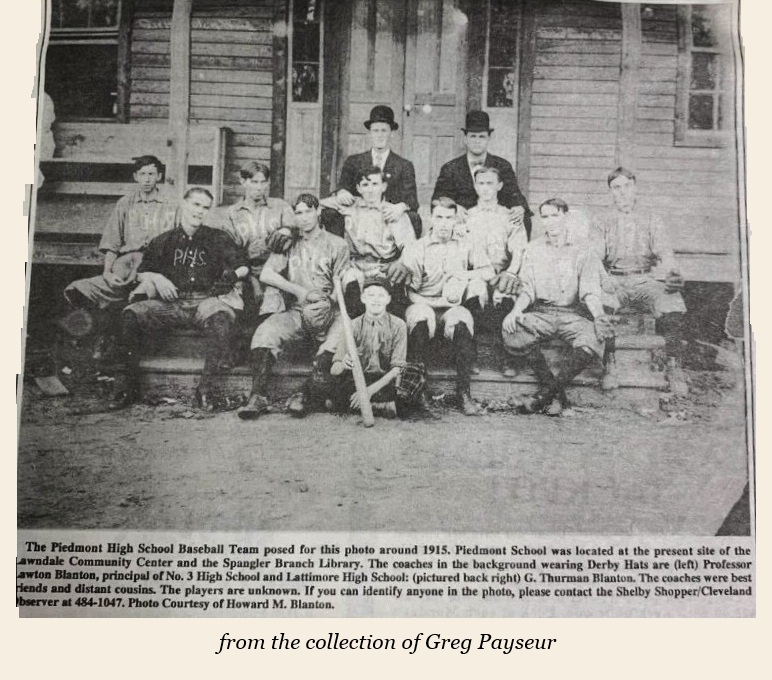
| Piedmont (private school) | 1896-1924 | 9; Cleveland Mills, Lawndale |
| Piedmont (public) | 1924-1967 | 9; Lawndale |
| Pinnacle Classical Academy | 2013-present | 6; 2401 Joe’s Lake Rd., Shelby |
| Pleasant Grove | x-1905-x | 9 |
| Pleasant Hill | x-1906-x | 3; near the same named church |
| Pleasant Hill | x-1926 | 10 |
| Pleasant Ridge | x-1906-x | 7 |
| Plonk | x-1931 | 5; see 1918 map |
| Point | x-1906-x | 11 |
| Polkville | 1927-1991 | 8 |
| Poplar Grove | 6; see 1918 map | |
| Poplar Springs1 | x-1906-x | |
| Poplar Springs | 1903-x | 6 |
| Powell | x-1906-x | 8 |
| Prospect | x-1936 | 1 |
| Pruette | x-1918-x | 3; see 1918 map |
| Pruette | x-1926 | 11; see 1918 map |
| Number One | 1936-1963 | 1 |
| Ramseur2 | 1929-1940 | 9 |
| Randle | 1905-x | 3; Hwy. 18 S and Shoal Creek Church Rd. |
| Rehobeth | x-1920 | 7 |
| Richards | 9; see 1918 map | |
| Riverside2 | x-1940 | |
| Round Hill | x-1920 | 8; see 1918 map |
| Rhyne | 5; see 1918 map | |
| Roberts School | x-1918-x | 6; see 1918 map |
| Roberts Seminary | 1863-x | 6; William J. Roberts home |
| Rock Cut1 | 1904-1949 | 1 |
| Rock Cut | x-1904-x | 6; see 1918 map |
| Ross Grove | 1904-x | 6 |
| Royster | x-1906-x | 9; see 1918 map |
| Saint Paul | x-1923 | 5; across from the same named church |
| Shanghai | x-1906-x | 6; listed in 2 on some records; see 1918 map |
| Sharon | x-1893-1936-x | 2 |
| Shelby Cotton Mill | 1915-x | 6 |
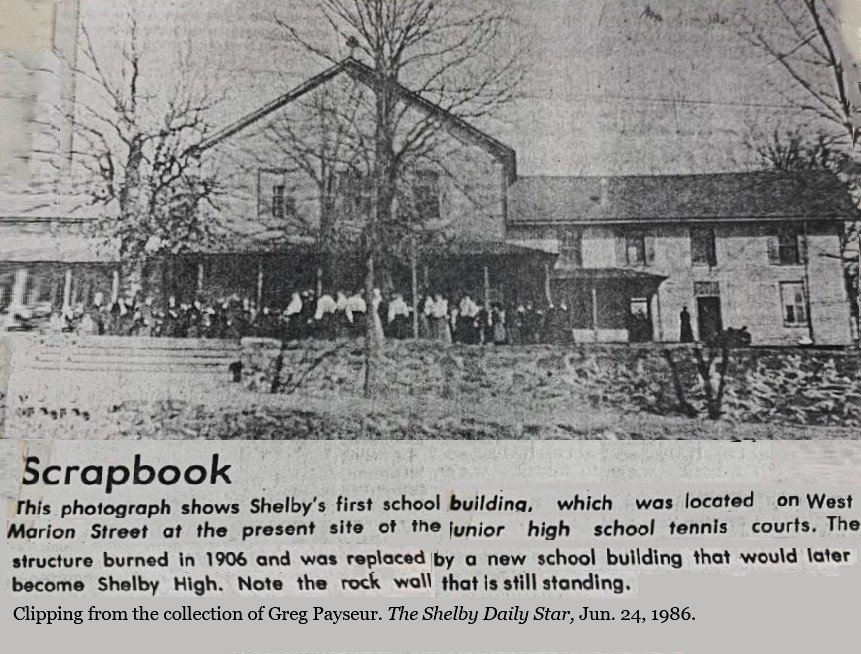
| Shelby Graded1 | x-1906-x | Sumter Street vicinity |
| Shelby Graded/ Central School | 1891-1927 (included all grades) | 204 W. Marion St. |
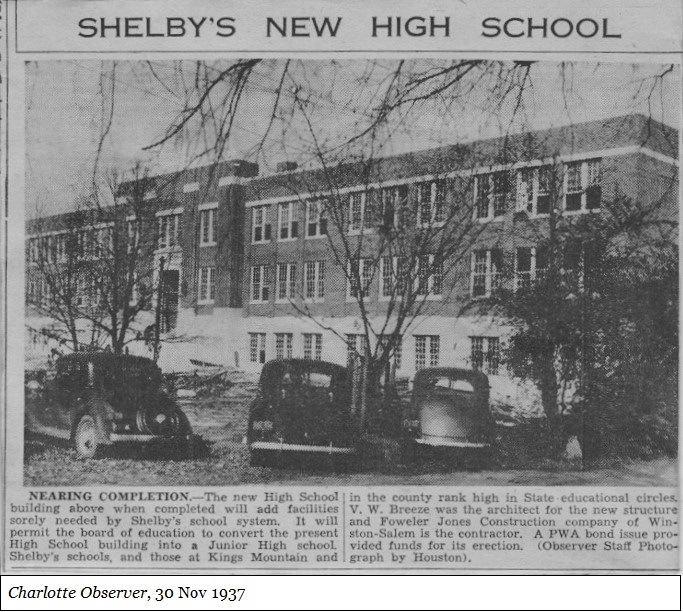
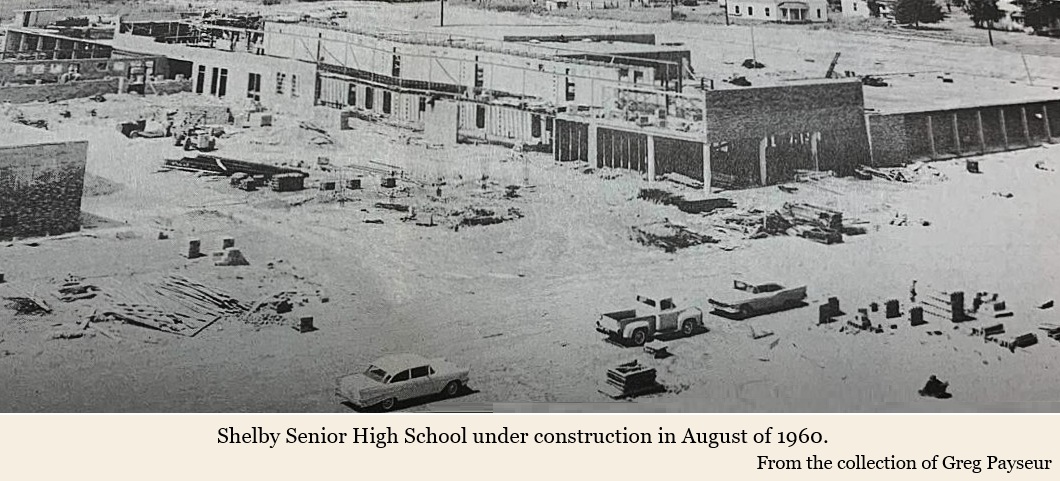
| Shelby High; SHS tab | 1891-1938 1938-1961 1961-present | 204 W. Marion St. 400 W. Marion St. 230 E. Dixon Blvd. |
| Shelby Jr. High | 1938-1961 1961-1987 | 204 W. Marion St. 400 W. Marion St. |
| Shelby Middle | 1987-2011 2011-present | 400 W. Marion St. 1480 S. Dekalb St. |
| Shoal Creek1, 2 (renamed Camp, 1942) | 1935-1942 | 3 |
| South Cleveland Jr. High (previously Camp High) | 1968-x | 3; Mt. Sinai Ch. Rd. just west of Hwy. 18 S |
| South Shelby (renamed Morgan in 1925) | 1911-1925 | 6 |
| Spangler | x-1925 | 9; see 1918 map |
| Springmore Elementary | 2000-present | 2; 616 McBrayer Homestead Rd., |
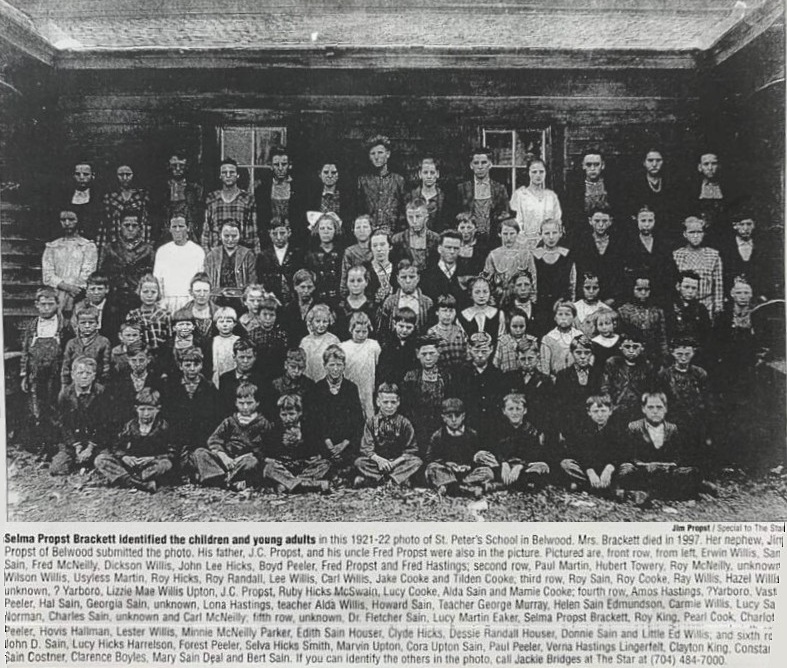
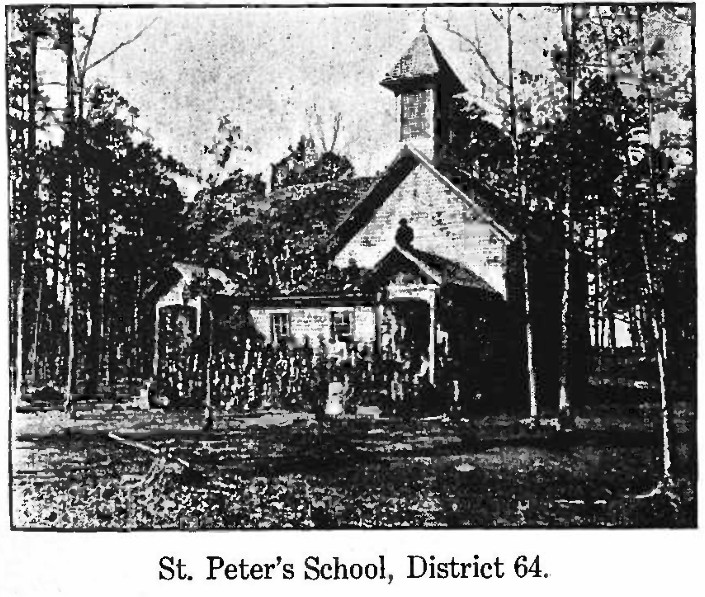
| St. Peter | 1904-x | 10 |
| Stubbs | 1903-x | 5 |
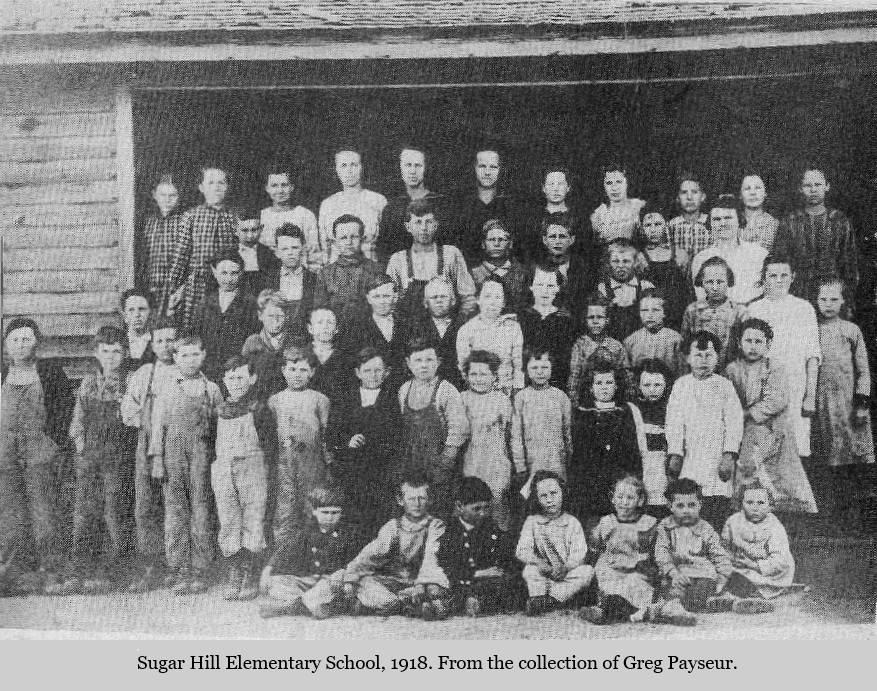
| Sugar Hill | 9; see 1918 map | |
| Sylvanus Erwin Normal Institute | 5 |
T-Z
| school | time period | township/address |
| Twelve Oaks Academy (private) | x-1970s-x | 6; 12 Oaks Dr. Shelby; 701 W. Oak St., Shelby |
| Thomas Jefferson Classical Academy | 1999-present | 7; 2527 Hwy. 221A, Mooresboro (physical address is in Rutherford County) |
| Township 3 | 1910-1931 | 3; one mile north of Earl |
| Township 3 High | 1931-1967 | 3; 526 Davis Rd., Shelby |
| Township 3 Elementary | 1967-present | 3; 526 Davis Rd., Shelby |
| Trinity | 1902-1936 | 2 |
| Turning Point Academy | 2012-present | 6; 409 W. Sumter St., Shelby |
| Union | 8 | |
| Union | x-1918-x | 11; see 1918 map |
| Union Elementary | 1991-present | 8; 1440 Union Ch. Rd. Shelby |
| Vance Grove | x-1940 | 10 |
| Vestibule1 | 1867-1951 | 4 |
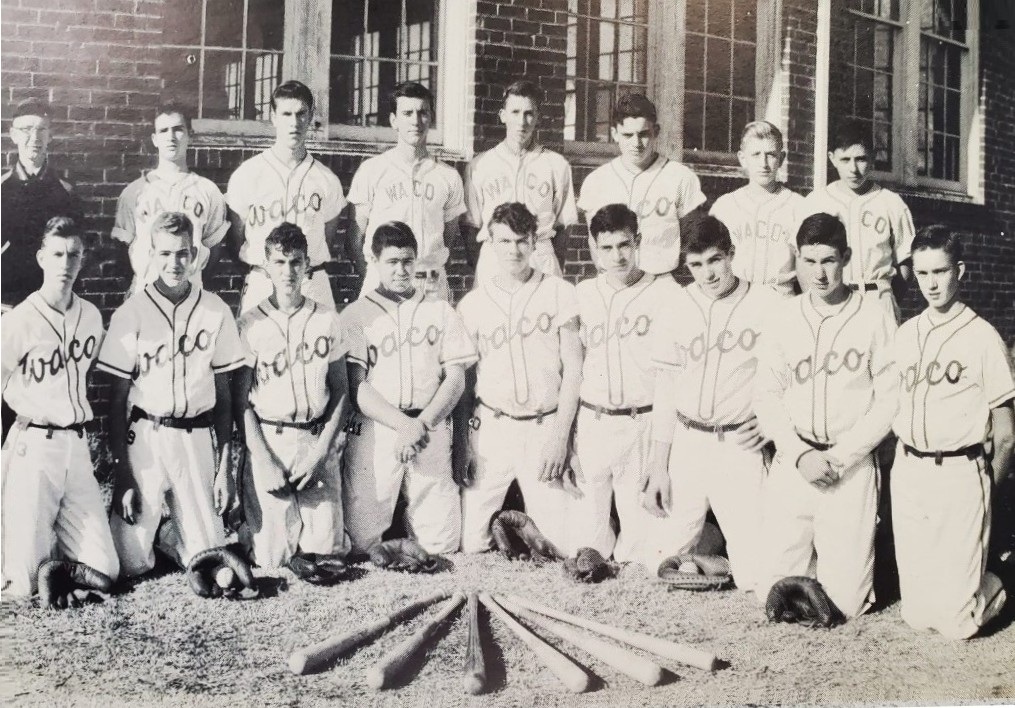
| Waco | x-1906-x | 5 |
| Waco High | 5 | |
| Ware | 1903-1923 | 4; see 1918 map |
| A. D. Warlick | 1904-x | 10 |
| Henry Warlick | 1904-x | 8 |
| Washington1, 2 | 1860s- | |
| Washington Elem. (bldg. demolished) | 1926-1979 | 6; 1100 N. Lafayette St., Shelby |
| Washington Elementary | x-present | 5; 1907 Stony Point Rd., Shelby |
| Weathers Grove2 | 1923-1940 | 9; four miles NE of Polkville |
| West Cleveland Jr. Hi | x-1972-x | 2 |
| West Elementary | 1970-present | 4; 500 W. Mountain St, Kings Mtn. |
| West End | 1922-1970 | 4 |
| White Plains Academy | 1859-x | 4 |
| White’s | x-1926 | 11 |
| Willis | x-1918-x | 11; see 1918 map |
| Willis/W. S. Lattimore | x-1906-x | 8; see 1918 map |
| Wood | x-1902-x | 1 |
| Wright | 1904-x | 7 |
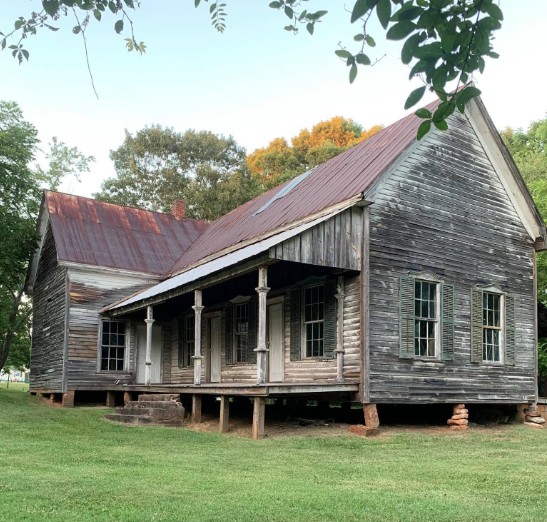
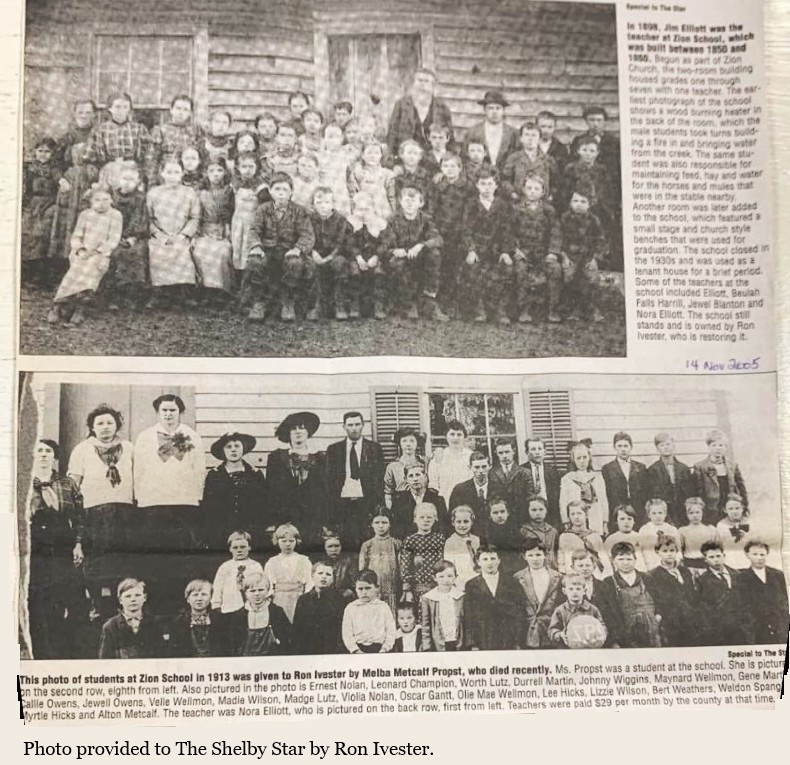
| Zion | 1870-193x | 6 |
| Zoar | 1903-1911 | 6 |
| Zoar2 | 6 |
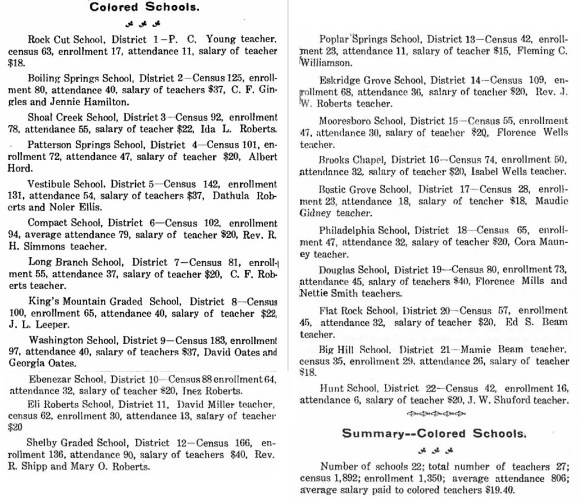
| 1 The 1906 CC Superintendent’s Annual Report by B. T. Falls listed a total of 22 “Colored” schools, 27 teachers, enrollment 1350, census 1892, average attendance 806, average teacher salary $19.40. Additional information, including names of teachers, is here. |
| 2 Ezra Bridges spearheaded the effort to document the history of Cleveland County schools for Black students in the 1990s. Her collection was donated and digitized at DigitalNC. |
Township 1 Schools

Photo from the Ezra Bridges Collection.
Township 2 Schools



Township 3 Schools


Township 4 Schools
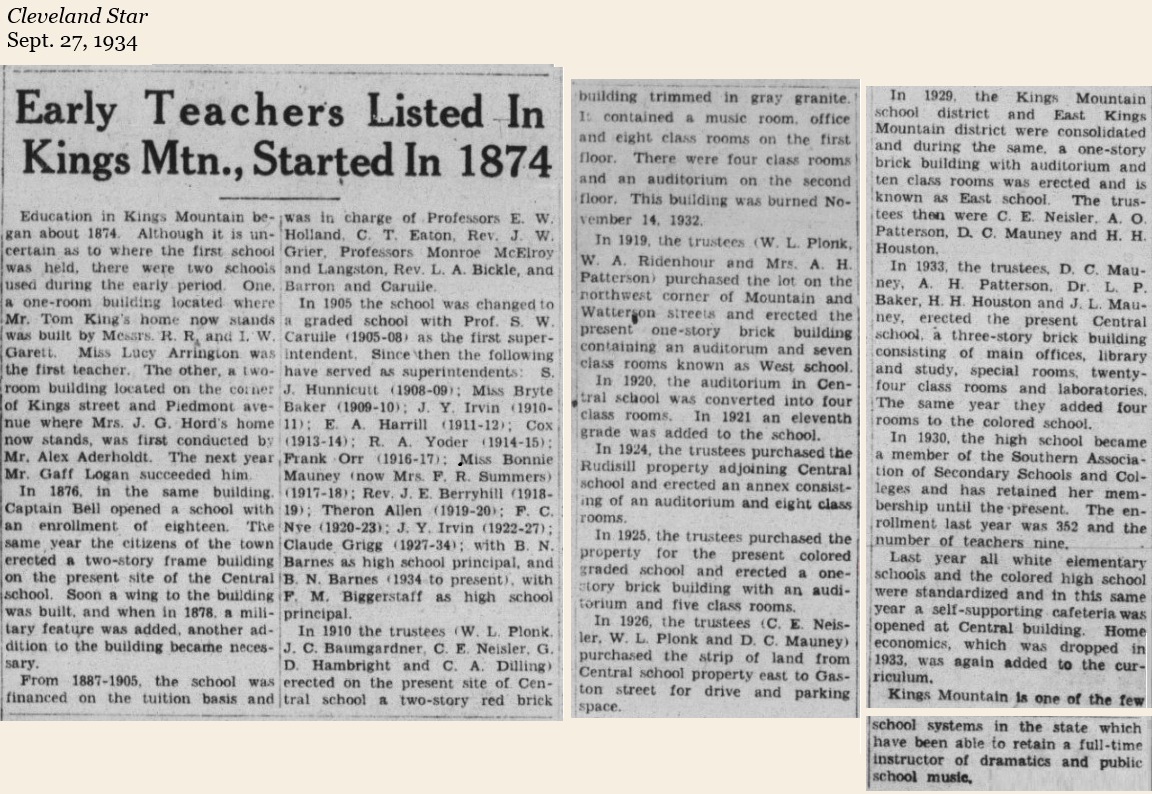
A history of Kings Mountain Schools, 1874-1935, was published in the Cleveland Star in September of 1935.

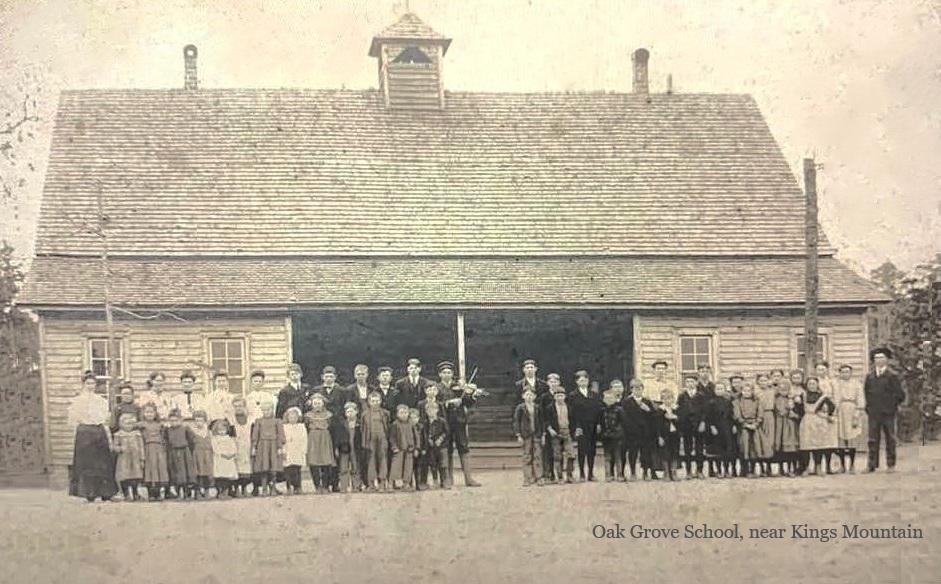
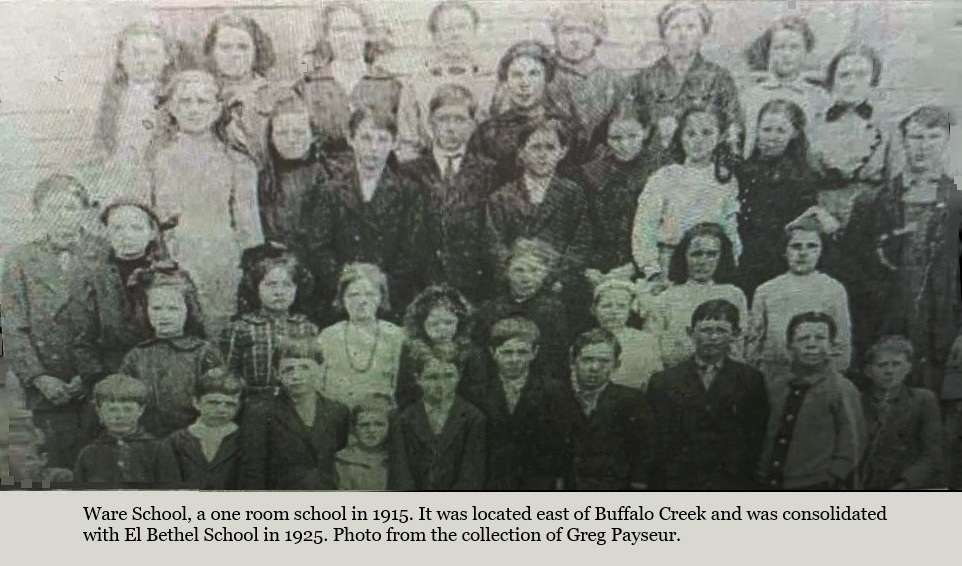

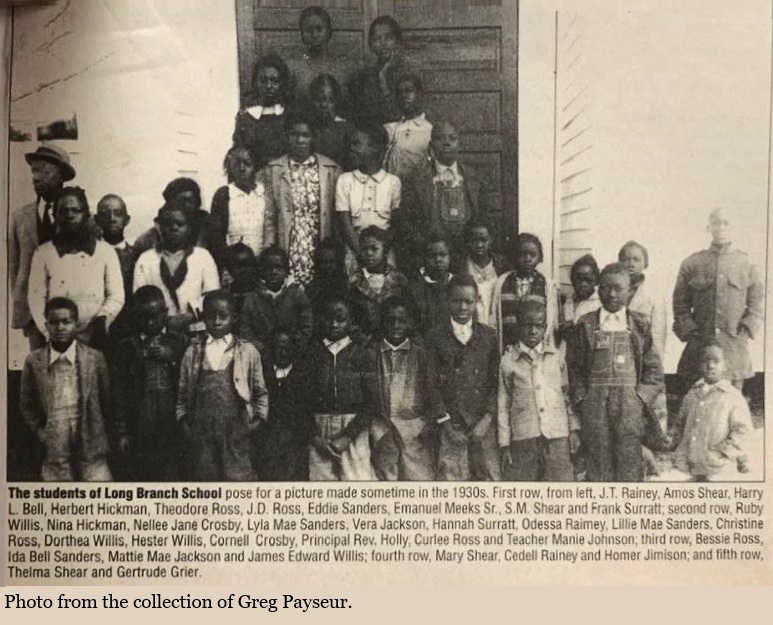
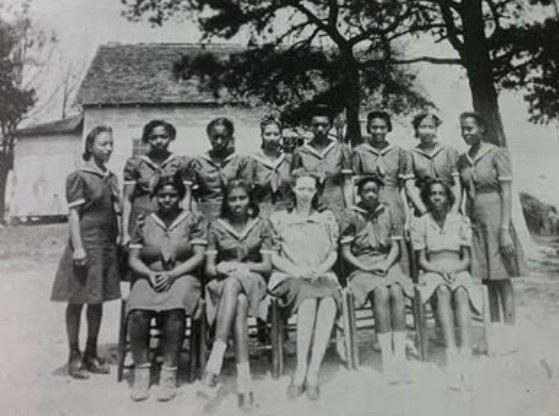


Township 5 Schools

Township 6 Schools



Township 7 Schools
Township 8 Schools


Township 9 Schools




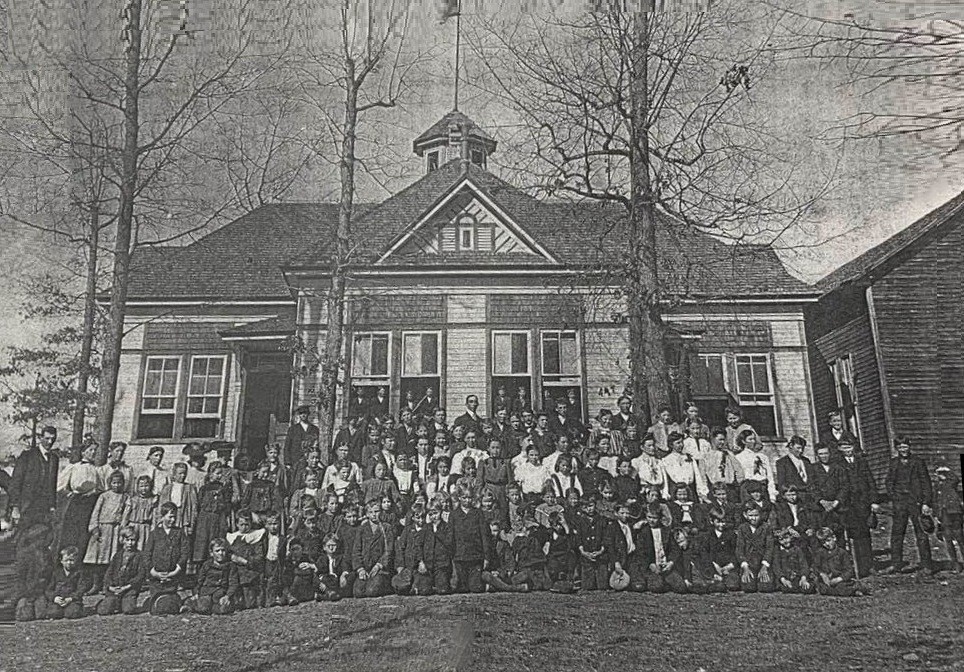
Township 10 Schools, Extinct
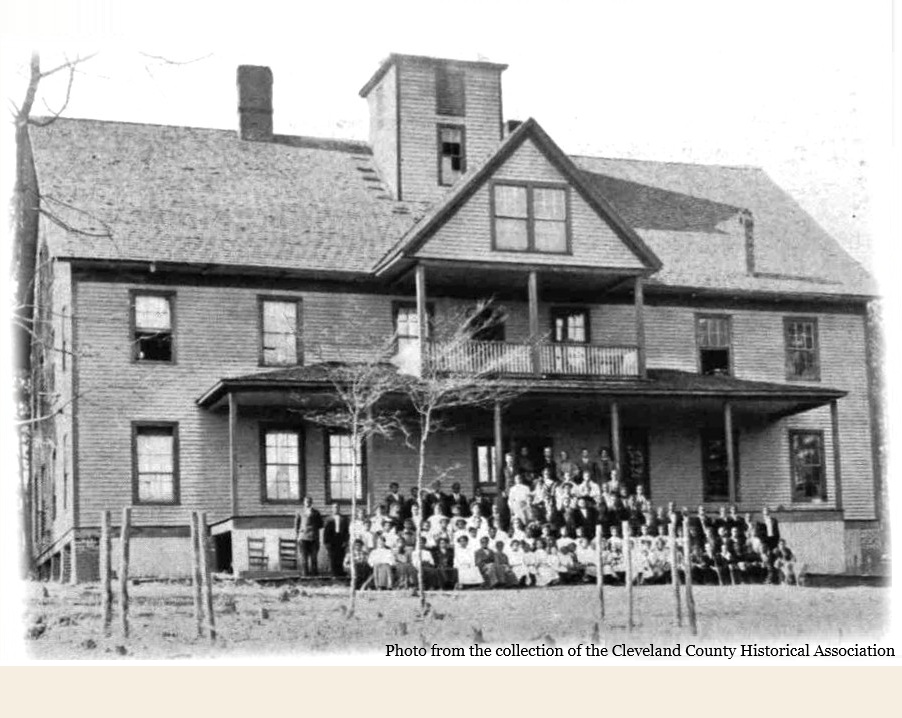
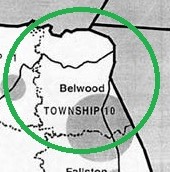
- Belwood Institute, Hoyle, Ledford, Little Zion, Mull, Philbeck (x-1913+), St. Peter, Vance, and A. D. Warlick School.


Township 11 Schools

Below is additional information on the schools for Black children listed in the Superintendent B. T. Falls’ 1906 annual report to the Cleveland County School Board.
A comprehensive history of Black schools in Cleveland County was compiled by a committee led by the late Ezra Bridges in the 1990s. It can be accessed in its entirety at DigitalNC.
Cleveland County School Histories
Historical accounts of some of Cleveland County’s schools have been written by local residents:
African American History and Education in Cleveland County. This is a scrapbook of 134 images and articles compiled by Ezra Bridges, a distinguished 20th century educator and community leader in the county.
Broad River Academy. Pat Poston wrote a brief historical sketch of this old 1870s school which was located on Mt. Sinai Church Road just south of Shelby, NC.
Burns High School – Lawndale, NC, Shelby Star article on the occasion of Burns’ 50th anniversary.
Cleveland County Training School/Cleveland High School Application for National Registry.
Crest High School; brief history from the school’s website “About” page.
Earl School. Gladys Horn Hopper wrote a brief historical sketch of this school which evolved to become Number Three School. Other schools mentioned here include the old Cedar Grove School, McBrayer School, Broad River Elementary School, and Patterson Springs High School.
Kings Mountain Schools – Kings Mountain, NC
Old Piedmont High School– Lawndale, NC; article by Tom Forney.
Sketches of Piedmont High School – a comprehensive history.
Shelby High School– Shelby, NC. This is from the school’s website. A list of principals is included.
Shelby Public School Educators. This is a collection of Find a Grave memorial pages consisting of Shelby Public School teachers, coaches, and administrators who were born between 1898 and 1940.
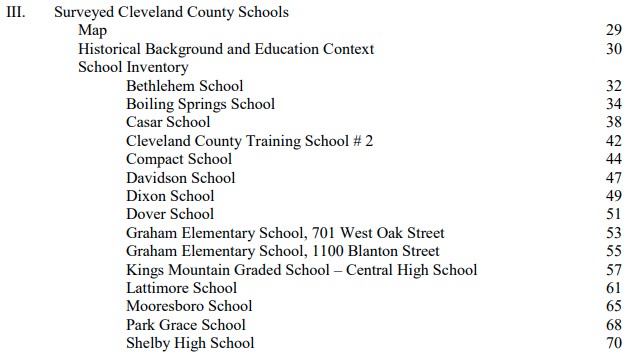
Historic Architectural Resources Survey Report: Cleveland, Henderson, Polk, and Rutherford County Schools, pg. 29-70. The schools surveyed are shown in an excerpt from this document:
Cleveland County School Superintendents
A portion of the following list of Cleveland County School superintendents was compiled by the Shelby Daily Star for the 1976 publication of Our Heritage.
| Cleveland County School Superintendents | term | portrait/photo |
| John R. Logan | 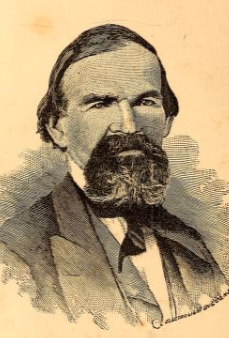 | |
| Horace T. Royster | x-1887 | |
| J. A. Anthony | 1887; 1902-1904 | |
| B. Thurman Falls | 1904-1911 | |
| John Y. Irvin | 1911-1923 | 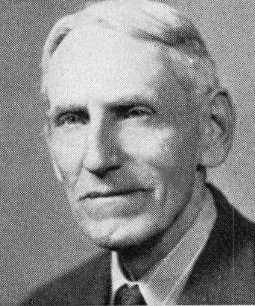 |
| J. Clint Newton | 1923-1926 | |
| J. Horace Grigg | 1927-1963 | 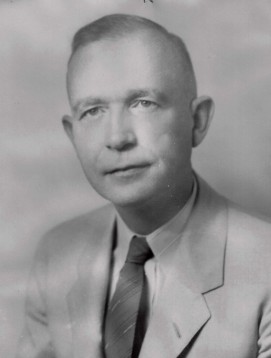 |
| Lee C. Phoenix | 1963-1968 | |
| Walter B. Thomas | 1968-1971 | |
| Dr. Vincent J. Columbo | 1971-1979 | |
| Dr. Jerry Blake | 1979-1984 | |
| Dr. A. Mickey Church | 1984-1985 | |
| Dr. Ellen Powell | 1985-1991 | |
| Dr. W. Earl Watson | 1991-1996-x | |
| Superintendents since the 2004 merger with Shelby and Kings Mountain schools | ||
| Dr. Gene Moore | 2004-2006 | |
| Dr. Bruce Boyles | 2007-2014 | |
| Dr. Stephen Fisher | 2015-2026 |  |
| Dr. Brian Hunnell | 2026 (interim) | 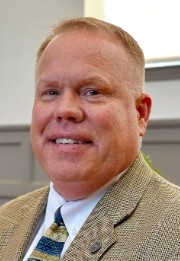 |
| Dr. Chris Bennett | 2026-present |  |
| Kings Mountain School Superintendents | term | photo |
| Stanmore W. Carwile | 1905-1908 | |
| S. J. Hunnicutt | 1908-1909 | |
| Miss Bryte Baker | 1909-1910 | |
| John Y. Irvin | 1910-1911 | |
| Ector A. Harrill | 1911-1912 | 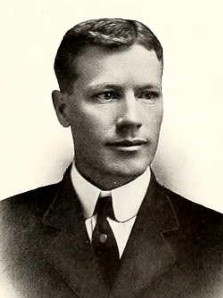 |
| Rufus C. Cox | 1913-1914 | 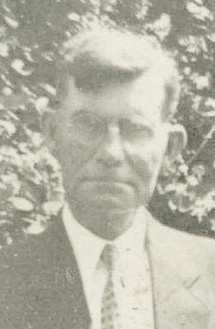 |
| Robert A. Yoder | 1914-1915 | |
| Frank Orr | 1916-1917 | |
| Miss Bonnie Mauney | 1917-1918 | 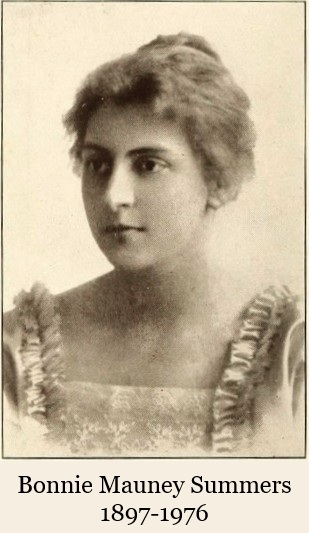 |
| Rev. Joseph E. Berryhill | 1918-1919 | |
| Theron Allen | 1919-1920 | 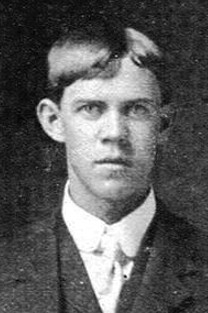 |
| Fernando C. Nye | 1920-1923 | |
| John Y. Irvin | 1923-1927 | |
| Claude Grigg | 1927-1934 | 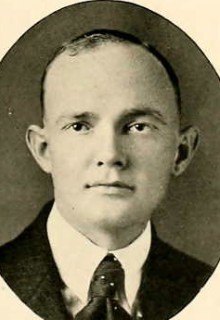 |
| Bahnson N. Barnes | 1934-1967 | 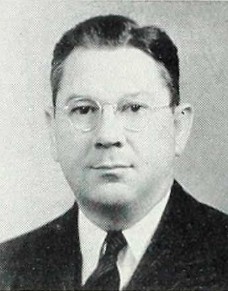 |
| Donald D. Jones | 1967-1977 |  |
| William F. Davis | 1977-1986 | |
| Bob McRae | 1986-2000 | 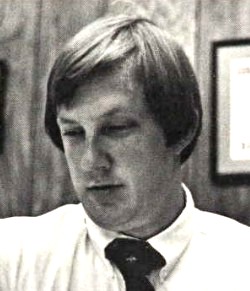 |
| Dr. Larry Allen | 2001-2004 | 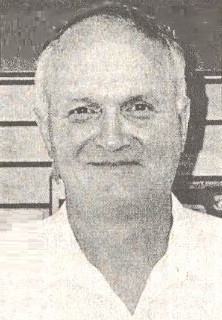 |
| Shelby School Superintendents | term | portrait/photo |
| Charles J. Parker | 1891-1891 | 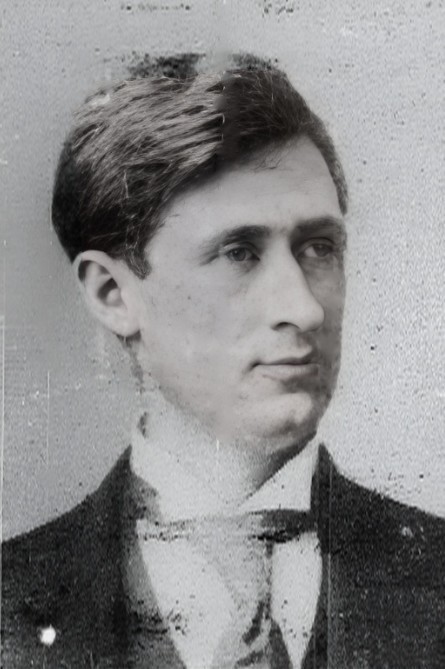 |
| E. C. Wingo (Winfield?) | 1891-1892 | |
| Frank H. Curtis | 1892-1898 | |
| Samuel E. Gidney | 1898-1899 | 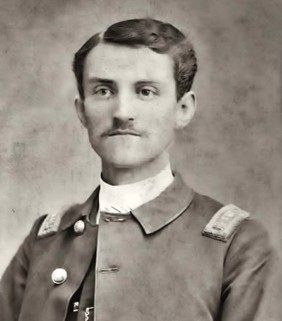 |
| C. T. Carr | 1899-1900 | |
| Samuel G. Harden | 1900-1903 | |
| John A. McLean | 1903-1905 | |
| W. W. Davidson | 1905-1907 | |
| John Y. Irvin; bio | 1905-1910 | |
| Richard T. Howerton, Jr. | 1910-1916 | 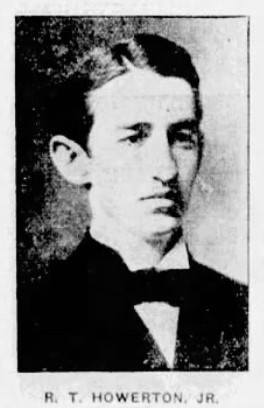 |
| I. C. Griffin | 1916-1929 | 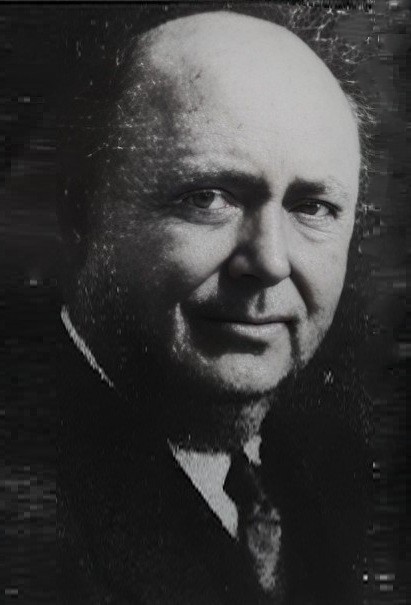 |
| Capt. Ben L. Smith | 1929-1936 | 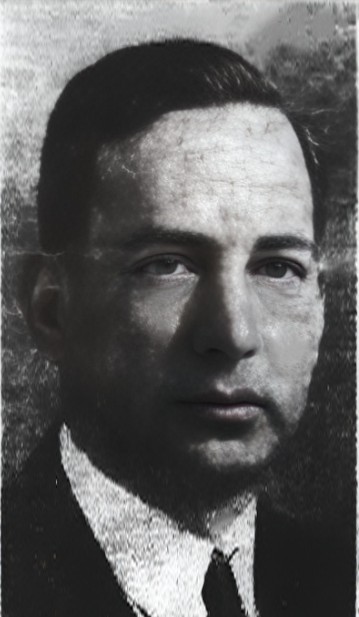 |
| Walter E. Abernethy | 1936-1956 | 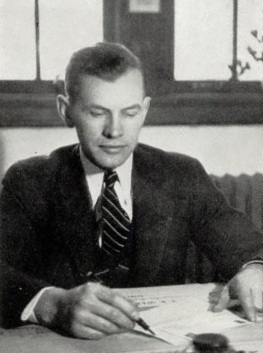 |
| Malcolm Brown | 1956-1980 | 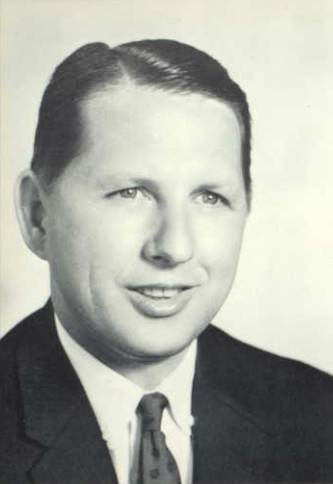 |
| Dr. Johnny Presson | 1980-1991 | 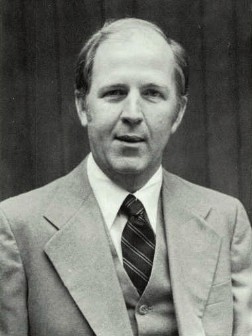 |
| Dr. Steve Curtis | 1992-199x | 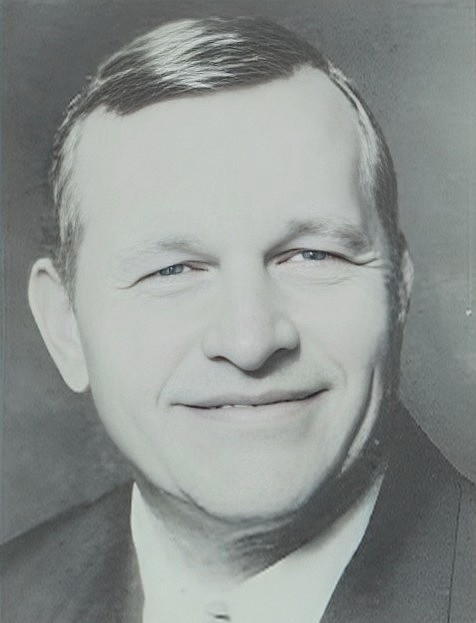 |
| Cliff Wilson | 199x-200x |  |
* The Cleveland County Historical Association, “The Early Schools,” in The Heritage of Cleveland County, Vol. I. (Winston-Salem, NC: Hunter Publishing Company, 1982), pg. 3.