On Dec. 20, 1860, South Carolina became the first of 11 states to secede from the Union. North Carolina was the next to last to secede on May 20, 1861. Slaveholding in North Carolina was concentrated in the Coastal Plains and Piedmont Regions. The greatest number of enslaved Black people to the square mile was in the counties along the Virginia border. In 1860, five counties, Edgecombe, Granville, Halifax, Warren, and Wake were populated with more than 10,000 enslaved people. In 1860, Cleveland County had 2,131 enslaved Black people. On average, each farmer or plantation owner enslaved between five and ten people. Yet Cleveland County sent 2,035 men to serve in the Confederate Army during the four-year war. This was about a third of the white male population in the county–a higher percentage of its men to fight than any other county in North Carolina. Some estimate that 24% of the men from Cleveland County died in battle or from disease, 28% were wounded, and 27% were captured.
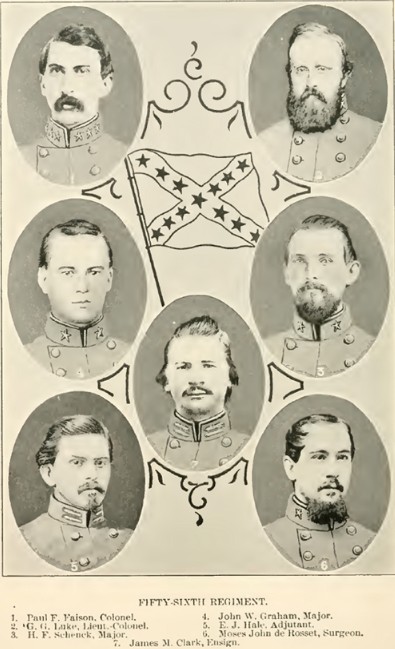
Cleveland County furnished 14 companies and 18 captains during the war. J. D. Lewis conducted extensive research into the various regiments formed from both North and South Carolina. His website, Carolana, provides a table of units from Cleveland County. There are also links to the 1901 book by Walter Clark, Histories of the several regiments and battalions from North Carolina, in the great war 1861-’65, (876 pages). Below is an example of photos throughout the book.
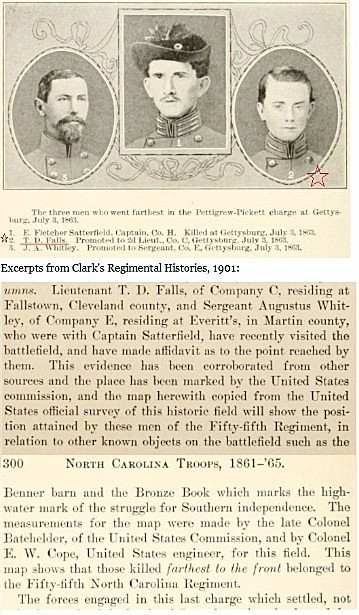
T. D. Falls, from Fallston, was a member of the Fifty-Fifth Regiment that progressed the farthest at Gettysburg.
With so many men off fighting for the Confederacy, Cleveland County women were left struggling to maintain farms and families. When the war ended, those who survived the battles often returned home maimed for life. The Civil War had a devastating effect all over the south that lasted for generations.
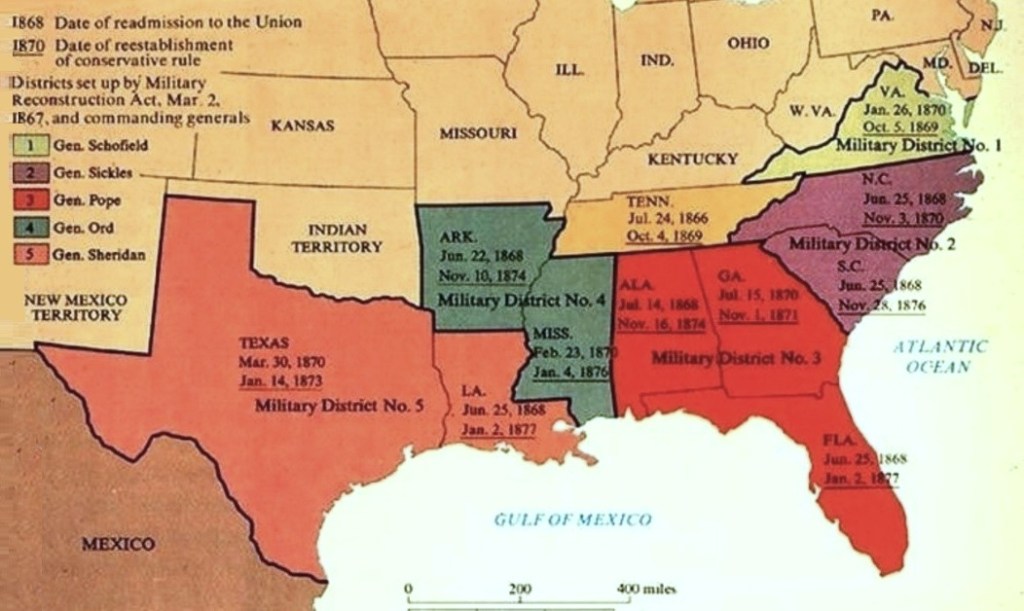
After the war, the 14th Amendment and the Reconstruction Acts were passed. These were complementary federal strategies to rebuild the South, with the Amendment providing the permanent constitutional basis for citizenship and equal protection, while the Acts served as legislative enforcement mechanisms, dividing the South into military districts and forcing ratification of the 14th Amendment for re-admission to the Union.
The 14th Amendment, which was a permanent constitutional law included the following provision:
- Citizenship: Guaranteed birthright citizenship, overturning Dred Scott.
- Rights: Guaranteed due process and equal protection to all persons, restricting state power.
- Political Constraints: Disqualified former Confederate officials from holding office.
- Purpose: Created a permanent, constitutional protection of civil rights.
The Reconstruction Acts of 1867 and 1868, were temporary legislative actions with the following provisions:
- Enforcement: Divided former Confederate states into five military districts governed by federal generals. North and South Carolina were in the 2nd Military District, commanded by General Daniel Sickles.
- Conditions: Required states to draft new constitutions allowing African American suffrage.
- Mandate: Forced Southern states to ratify the 14th Amendment to rejoin the Union.
- Purpose: Provided immediate military administration and established the political process for returning states to the Union.
Essentially, the Reconstruction Acts forced Southern states to submit to the constitutional changes required by the 14th Amendment. The acts provided the “how” (military rule/political reorganization) to ensure the “what” (ratification of the 14th Amendment).
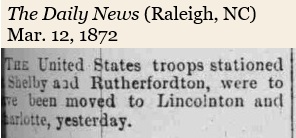
The court square in Shelby was occupied by federal troops from 1865 until 1872.
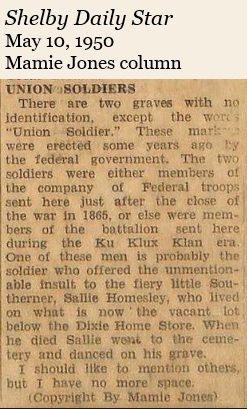
There are four graves at Sunset Cemetery marked “Unknown Confederate Soldier;” there are five marked “Unknown Union Soldier.” The markers of the Confederate soldiers are pointed; those of the Union soldiers are rounded. The story repeated is that the pointed headstones were made purposefully “so that Yankees couldn’t sit atop their gravestones!”
On May 22, 1872, President Ulysses S. Grant signed the Amnesty Act into federal law. The act restored rights to most white Southerners who had rebelled, aiding in postwar healing. Aiming to foster national reconciliation, the law restored voting and office-holding rights to approximately 150,000 former Confederates, excluding about 500 top military and civil leaders. Amnesty was given to these in the later 1898 Amnesty Act.
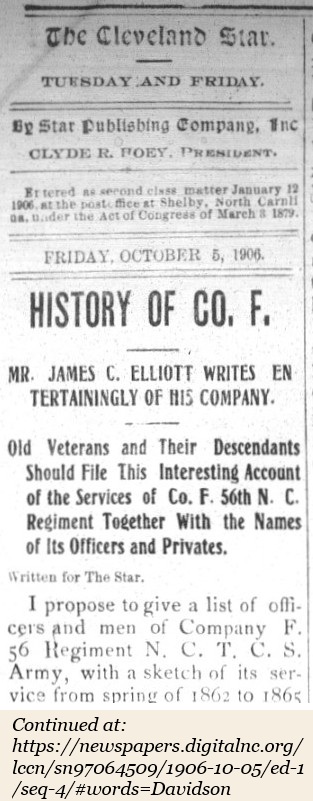
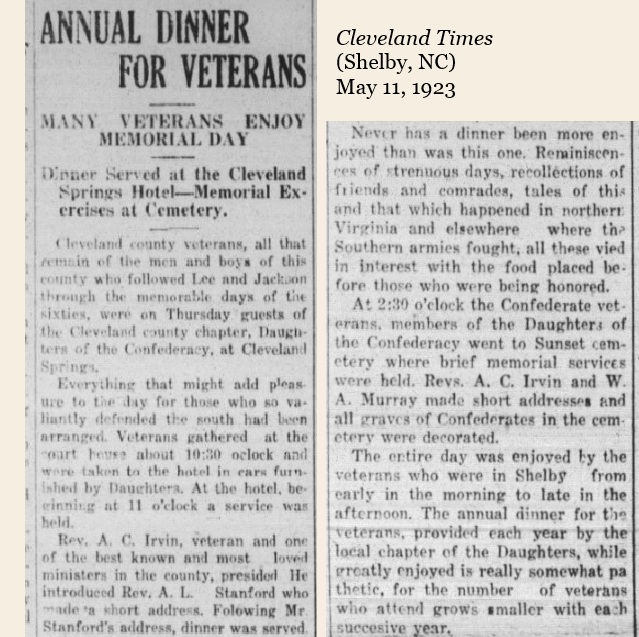
In 1906, James C. Elliott wrote a history of his company in the Confederate Army.
The entire article can be accessed at DigitalNC.
In 1907 he wrote a book of his memoirs, “The Southern Soldier Boy: A Thousand Shots for the Confederacy.”
A “virtual cemetery” was created on Find a Grave by Van A. Hoyle, Sr. of Shelby. Before his death in 2020, Hoyle located the burial sites of 184 Cleveland County Confederate soldiers. The collection is here.
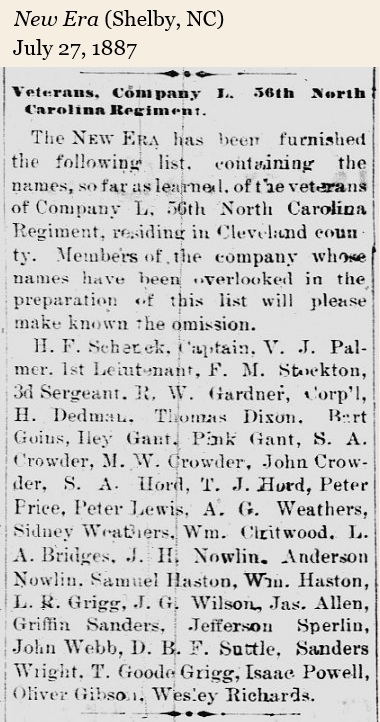
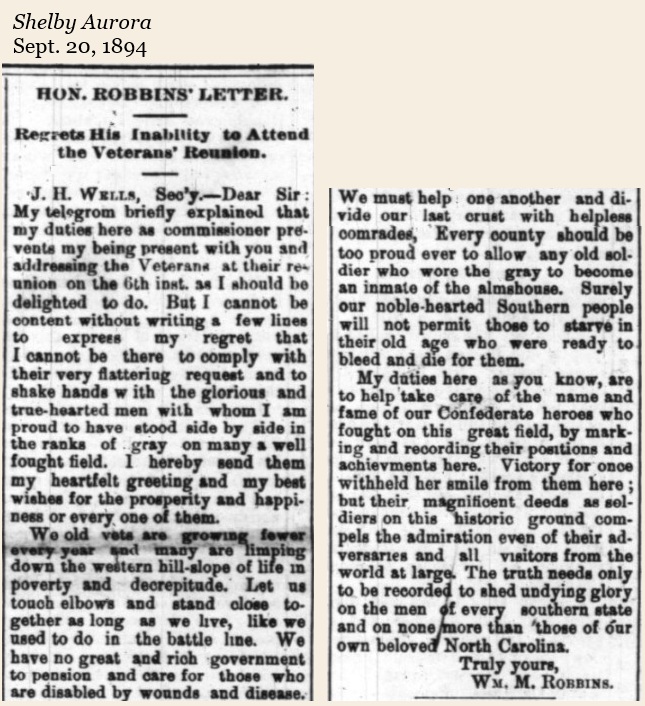
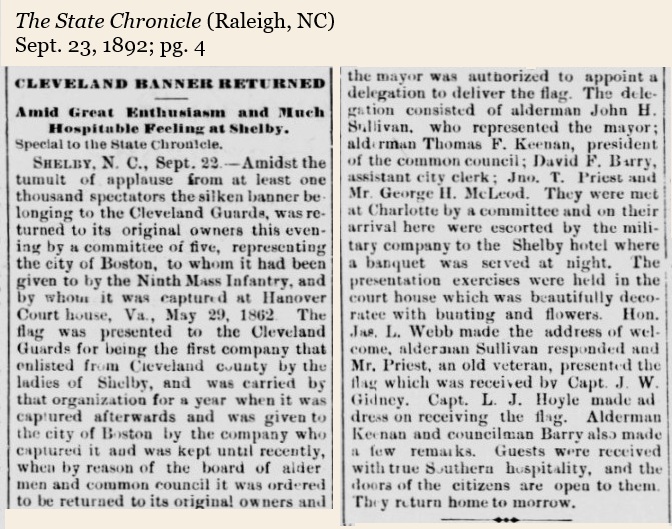
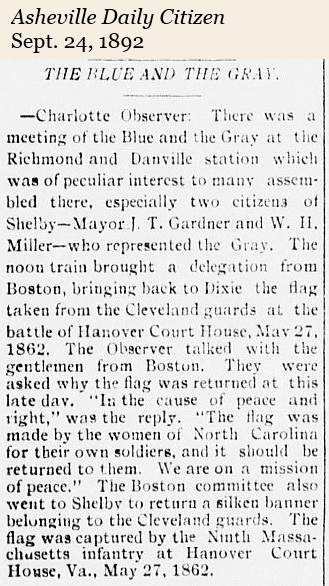
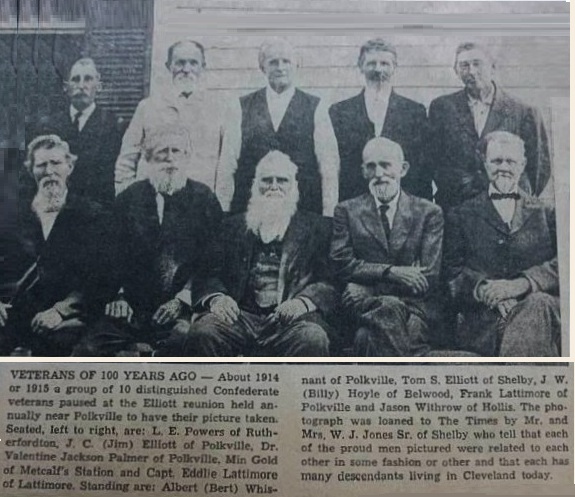
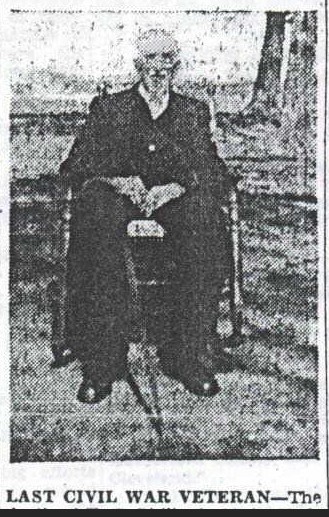
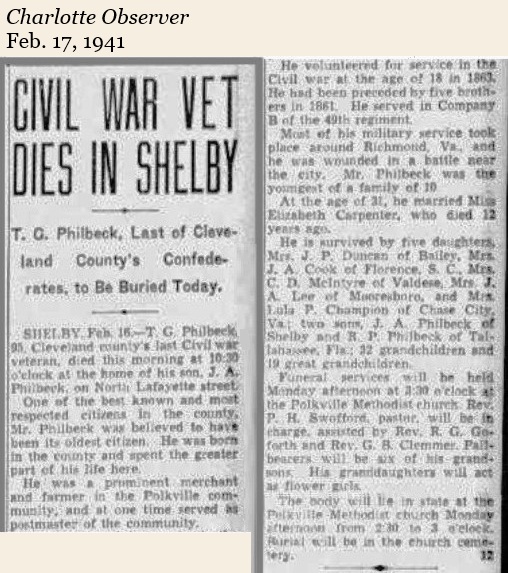
Thomas Goode Philbeck was Cleveland County’s last surviving Confederate veteran. He had served with Company B, 49th NC Infantry Regiment and was wounded on May 10, 1864 at Drewry’s Bluff in Virginia.
He was 95 when he died in 1941. He is buried at Polkville Methodist Church Cemetery.