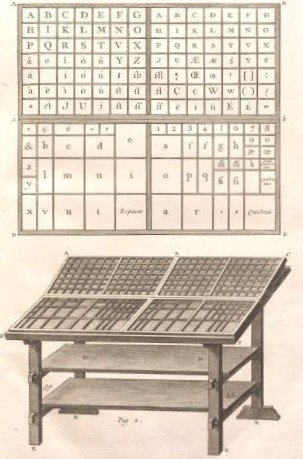
The lower case, placed below for easier reach, held small letters, punctuation, and spaces. This is the origin of “uppercase” and “lowercase” letters. Also, printers had to “mind their p’s and q’s” when they placed those two letters back into the cases.
The first newspaper in the county was a four page, letter-size, weekly called Rip’s Pop Gun. It was named after the nickname of its publisher, Frank “Rip Van Winkle” Harley. Its circulation began in 1854, but it is unknown how long it ran.
In the same year, The Carolina Intelligencer began circulating. Edited and printed by A. J. Cansler, it was a Baptist denominational paper.
Over the next several decades, newspapers came and went. Dozens of Cleveland County newspapers have been digitized and can be accessed at DigitalNC. Lincoln County newspapers can be accessed here. Rutherford County newspapers can be accessed here. Other North Carolina newspapers are also at DigitalNC as well as at Chronicling America.
Below is a summary of historical newspapers, along with their publication periods, and first publishers and/or editors.
Newspapers Published in the County Seat of Shelby
| dates published | title | first publisher/editor |
| 1853-18xx | Rip’s Pop Gun | Frank “Rip Van Winkle” Harley |
| 1853-1857 | Carolina Intelligencer | Rev. A. J. Cansler |
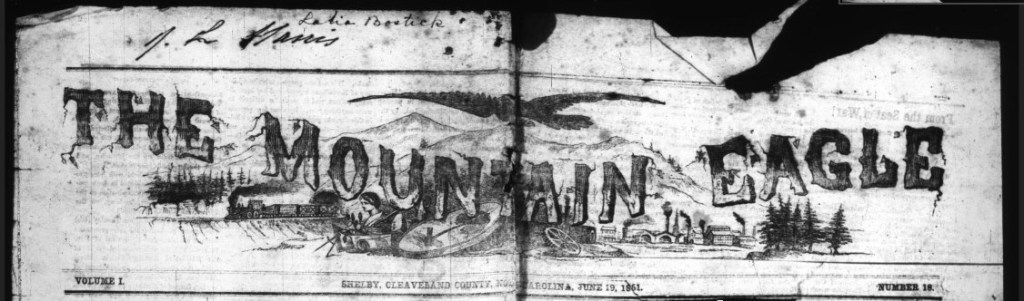
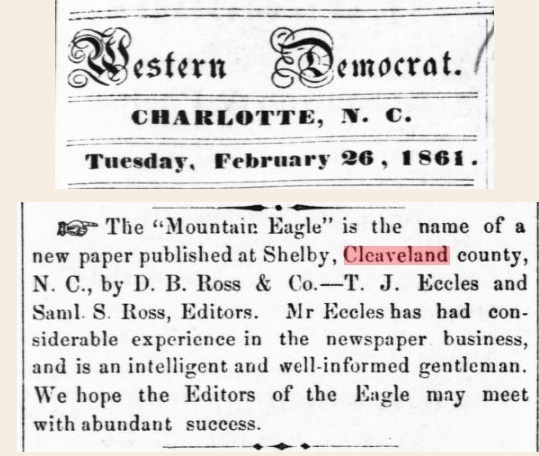
| 1861-1865 | Mountain Eagle | Thomas Eckles, Thomas S. Moss; Sam Ross; changed to the New Regime |
| 1865-186x | New Regime | Joe Babington |
| 1871-1876 | Cleaveland Banner | Plato Durham |
| 1876-18xx | Shelby Banner | W. C. Durham; sold to James L. Webb |
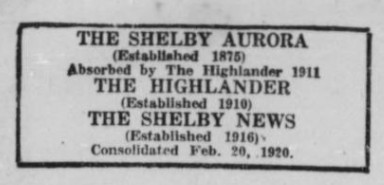
| 1875-1911 | Shelby Aurora | Joe Babington and W. H. Miller; sold to J. Y. Hamrick, J. H. Quinn, and Fred D. Hamrick. Acquired by The Highlander in 1911. |
| 1879-188x | Southern Methodist Herald | A. J. Craven |
| 1885-1889 | New Era | W. H. Osborne; sold to Clarence and George Frick |
| 189x-189x | Carolina Banner | |
| 1891-1894 | Shelby Review | Col. John C. Tipton; sold to Clyde R. Hoey who changed the name to the Cleveland Star |
| 1894-1936 | Cleveland Star | Clyde R. Hoey; Lee B. Weathers was editor/publisher 1911-1958; name changed to The Shelby Daily Star in 1936. |
| 1910-1920 | Highlander | Broadus H. DePriest; consolidated with the Shelby News in 1920. |
| 1916-1920 | Shelby Daily News | J. F. Babington and J. P. Wiggins |
| 1920-1923 | The Highlander and Shelby News | Broadus H. DePriest |
| 1928-1929 | Cleveland Press | C. J. Mabry and Wilbur J. “Jack” Cash |
| 1936-1984 | Shelby Daily Star | Henry Lee Weathers, editor 1958-1983. The paper was sold to Clay Communications. |
| 1941-197x | Cleveland Times | Will Arey, Jr. and Rush Hamrick, Jr. |
| 1983-present | Shelby Shopper & Info | Boyce Hanna |
| 1984-1988 | The Shelby Star | Previously named the Shelby Daily Star, The Shelby Star became The Star in 1988, its current name. |
| 1988-present | The Star | Currently owned by USA Today; its editor is Diane Turbyfill. It became digital-only April 1, 2023. |
| 2021-present | Cleveland County News | Creator/Editor, Brandon Bridges; digital only at https://www.facebook.com/cleveconews |
| 2025-present | The Shelby Independent | Creator/Editor, Chuck Thompson; digital only at https://www.shelbyindependent.com/ |


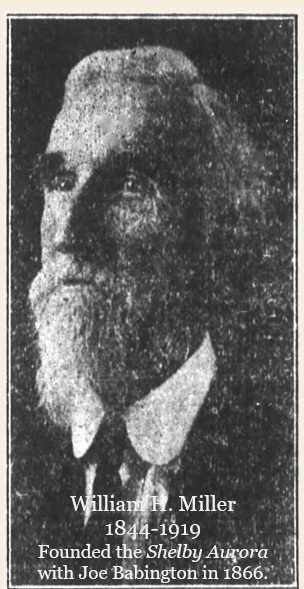
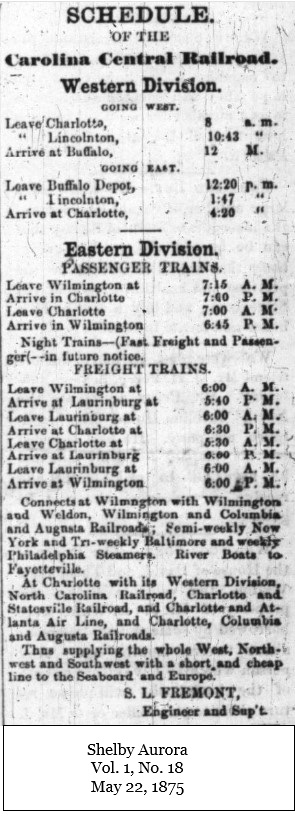
William H. Miller established the Shelby Aurora in 1875. It was in publication until 1911. It was acquired by The Highlander, which had been established during the previous year in 1910.





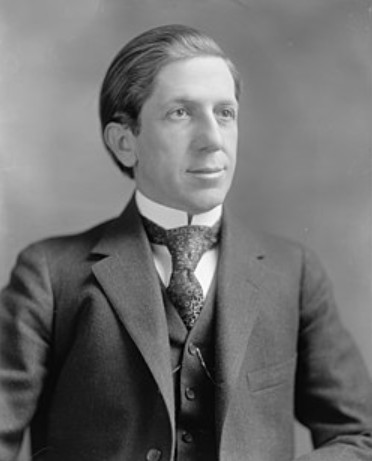
Clyde R. Hoey bought the Shelby Review newspaper in 1894. He was just 16 years old, but had already been working at the paper as a “printer’s devil.” He changed the paper’s name to the Cleveland Star. Over the years the paper would change names three more times– The Shelby Daily Star (1936-1984), The Shelby Star, (1984-1988), and The Star (1988-present.)
Born in Lawndale, Lee Beam Weathers owned and edited the Cleveland Star/ Shelby Daily Star from 1911 until his death in 1958. In 1956, he wrote the first book on Cleveland County history, The Living Past of Cleveland County: A History.
Henry Lee Weathers, son of Lee, joined the staff of the Shelby Daily Star in 1935. Upon the death of his father in 1958, he took over as publisher and remained until 1983.
Henry Lee Weathers, Jr. took over the reins at the Shelby Daily Star in 1983. That same year the paper was sold to Clay Communications.



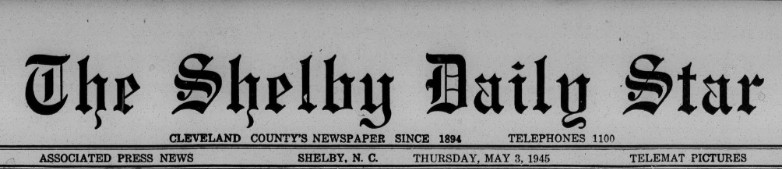

The Cleveland Star/Shelby Star has been fortunate to have employed so many long running, talented columnists in its history.
- Mamie Jones wrote a column entitled, “Cleveland County Early Days” during the 1940s and 1950s. Gardner-Webb University holds a collection of her columns.
- Erma Johnston Drum was a long-time columnist for the Shelby Daily Star, having taken over for husband Renn Drum after his death in 1935. She was also great friends with Jack Cash, who wrote the prize-winning book, The Mind of the South. Erma edited and typed the manuscript for his book. Jackie Bridges wrote an article about Erma Drum for The Star in 2014; it is here.
- Willard Wyan Washburn wrote a column about various people and places in Cleveland County’s history.
- Grace Rutledge Hamrick wrote weekly for a number of years about Cleveland County’s people, places, and events.
- Joe DePriest, Jr. wrote about the people of Shelby and Cleveland County for over 25 years.

1883-1967

1901-1999

1912-2006

1921-2000

1944-2025

Boiling Springs Newspapers

The Reformer was published in Boiling Springs in the late 1890’s and early part of the 20th century. Seaton Green was the editor. He wrote the news and editorials at home, then took the copy to Shelby for printing, after which he brought it back to Boiling Springs for mailing to his subscribers.
| dates published | title | first publisher/editor |
| 189x-190x | The Reformer | Seaton Green |
| 18xx-18xx | Rural Reformer | J. Y. Hamrick |
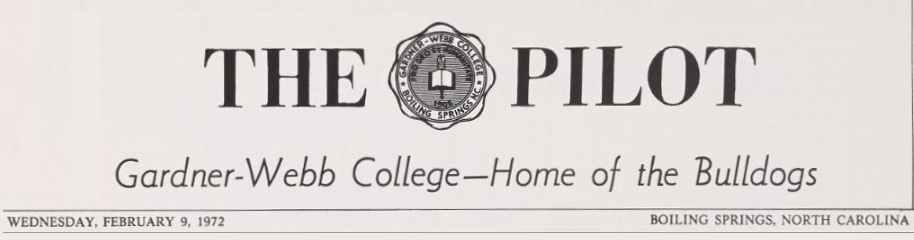
| 1942-2010 | The Pilot | Gardner-Webb College/University |
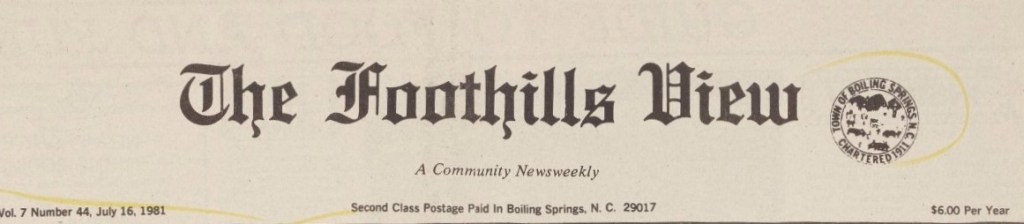
| 1981-1985 | Foothills View: A Community Newsletter |
Lawndale Newspaper
| dates published | title | first publisher/editor |
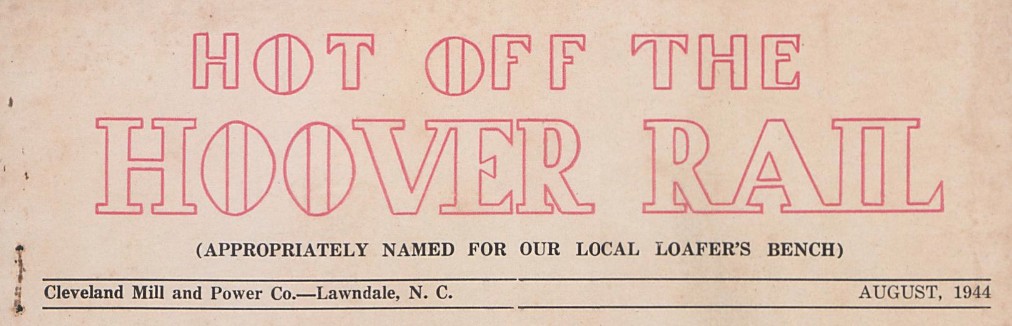
| 1942-1945 | Hot Off the Hoover Rail | Cleveland Mill and Power Company |
Kings Mountain Newspapers
| dates published | title | first publisher/editor |
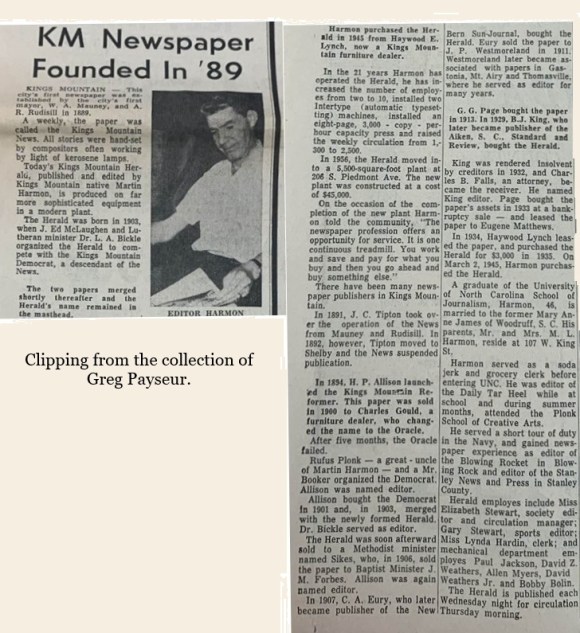
| 1889-1892 | Kings Mountain News | William A. Mauney and A. R. Rudisill; sold to J. C. Tipton |
| 1894-1896 | Progressive Reformer | |
| 1894-1900 | Kings Mountain Reformer | H. P. Allison; sold to Charles Gould, changed to the Oracle |
| 1900-1900 | Oracle | Charles Gould |
| 1xxx-1903 | Kings Mountain Democrat | Rufus Plonk and ______ Booker; merged with the KM Herald |
| 1903-present | Kings Mountain Herald | J. Ed McLaughen and L. A. Bickie |
| 1971-1974 | Kings Mountain Mirror | Lem R. Lynch, Rodney Dodson |



Waco Newspaper
| dates published | title | first publisher/editor |
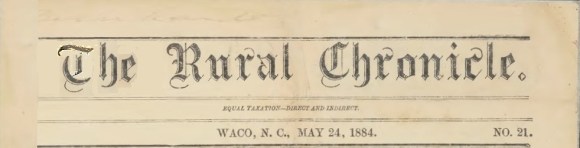
| 1884 | Rural Chronicle | H. S. Blair; moved to Lenoir, NC |
Articles and Special Editions on Cleveland County History
Over the years Cleveland County newspapers–as well as papers across the state–have published special editions recounting the county’s history and progress. Below is a listing of these as well as a link where available.
| newspaper issue | date published |
| Charlotte Chronicle | Aug. 9, 1891 |
| Cleveland Star (Maj. Harvey Cabaniss article) | July 1, 1903 |
| Cleveland Star (Martha Cabaniss Roberts article) | May 20, 1924 |
| Cleveland Star (W. E. White article) | May 14, 1934 |
| Cleveland Star | September 27, 1935 |
| The Star: “Cleveland County – A Sesquicentennial Celebration” | May 30, 1991 |
| The Kings Mountain Herald | February 20, 1992 |
| The Star: Our First Century | May 15, 1994 |
A Sampling of Local News and Opinion
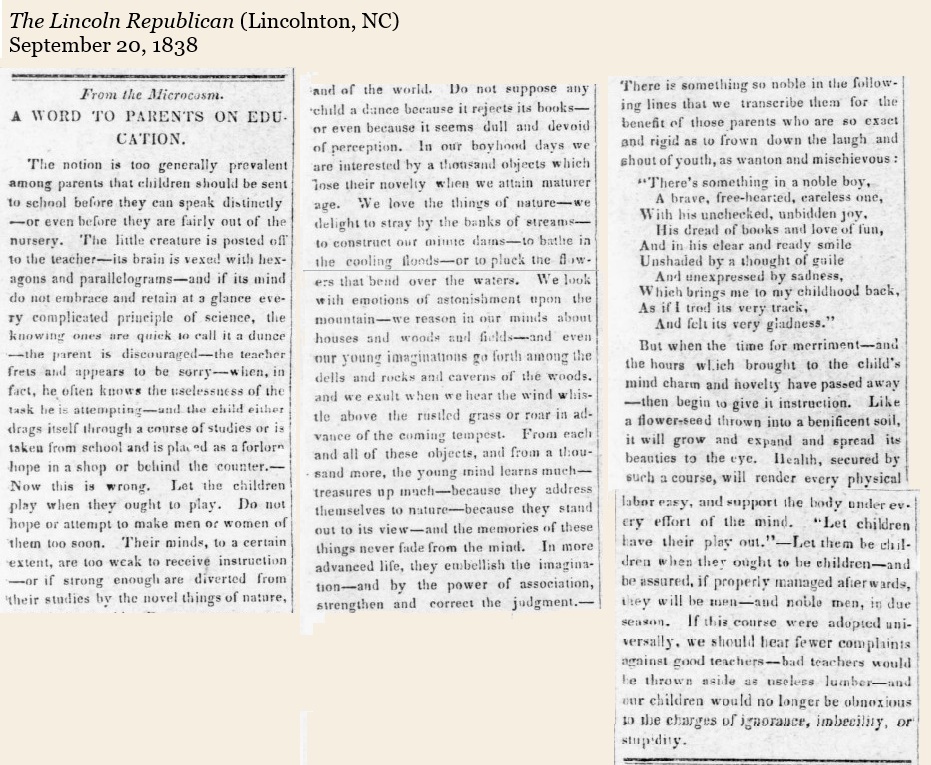
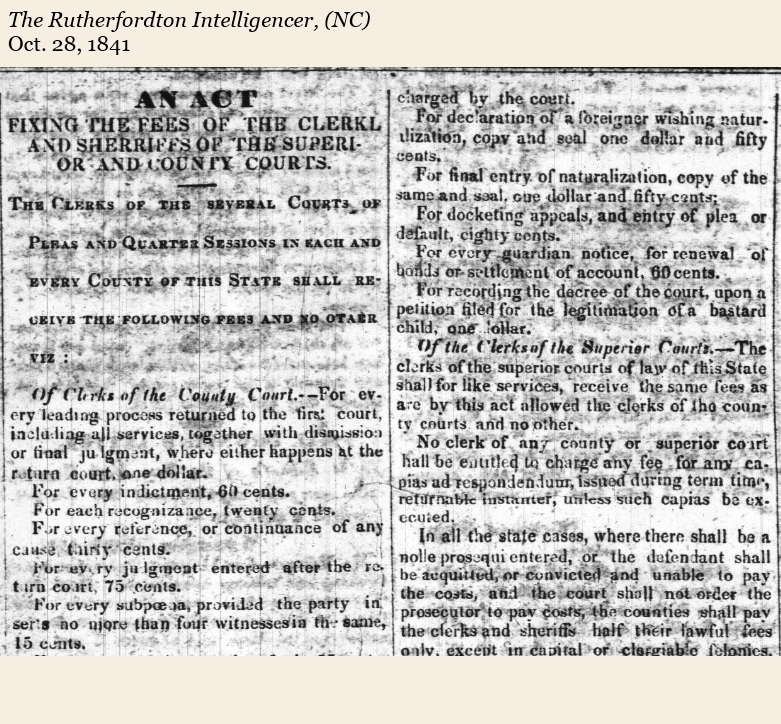
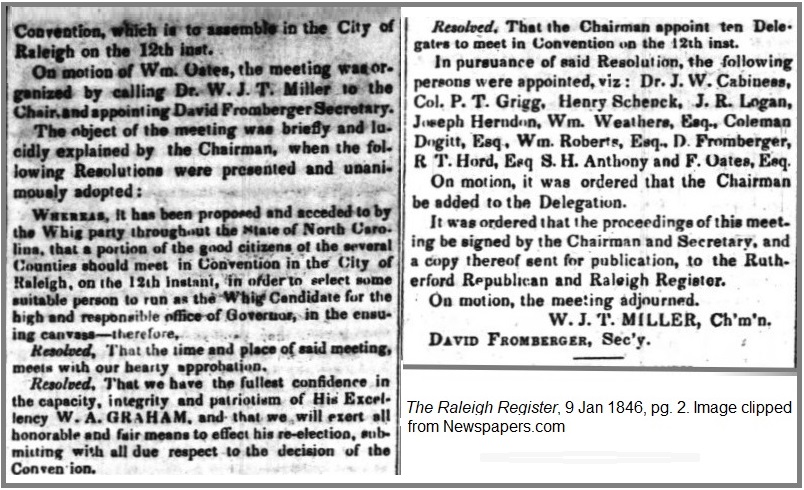
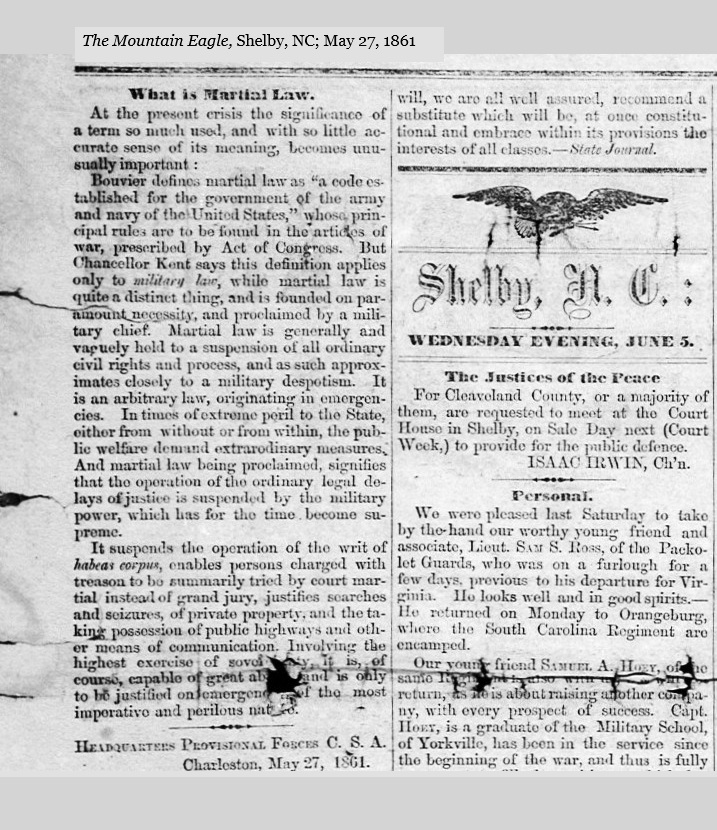
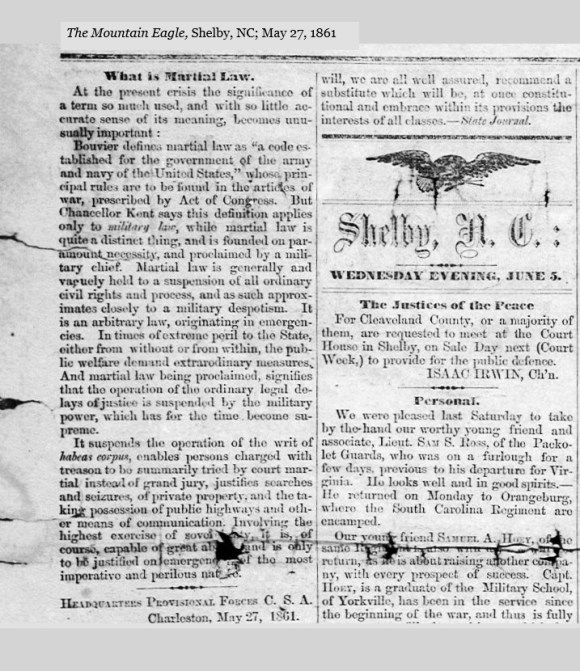
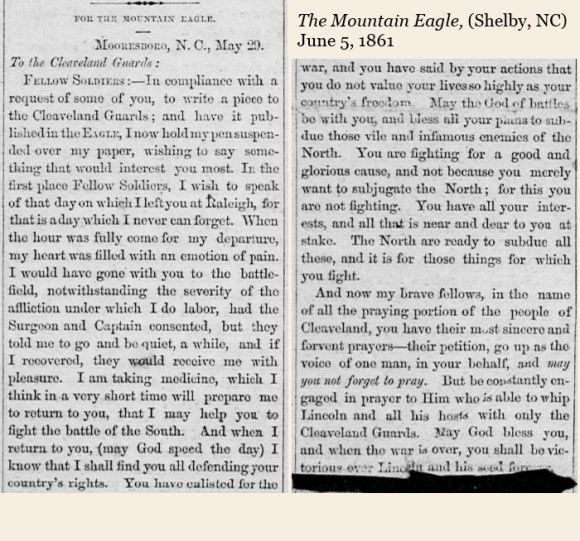
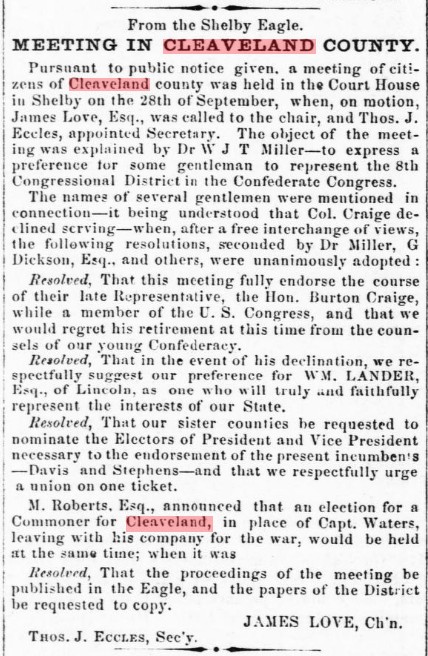
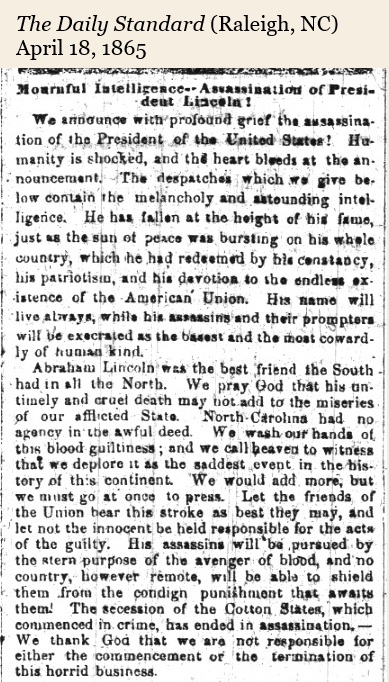
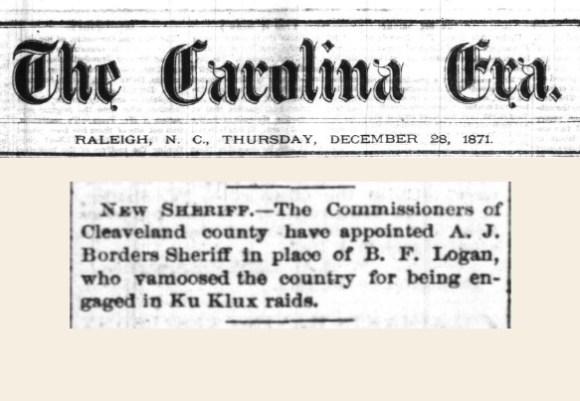
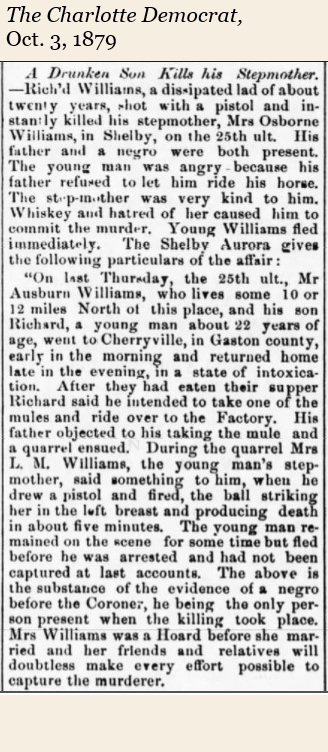
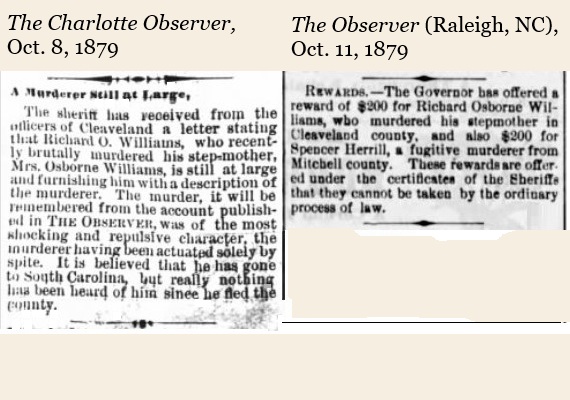
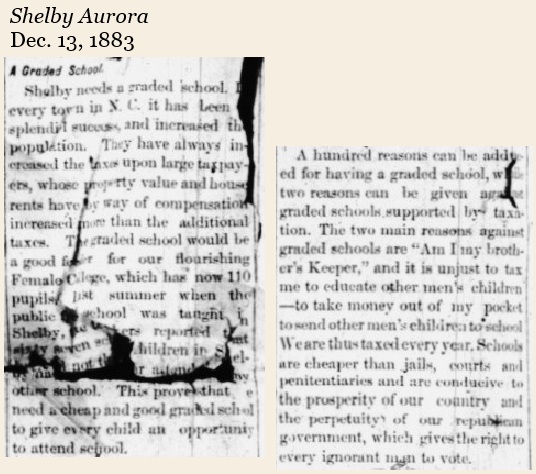
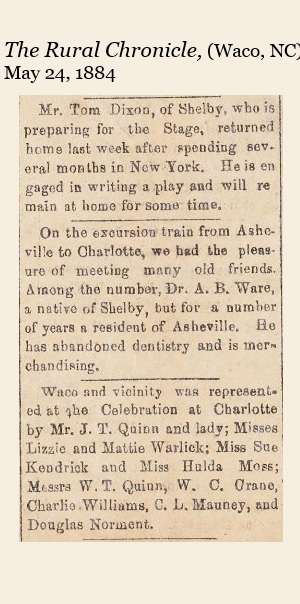
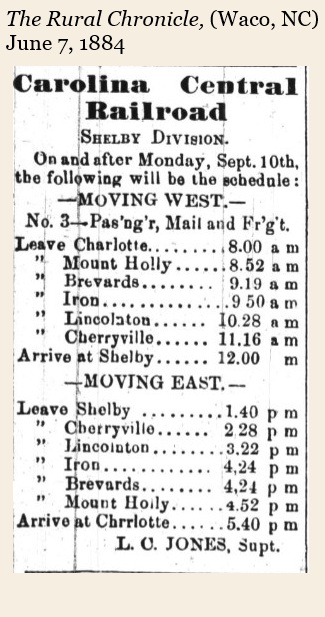
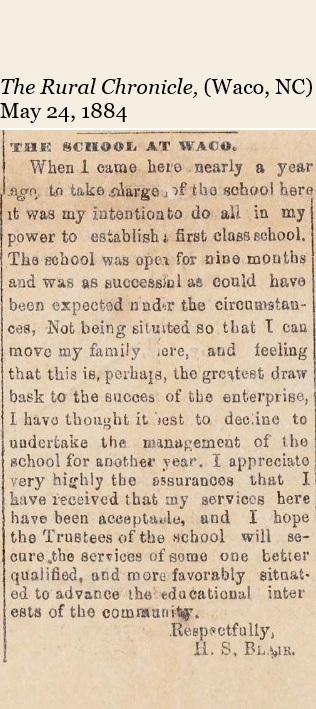
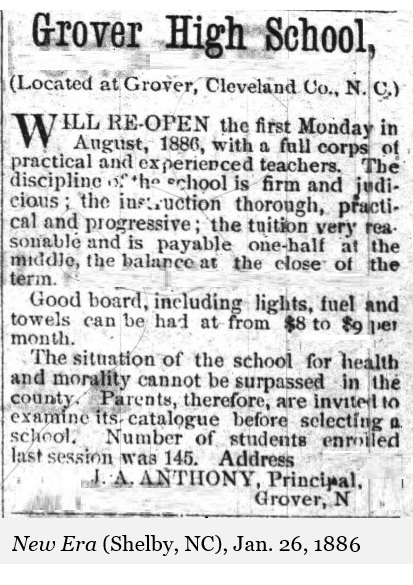
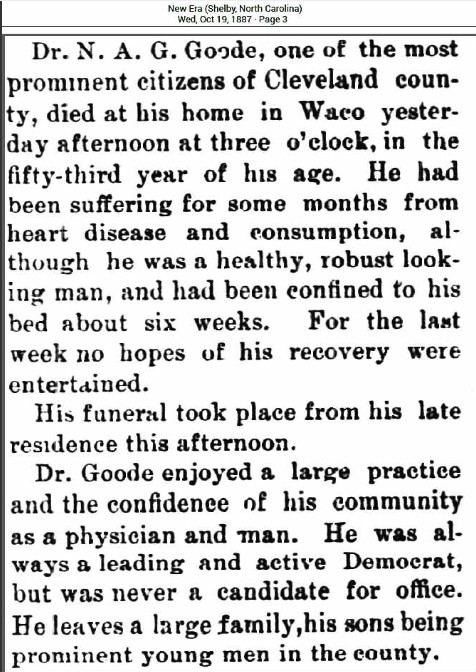
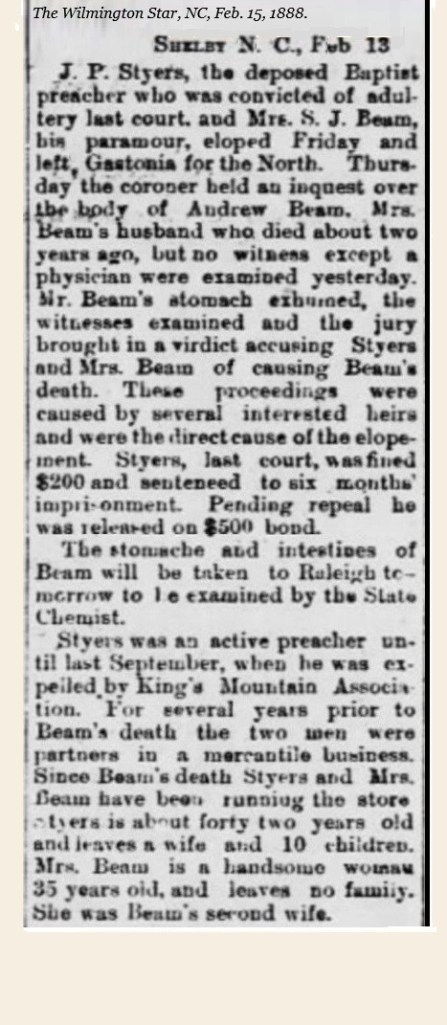
Some of these articles have been automatically clipped from the online images, then organized into two or three columns for optimal display on your computer screen. As a result, they may not look exactly as they did on the original page. The articles can be seen in their original form by visiting the cited online source.
Antebellum Years, 1836-1861
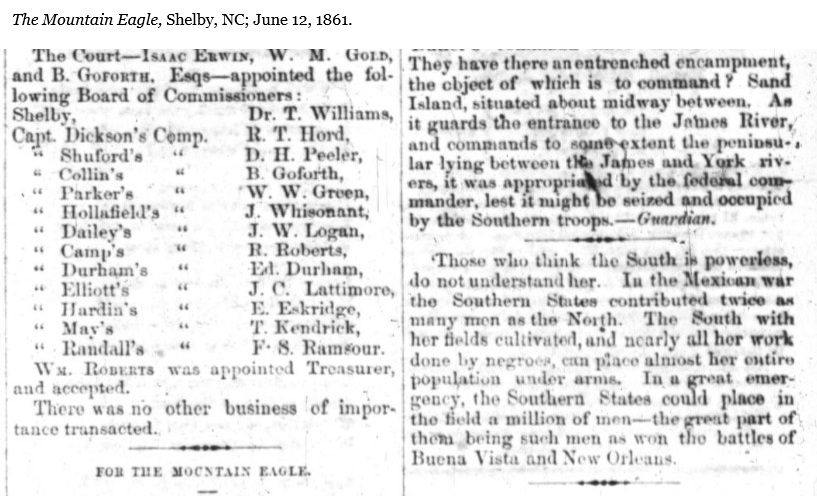
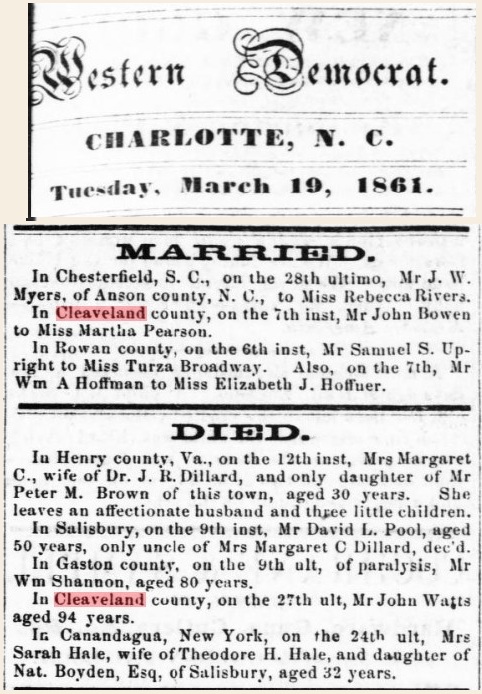
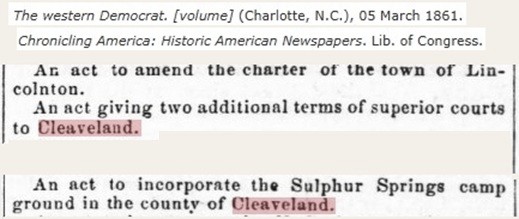
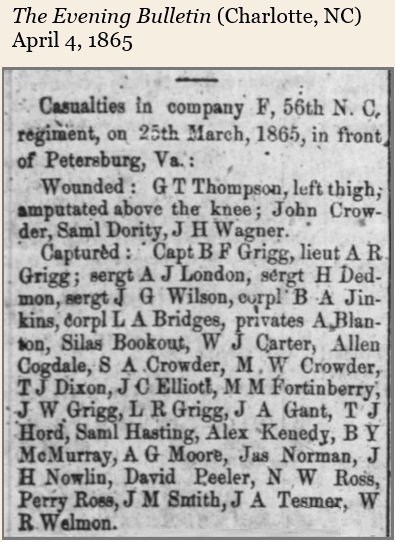
The Civil War and Reconstruction, 1861-1875


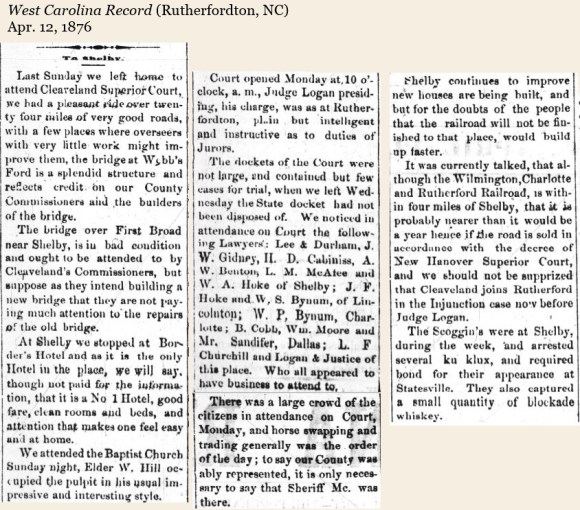
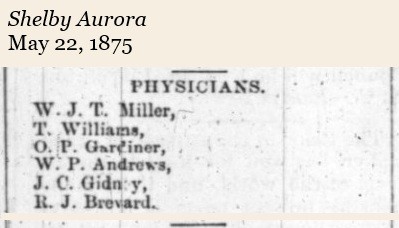
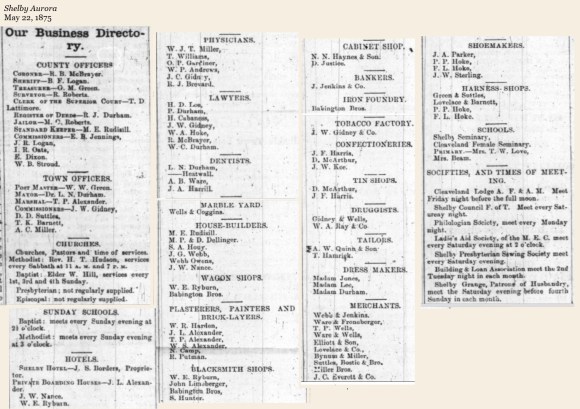
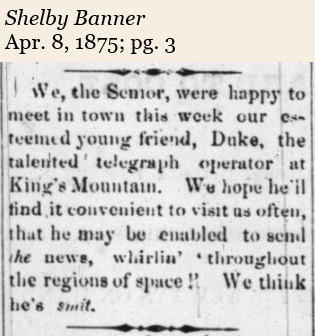
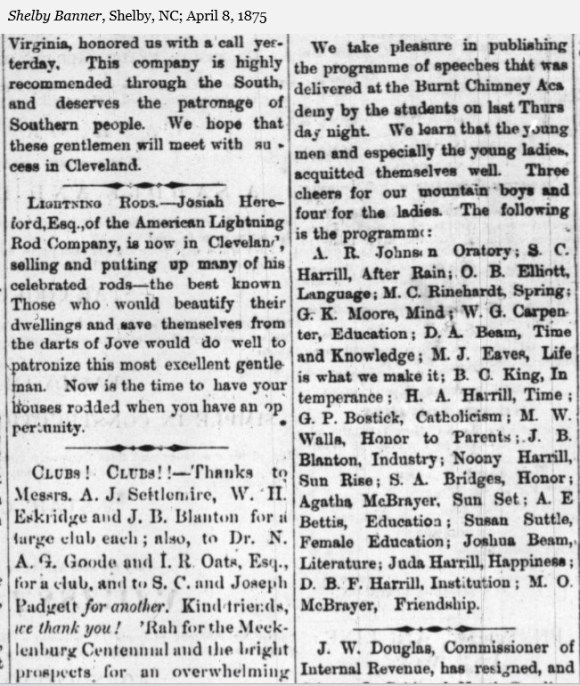
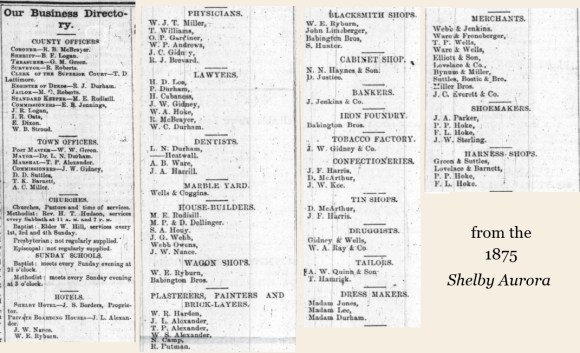
The Rise of Industry, 1876-1890
The Progressive Era, 1890-1929
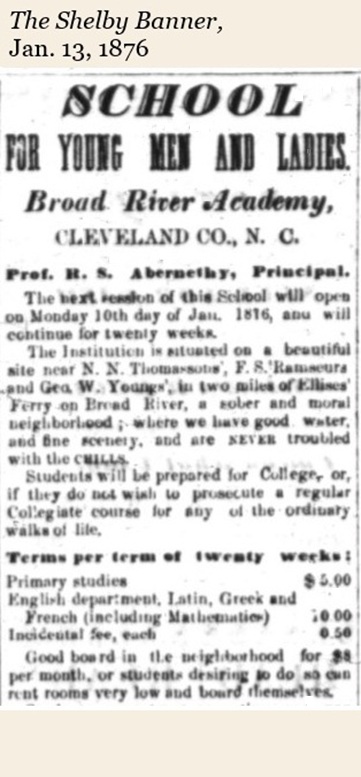
1876 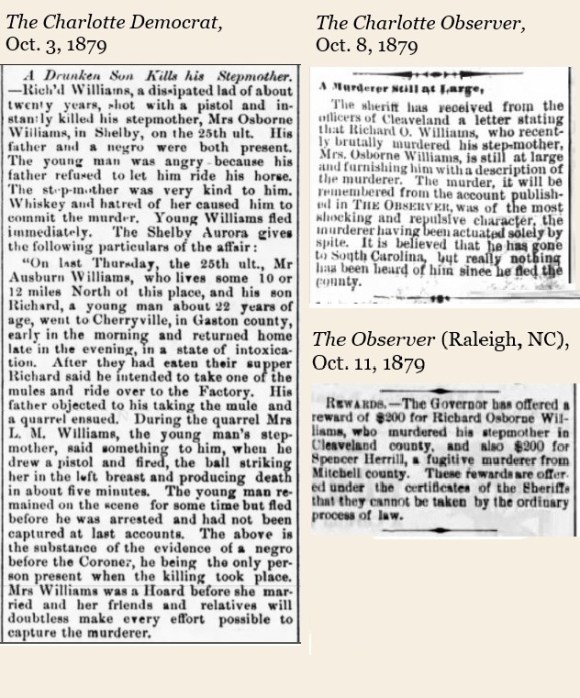
1879 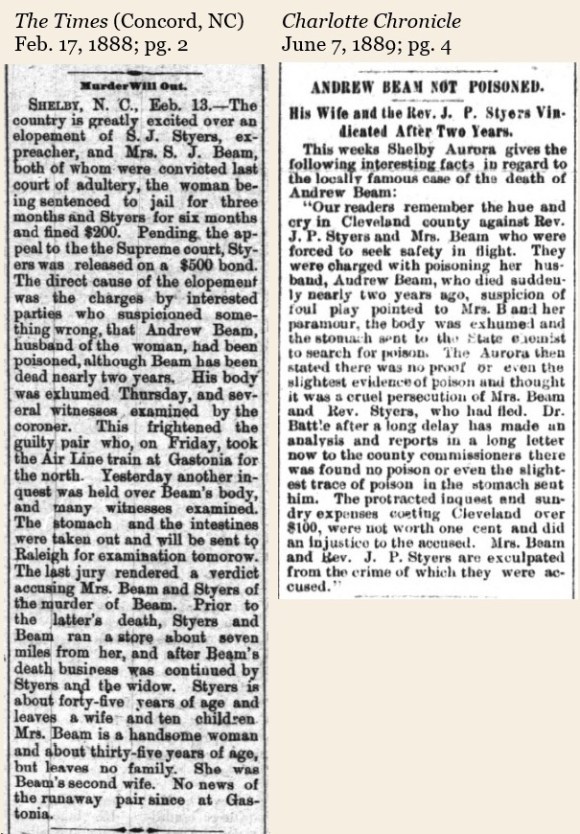
1888 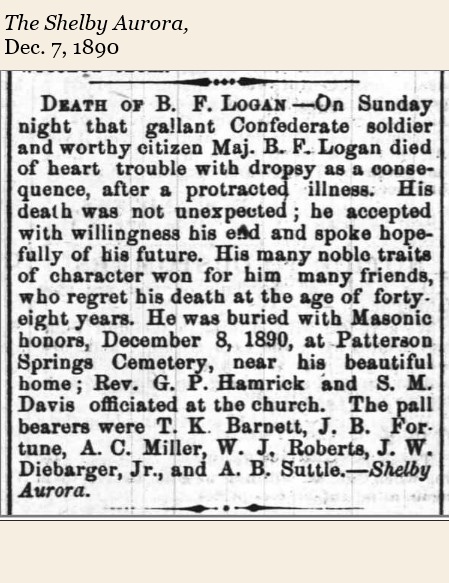
1890 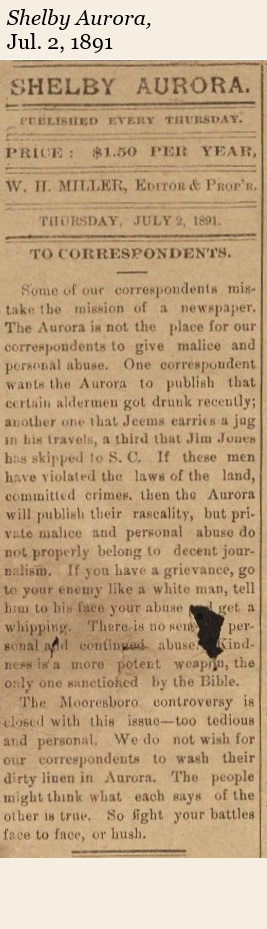
1891 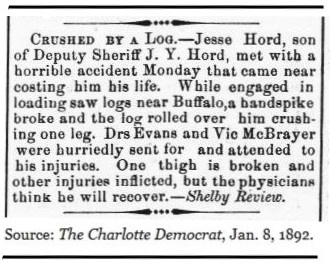
1892 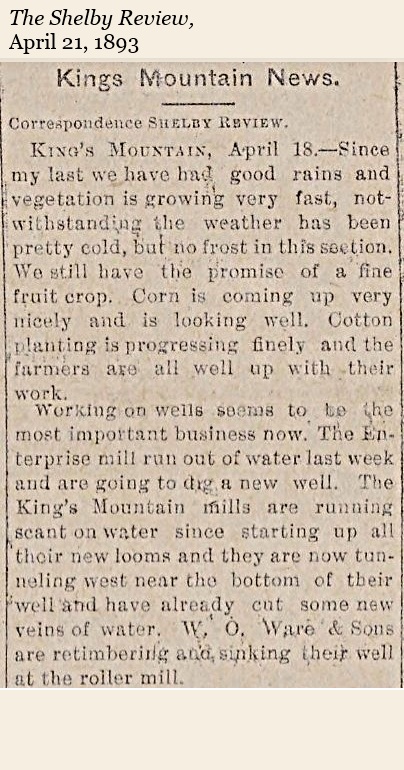
1893 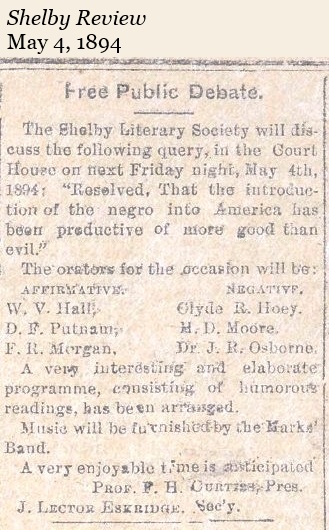
1894 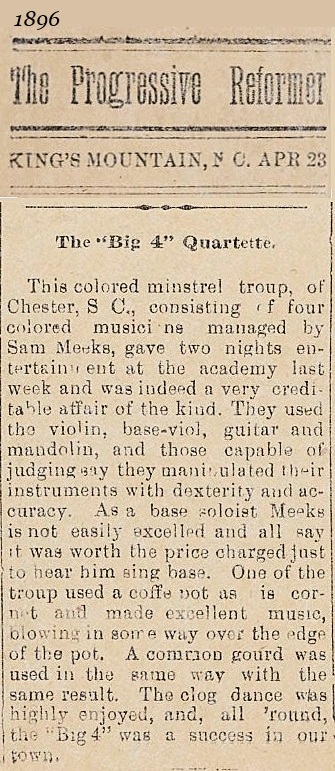
1896 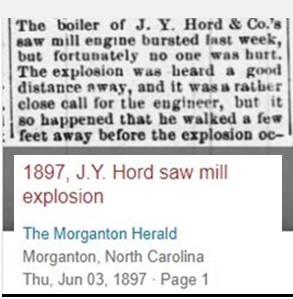
1897 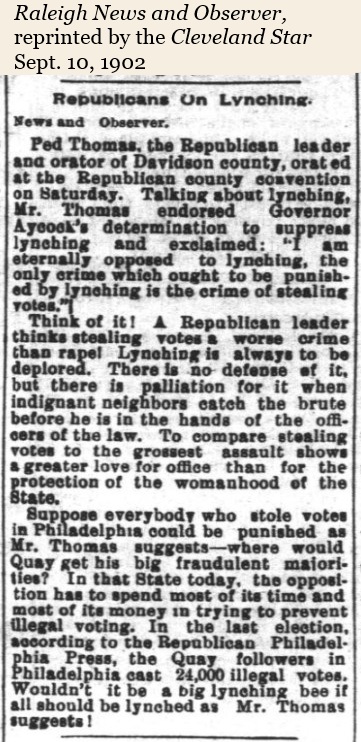
1902 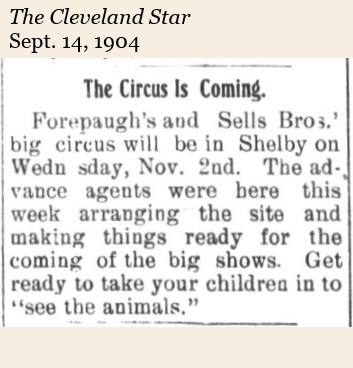
1904 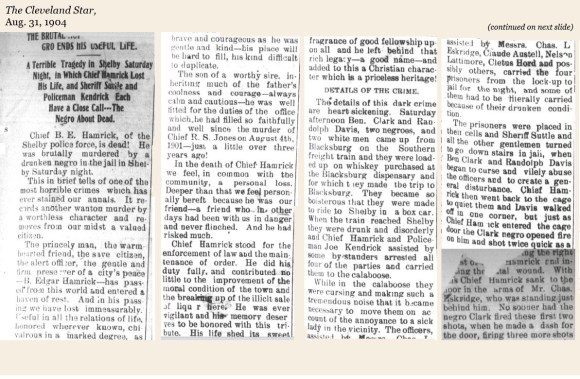
1904, slide 1 of 3 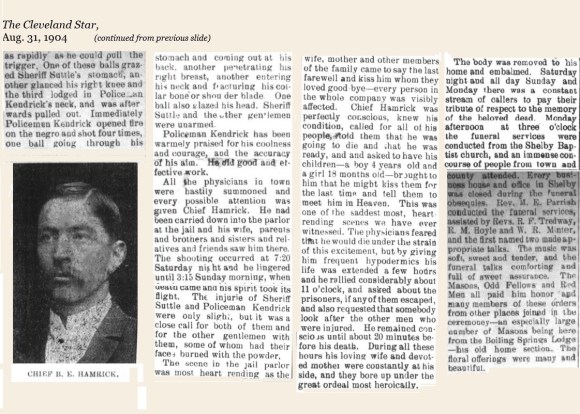
1904, slide 2 of 3 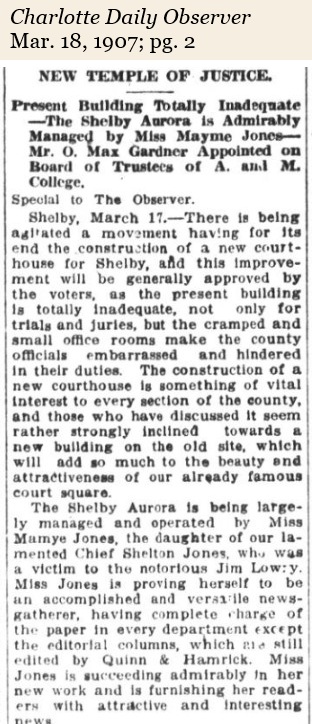
1907 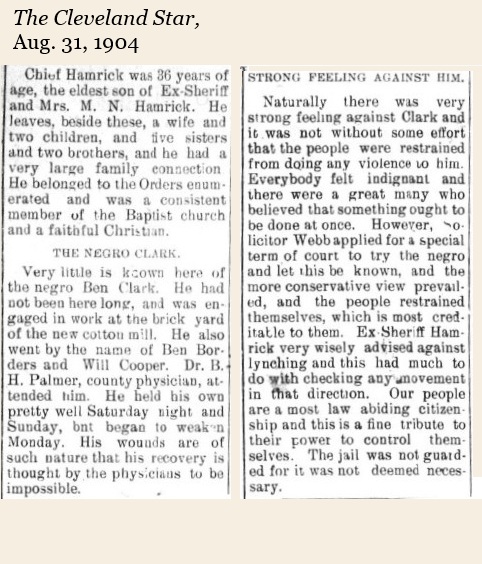
1904, slide 3 of 3 
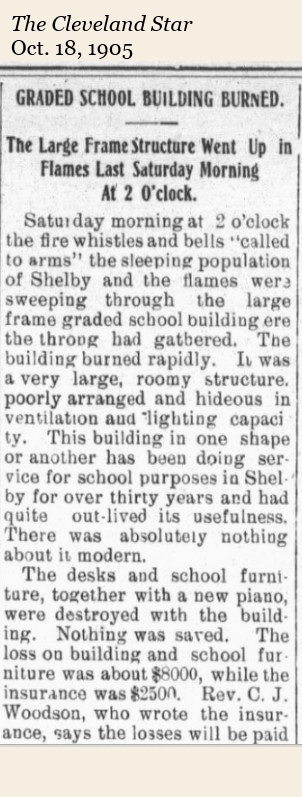
1905 
1906 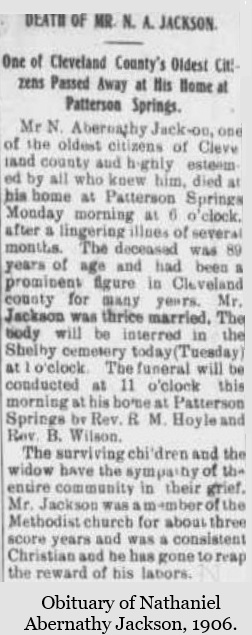
1906. Nathaniel Abernathy had built the first mill in Cleveland County–the Double Shoals Mill in 1871. 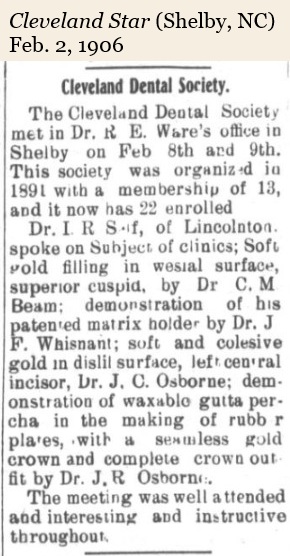
1906 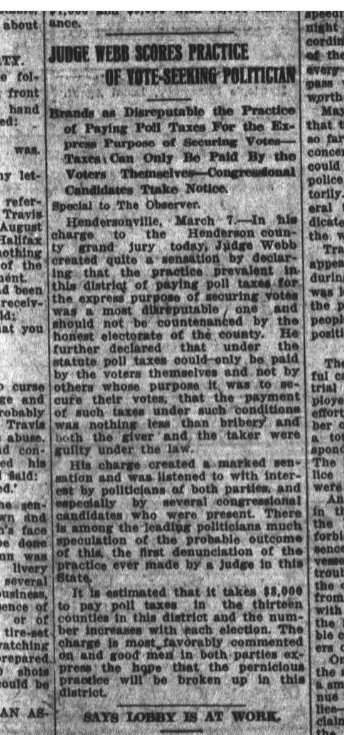
1910 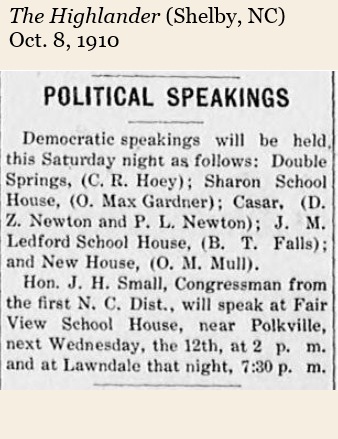
1910 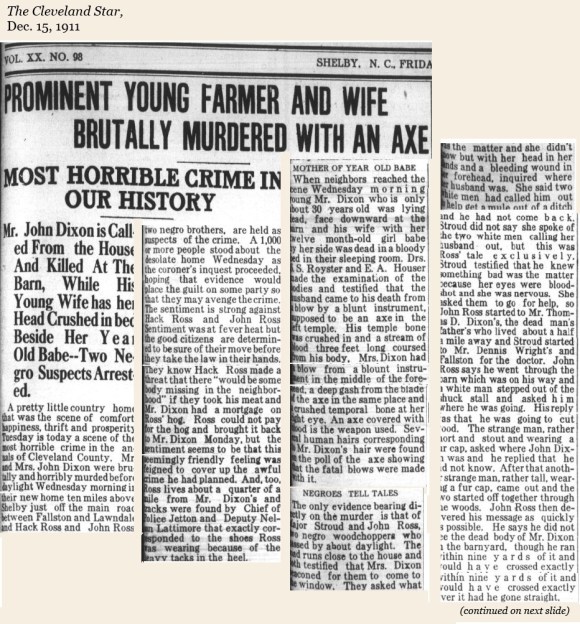
1911 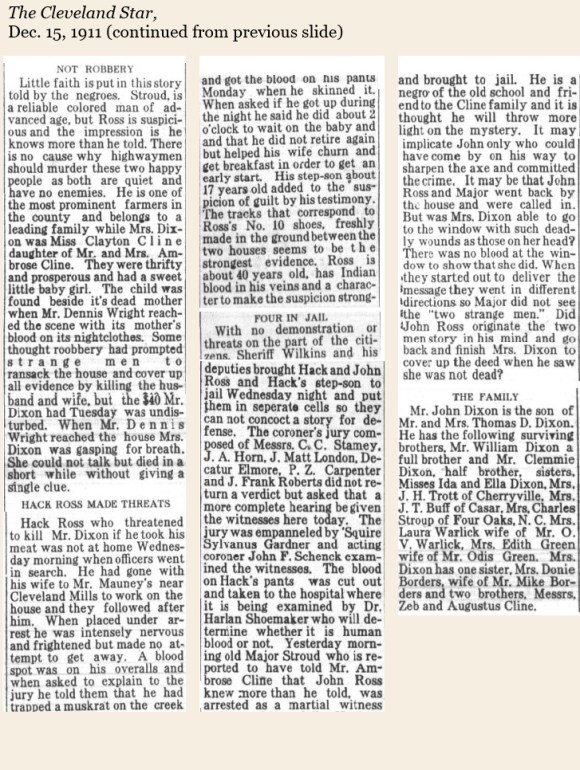
1911 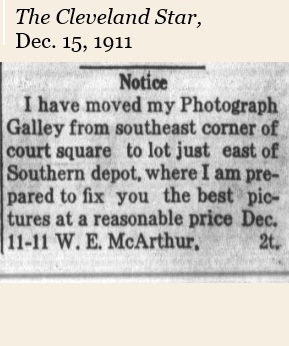
1911 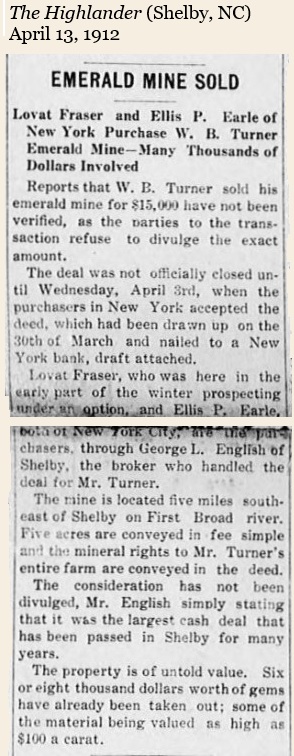
1912 
1912 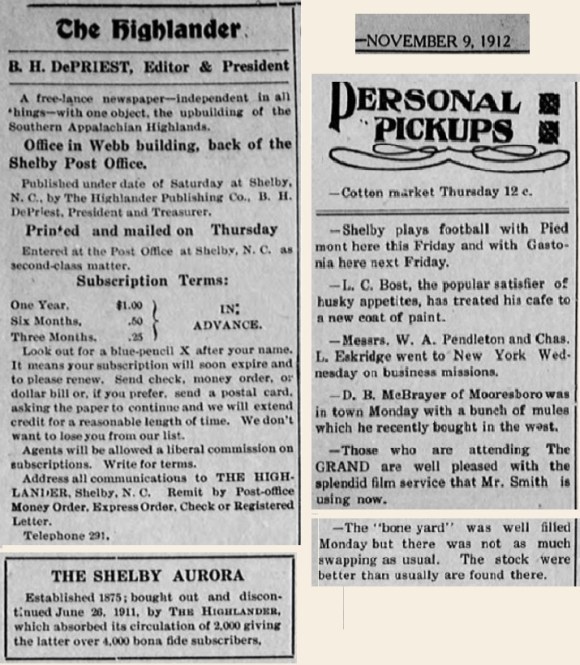
1912 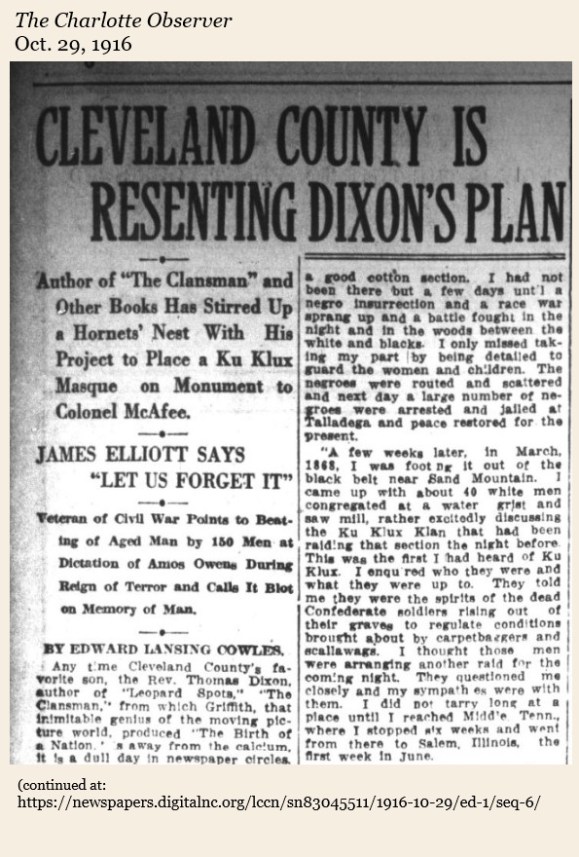
1916 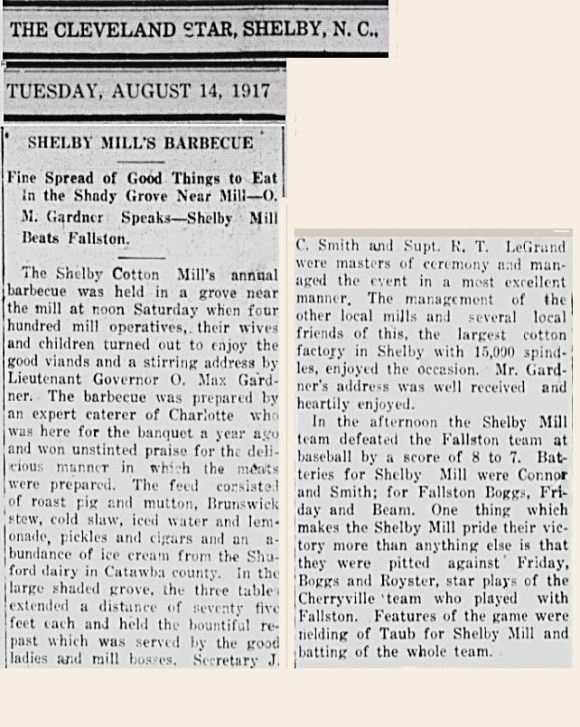
1917 
1918 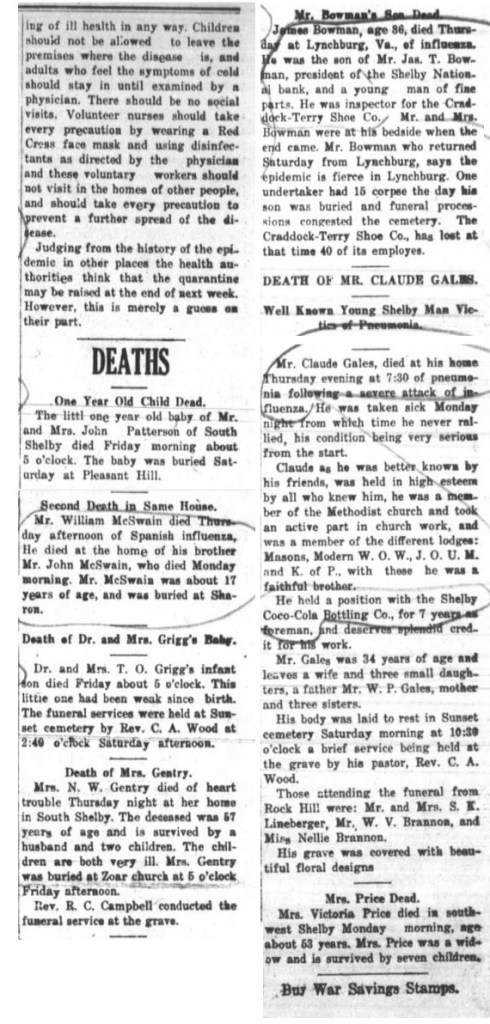
1918 
1919 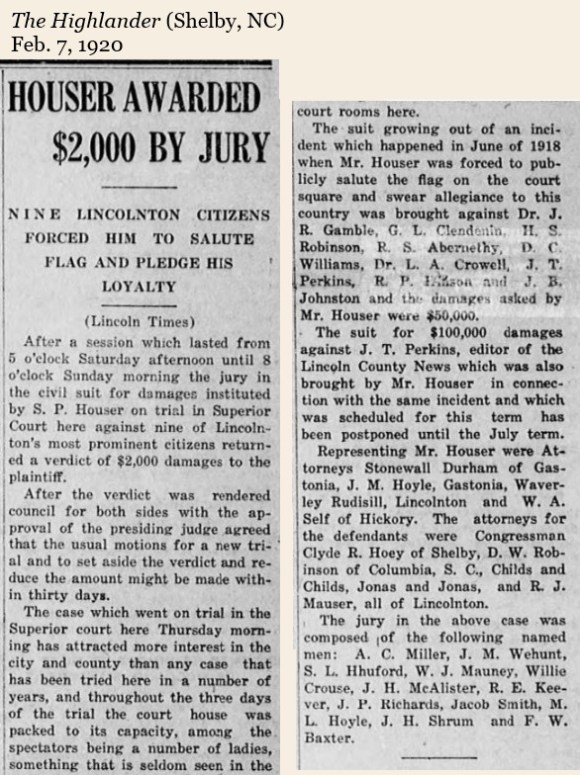
1920 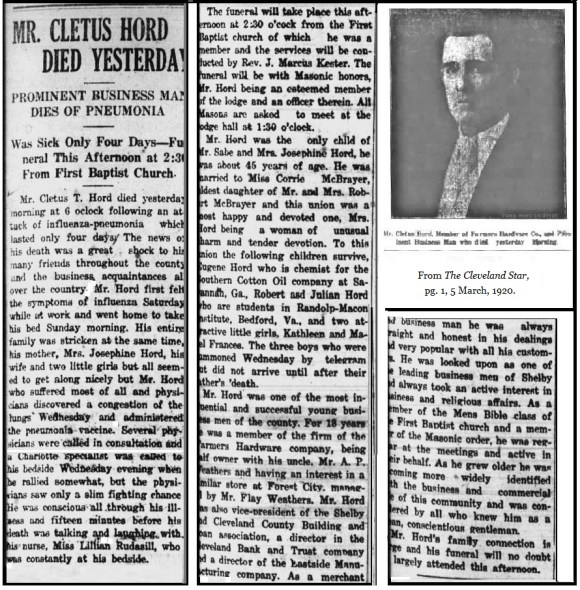
1920 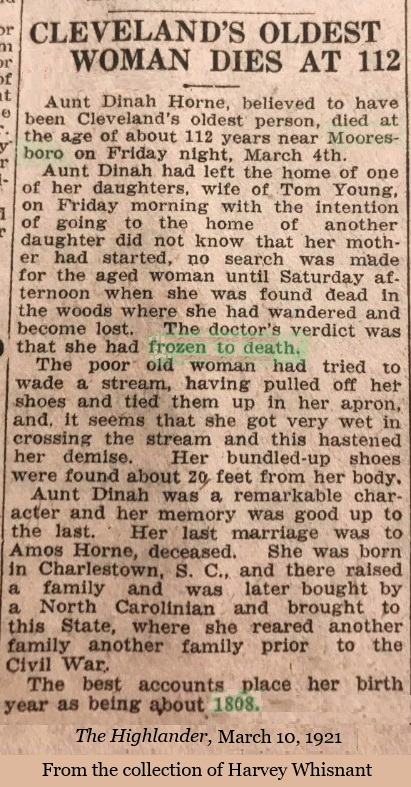
1921 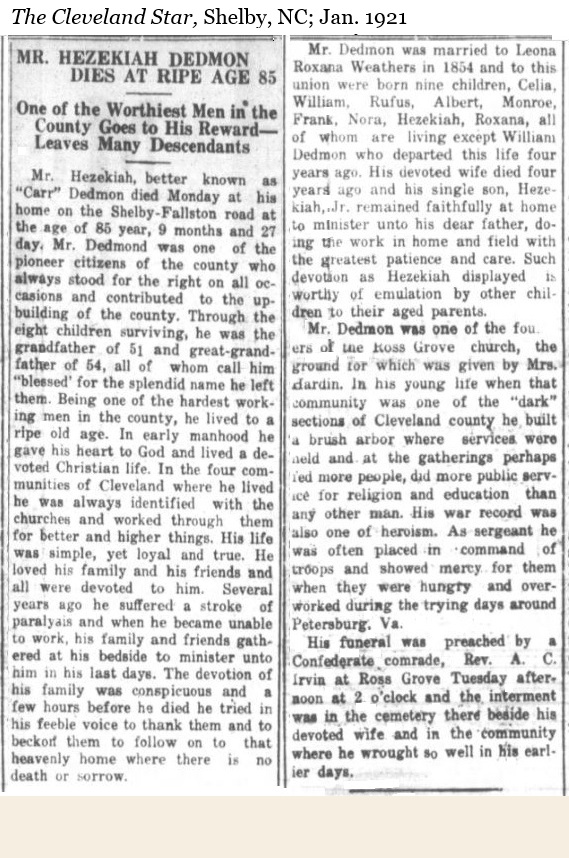
1921 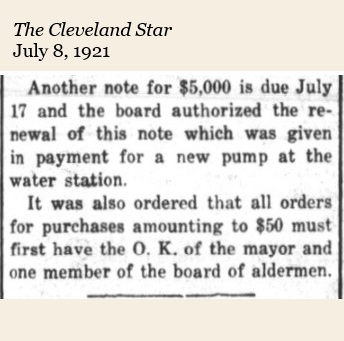
1921 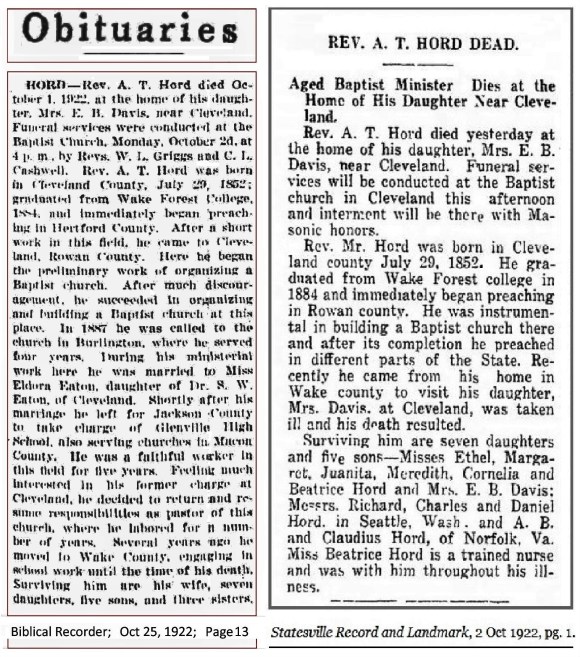
1922 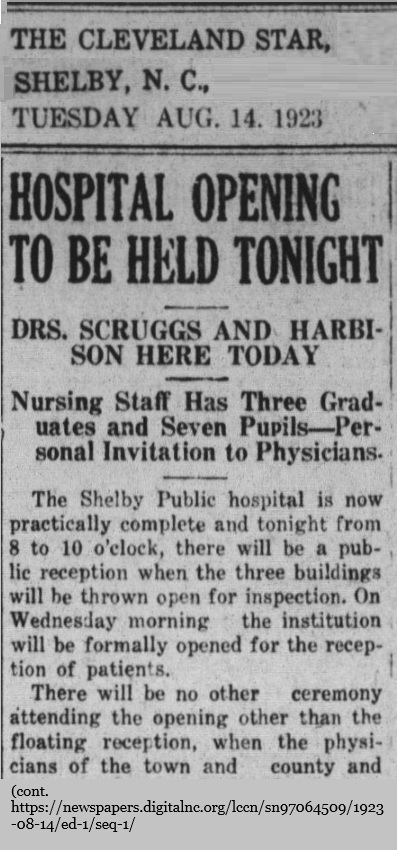
1923 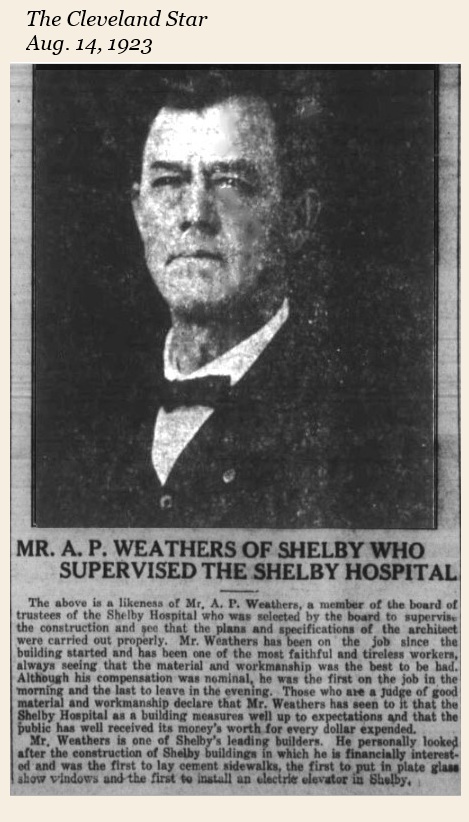
1923 
1916 – the slogan goes back a long way. 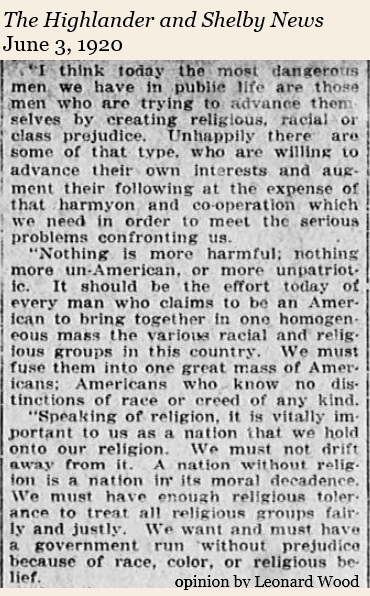
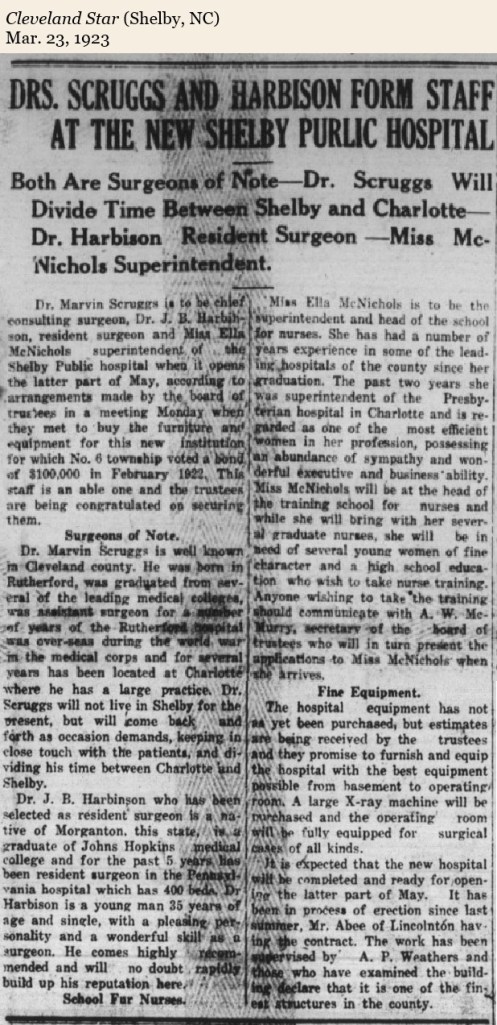
1923 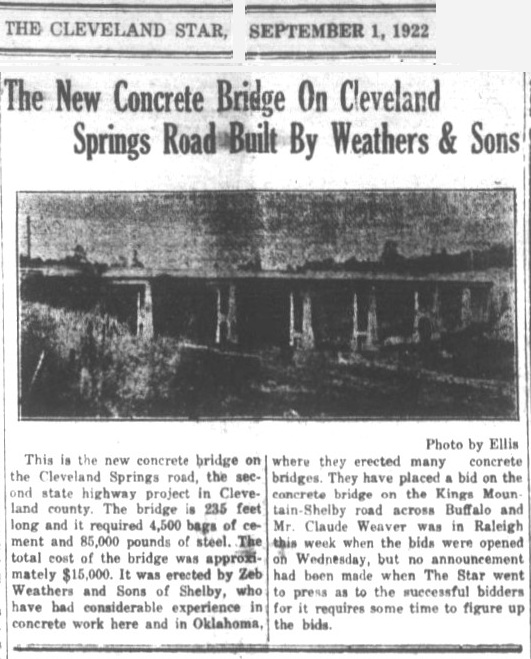
1922 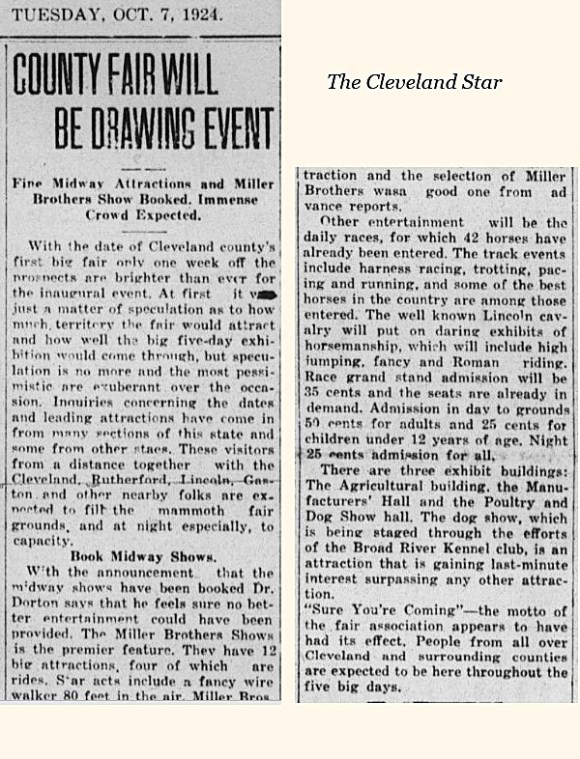
1924 – the 1st CC Fair 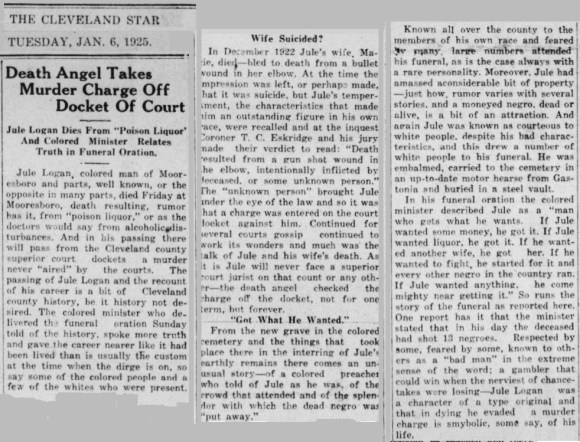
1925 
1927 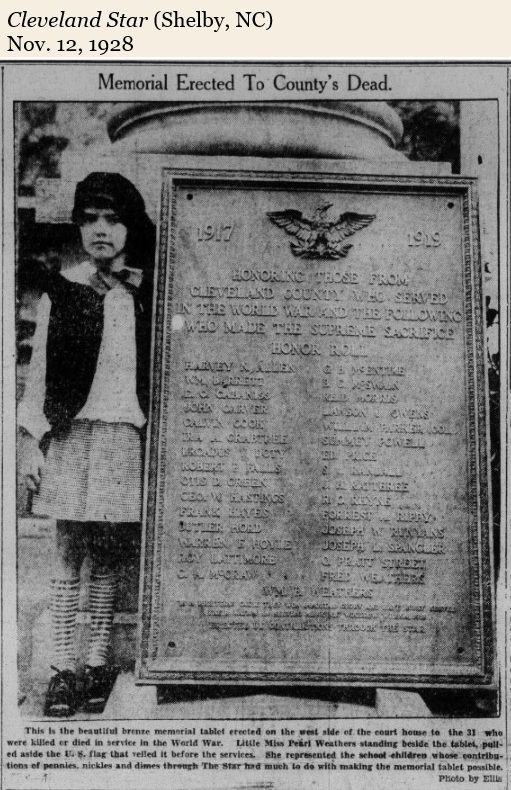
1928 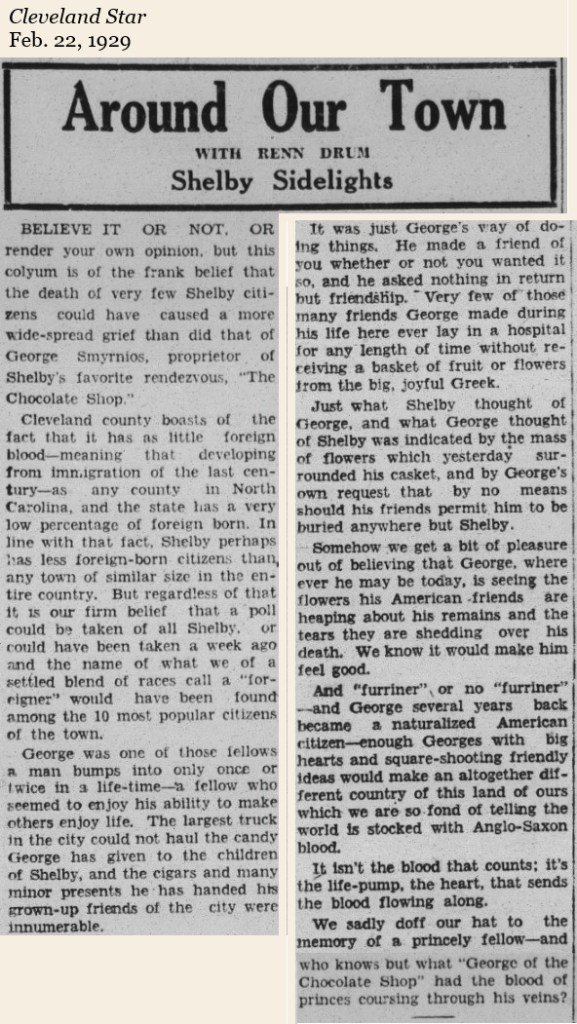
1929 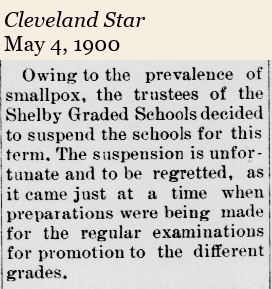
The Great Depression and World War II, 1929-1945
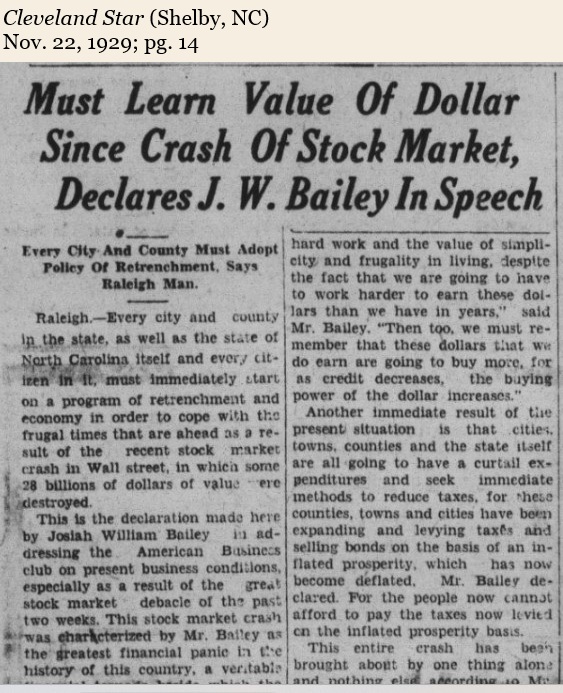
1929 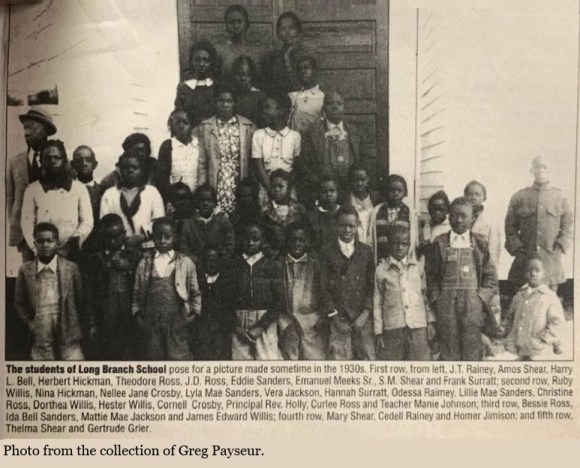
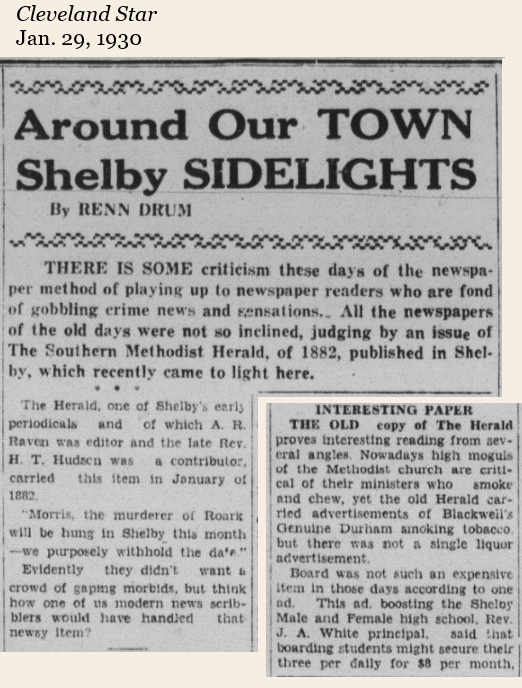
1930 
Clipping from the collection of Greg Payseur. 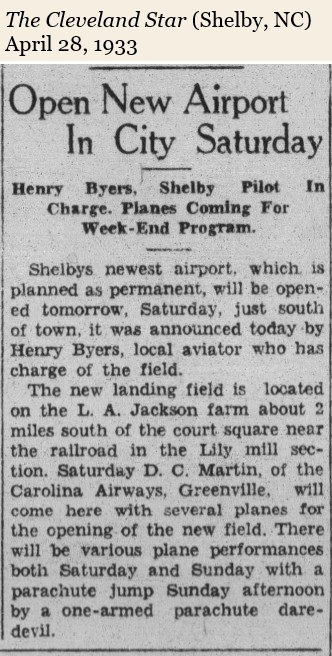
1933 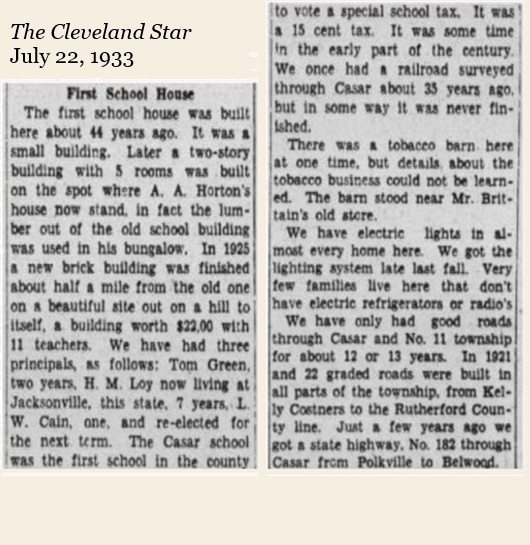
1933 article about the history of Casar School 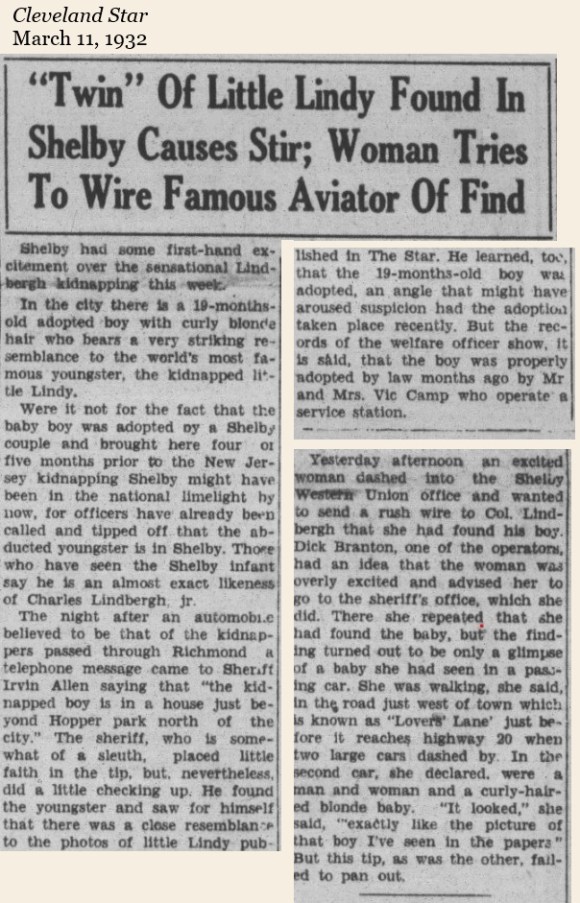
1932 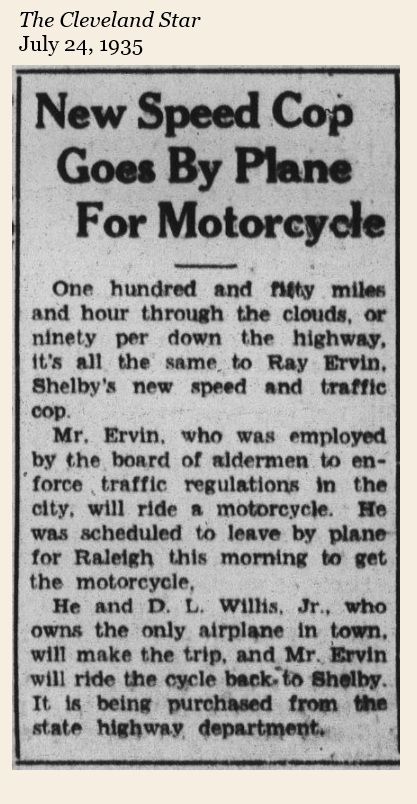
1935 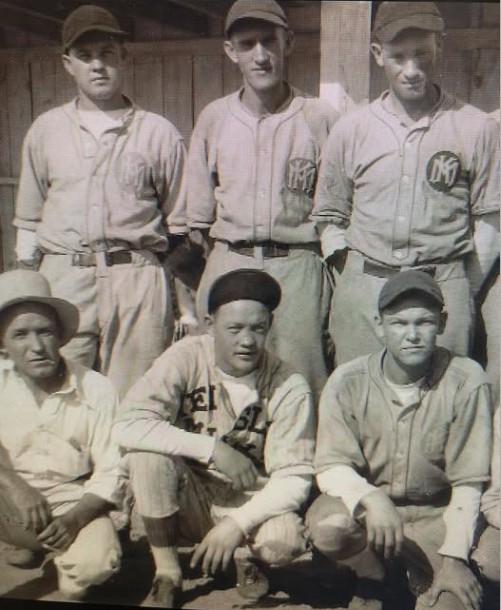
Minette Mills Baseball Team; 1930s. From the collection of Greg Payseur. 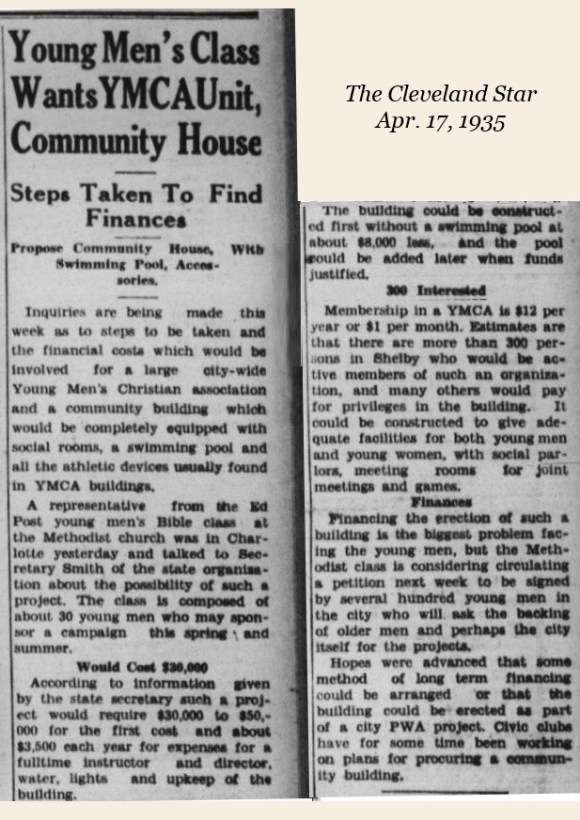
1935 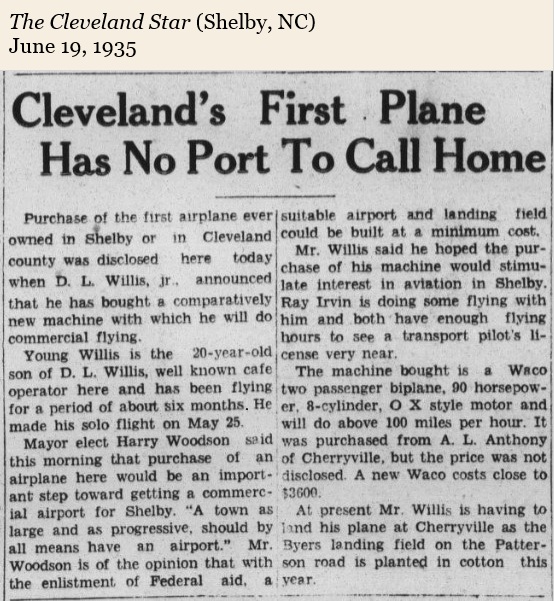
1935 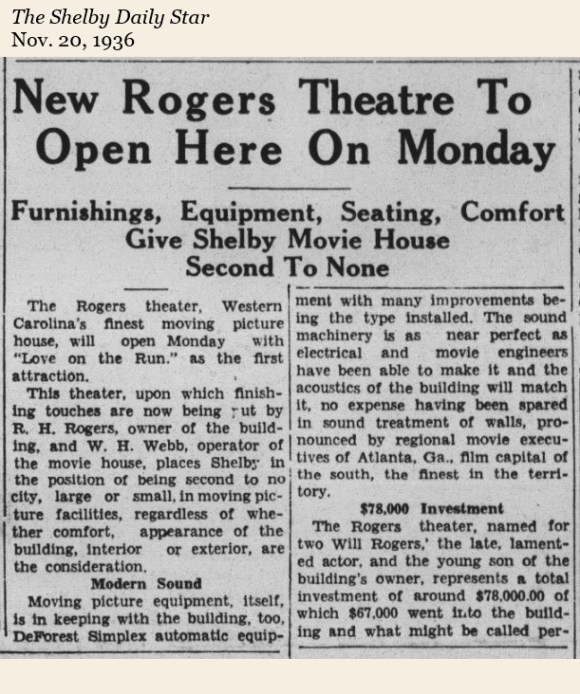
1936 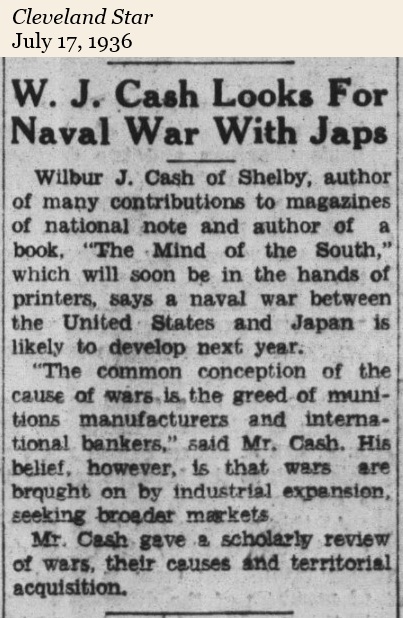
1936 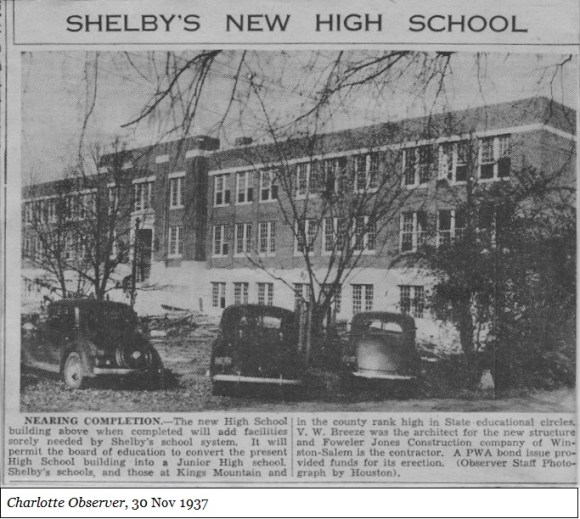
Shelby High School, 1937. 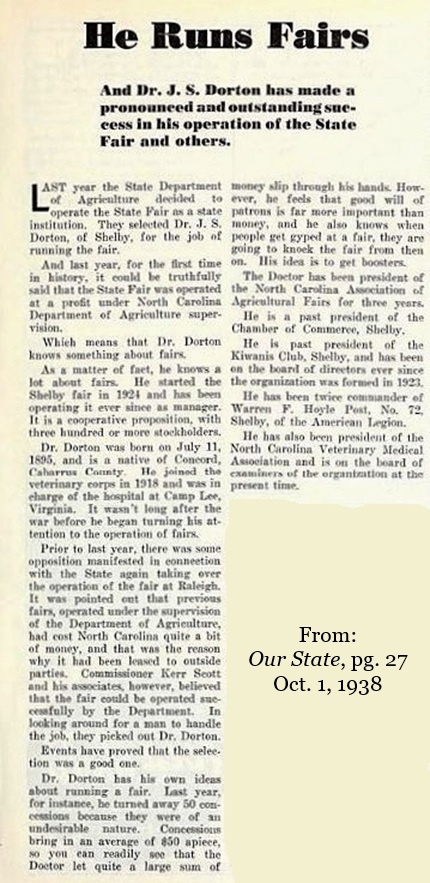
1938 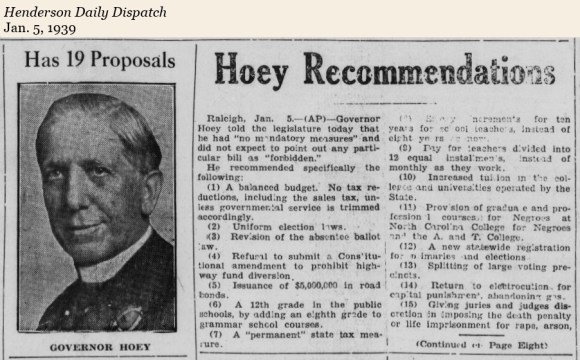

1945 – Train carrying FDR’s body travels through Grover and Kings Mountain. 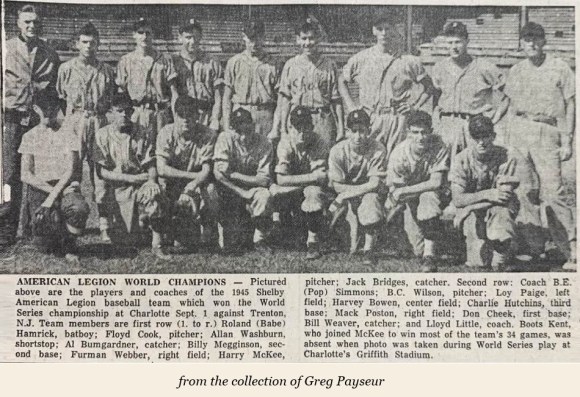
1945 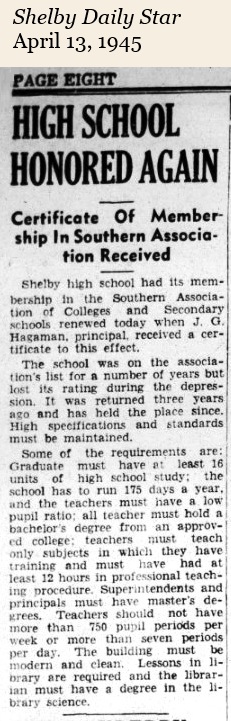
1945 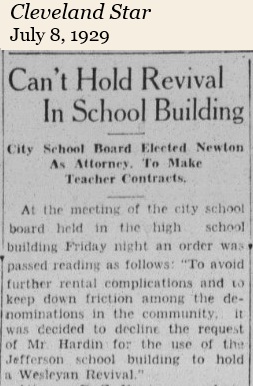
Post-War, Civil Rights, and Cold War Era, 1945-1991
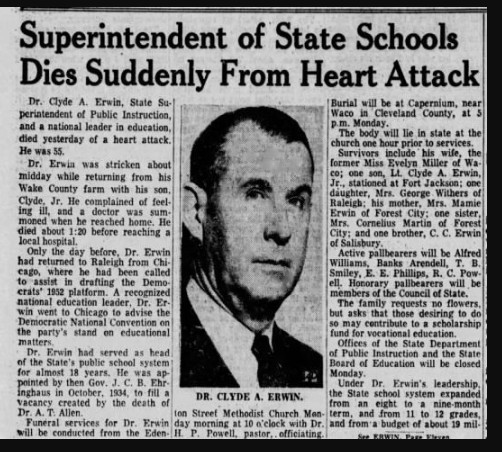
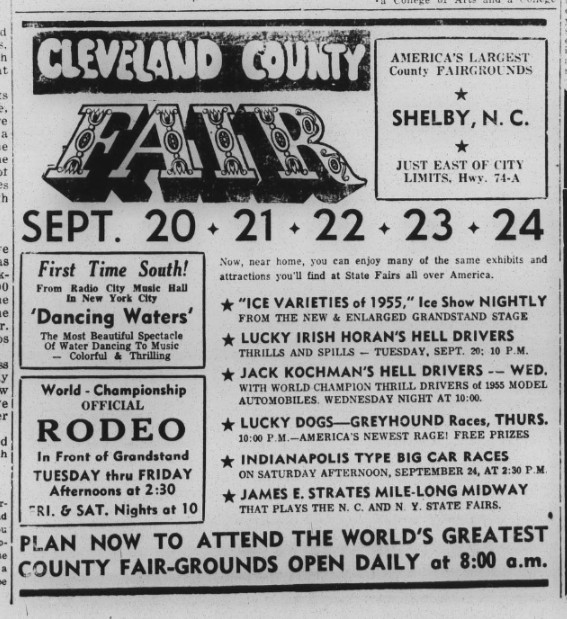
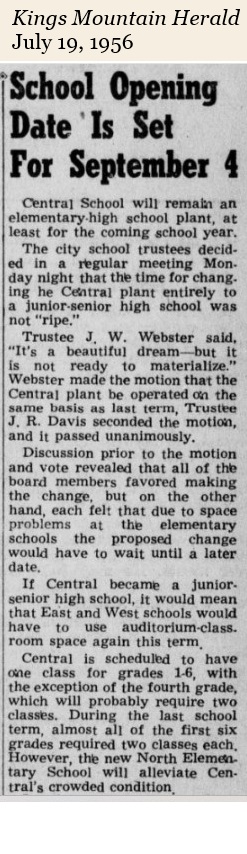
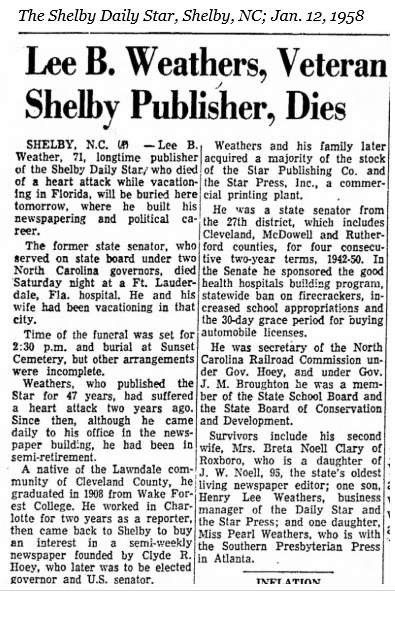
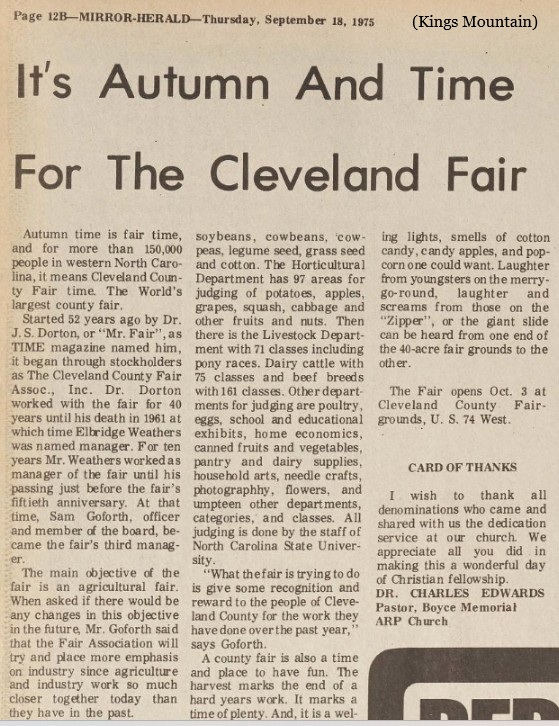
There were also earlier articles about people and events in the Charlotte and Raleigh newspapers of the day. Those may be found at Newspapers.com, although a paid subscription is required.
Photographers of the Past
The world’s first and oldest surviving photograph is “View from the Window at Le Gras” made in 1826 by Joseph Nicéphore Niépce. It shows the view from his French estate, captured on a pewter plate using a technique called heliography. This technique required an exposure of at least eight hours.


“Boulevard du Temple” is believed to be the earliest photograph showing a living person. Taken by Louis Daguerre in 1838, the photo was captured because the man in the image stood still for a shoe shine during the long exposure. The “Daguerreotype,” named for its inventor, created detailed, unique, mirror-like images on silvered copper plates. The technique was adopted world-wide and grew in popularity during the 1840s and 1850s.
Gaining popularity in the latter half of the 19th century (1860s–1880s) were itinerant photographers. These traveling photographers offered affordable portraits, often using tintypes in the 1870s or taking postcard photos in the 1920s. They traveled to rural areas at a time when only large cities had studio photographers. They would travel with all their equipment in their horse-drawn wagon and would set up at county fairs or street corners in small towns. Some would travel the countryside and take photos of farm families in front of their homes. The photo below is an example of similar photos found among the collections of many Cleveland County residents.

Itinerate photographers rarely signed their work, so their names are not known with certainty. Some of those who visited Cleveland County may have been:
- Rufus Morgan (Western NC / Appalachian region)
- The “Cline Brothers” (NC foothills, mostly around Hickory, but known to have visited Cleveland County)
- W. A. “Billy” Cooper (Upstate SC / Spartanburg area)
- J. B. Sherman (Piedmont NC / SC border region)

The first professional studio photographers in Cleveland County were brothers John C. and William E. McArthur. They were born in Rutherford County but the family had moved to Cleveland County by 1870.
John C. McArthur, born in 1856, is mentioned in the Cleveland Star around the turn of the century for his baby and family reunion photos. William E. McArthur, although three years younger, was mentioned as early as 1885 for his work in photography.


Many Cleveland County residents hold in their family history collection photos made by W. E. McArthur.


Both McArthur brothers moved back to Rutherford County before their deaths. John C. McArthur died in 1923 and is buried there. W. E. McArthur lived to be 96 years old and is buried at Sunset Cemetery in Shelby.


Forrest Lee Ellis was another photographer whose photos have had lasting importance to the history of Cleveland County. Born in 1890, he and his sister, Cora, established their photography business in the early 1900s. Forrest married Lalla DePriest; they had two daughters, Marion and Beverly who would also become photographers.

Although Ellis maintained a studio, he also went out into the community to photograph family events as well as newsworthy events of importance to the wider community. He contributed often to the Cleveland Star. Perhaps his most famous photograph was taken the morning of the Warren Street building collapse on August 28, 1928.

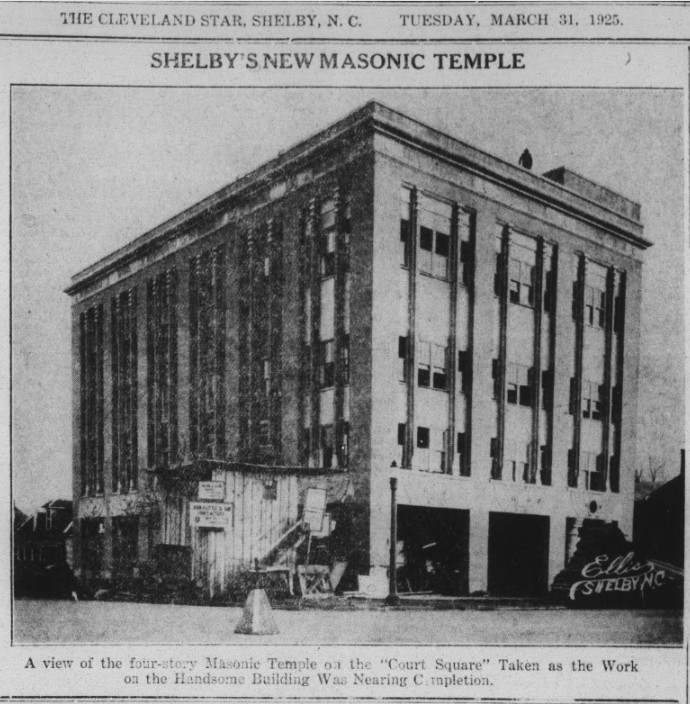
Forrest Ellis died in 1961, after having photographed Cleveland County people and events for over five decades. After his death, Ellis’ daughters Marion and Beverly took over the business. Marion died just eight years later, leaving Beverly as the sole owner of the business. Many Cleveland County residents remember her driving around in her old Rambler Cross Country station wagon.

The Earl Scruggs Center in Shelby has a collection of over 150 photographs made by Forrest Ellis. Many of these have no information attached to them. The public is invited to view these photographs online and submit information. The link is here.
Hubert O. Carlisle and his wife, Alma Sue, moved from Rutherford County to Kings Mountain in 1950 and opened a photographic studio there. In 1954, they moved the business to Shelby. Carlisle Studios was located at 314 South Lafayette and served Cleveland County residents for almost 40 years.
Paul Lemmons, age 95, of Mooresboro made a photograph in the early 1960s that became famous worldwide. He was called to the home of Onnie and Lena Baker who lived on Chestnut Street in Shelby. A Northern Cardinal had begun feeding goldfish in their little backyard pond! What Lemmons captured with his camera was such a rare event in the world of wildlife that the photograph was published in ornithology textbooks, birding magazines, and even National Geographic. Birding experts surmised that the cardinal had lost its clutch of babies and the goldfish’s open mouths looked enough like a baby bird’s that the cardinal began feeding them worms.


Lem Lynch of Shelby started his photography business after serving as a photographer in the US Army in Vietnam. He was also a frequent contributor to the Shelby Daily Star, as well as to the Kings Mountain Mirror which he cofounded with Rodney Dodson in 1971. Later in his career he added photo restoration services and videography to his business. Charlotte TV stations aired his videos frequently over the years.

Elwin Stilwell, also a Vietnam War veteran, was originally from Rowan County. He relocated to Shelby in the 1980s and opened the Victorian Rose Studio inside the old Hotel Charles building. He served the community for over 20 years.

Radio
The history of radio in Cleveland County continues here under the Transportation and Communications tab.

