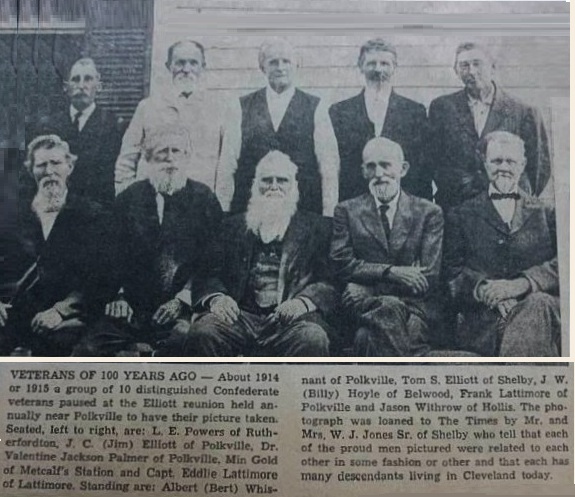
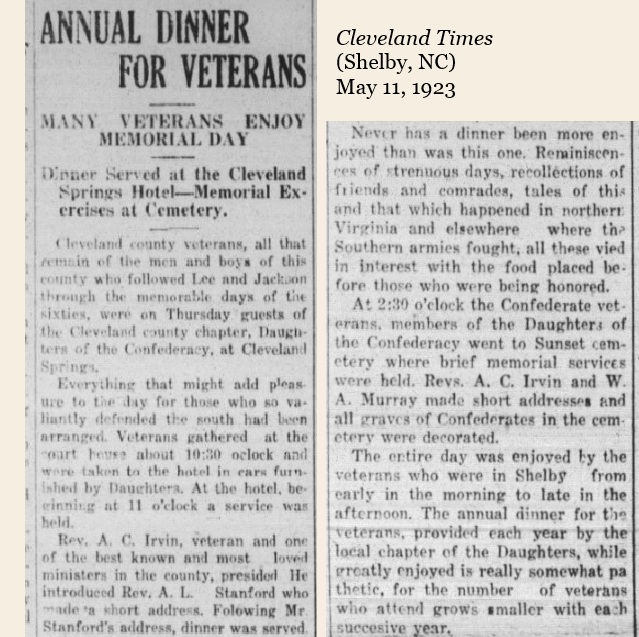
On Dec. 20, 1860, South Carolina became the first of 11 states to secede from the Union. North Carolina was the next to last to secede on May 20, 1861. Slaveholding in North Carolina was concentrated in the Coastal Plains and Piedmont Regions. The greatest number of enslaved Black people to the square mile was in the counties along the Virginia border. In 1860, five counties, Edgecombe, Granville, Halifax, Warren, and Wake were populated with more than 10,000 enslaved people. In 1860, Cleveland County had 2,131 enslaved Black people. On average, each farmer or plantation owner enslaved between five and ten people. Yet Cleveland County sent 2,035 men to serve in the Confederate Army during the four-year war. This was about a third of the white male population in the county–a higher percentage of its men to fight than any other county in North Carolina. Some estimate that 24% of the men from Cleveland County died in battle or from disease, 28% were wounded, and 27% were captured.
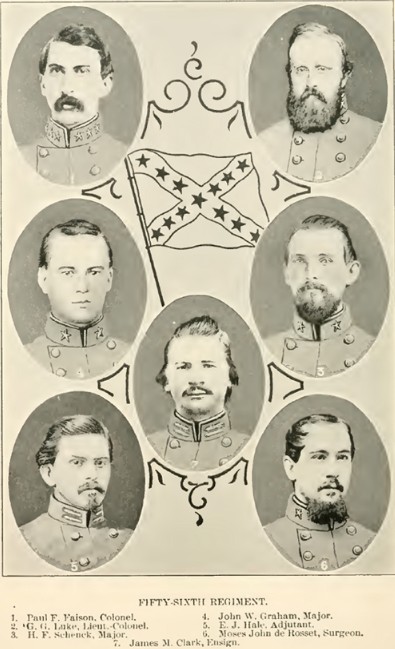
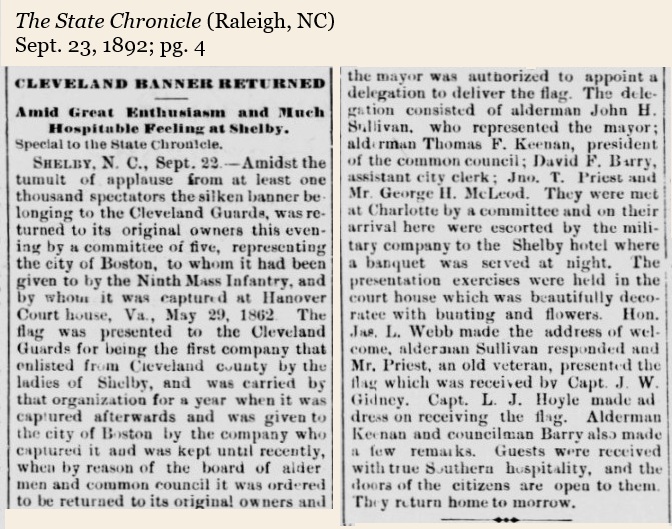
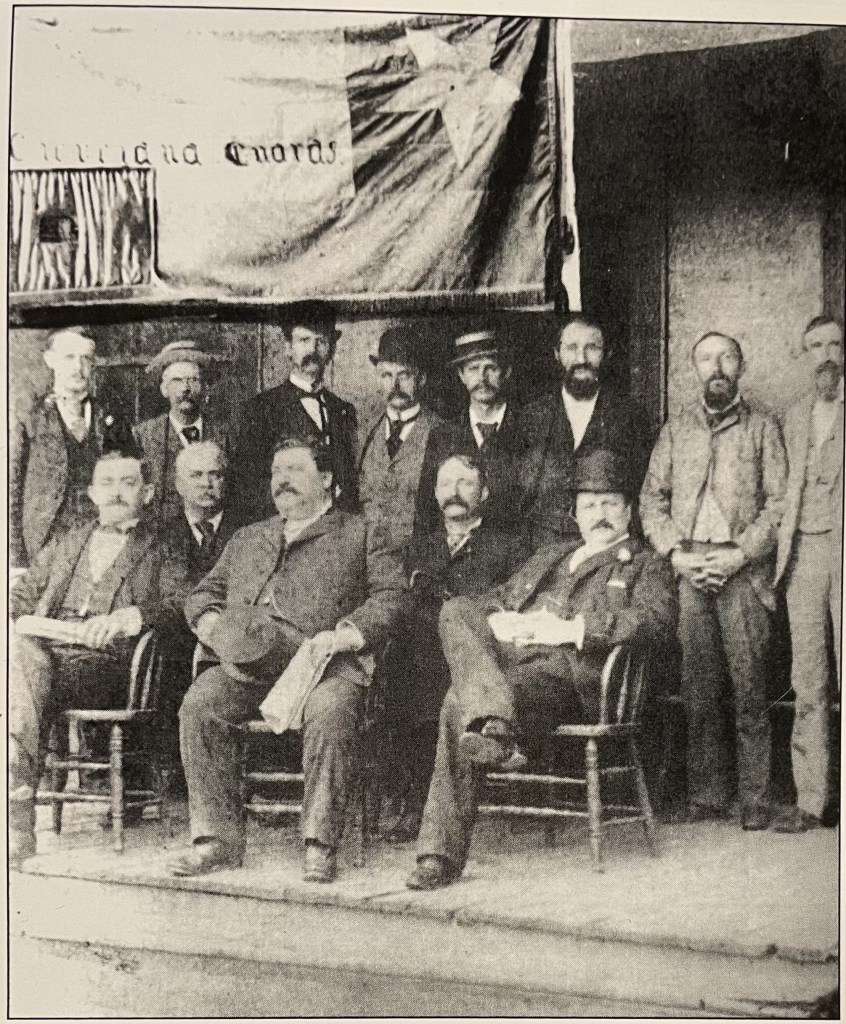
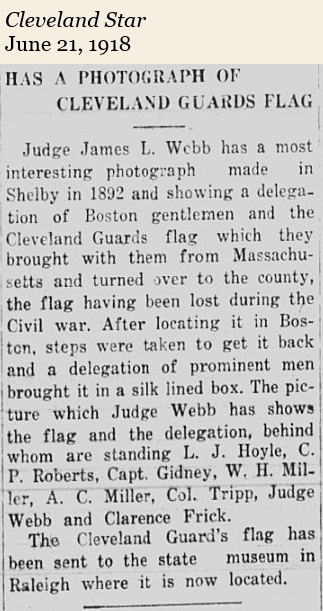
Cleveland County furnished 14 companies and 18 captains during the war. J. D. Lewis conducted extensive research into the various regiments formed from both North and South Carolina. His website, Carolana, provides a table of units from Cleveland County. There are also links to the 1901 book by Walter Clark, Histories of the several regiments and battalions from North Carolina, in the great war 1861-’65, (876 pages). Below is an example of photos throughout the book.
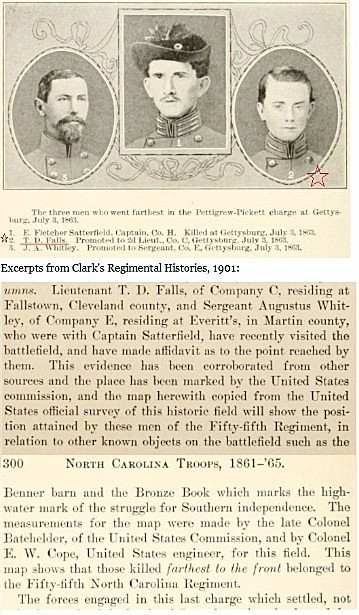
T. D. Falls, from Fallston, was a member of the Fifty-Fifth Regiment that progressed the farthest at Gettysburg.
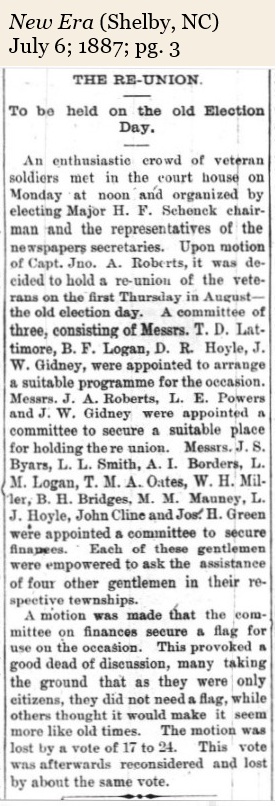
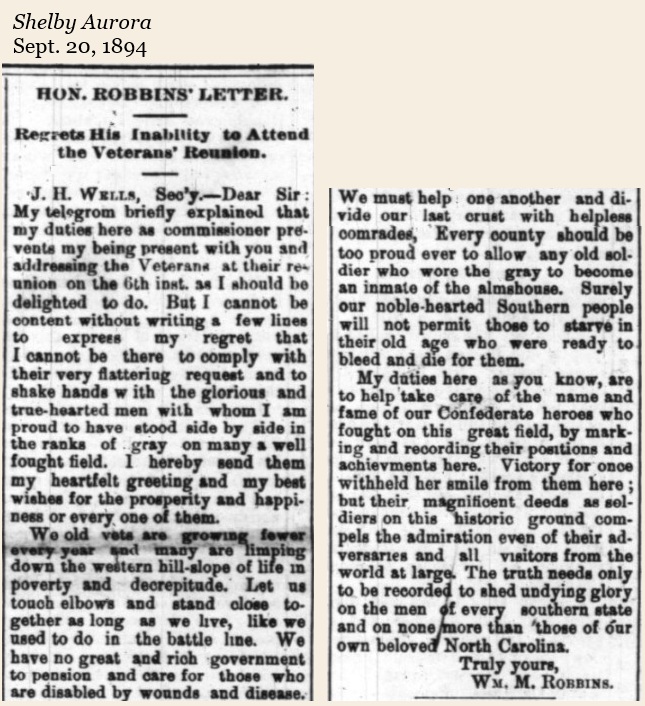
With so many men off fighting for the Confederacy, Cleveland County women were left struggling to maintain farms and families. When the war ended, those who survived the battles often returned home maimed for life. The Civil War had a devastating effect all over the south that lasted for generations.
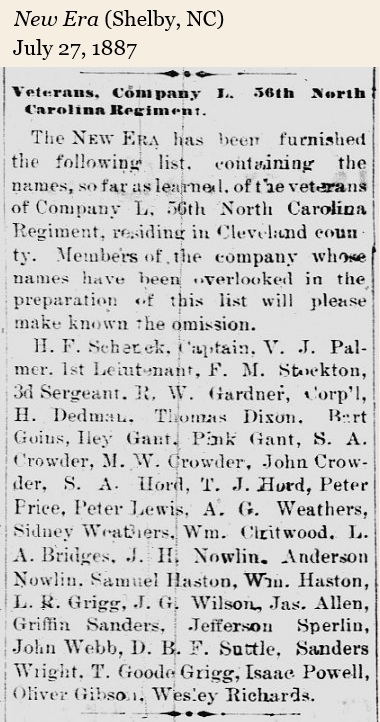
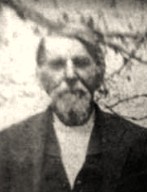
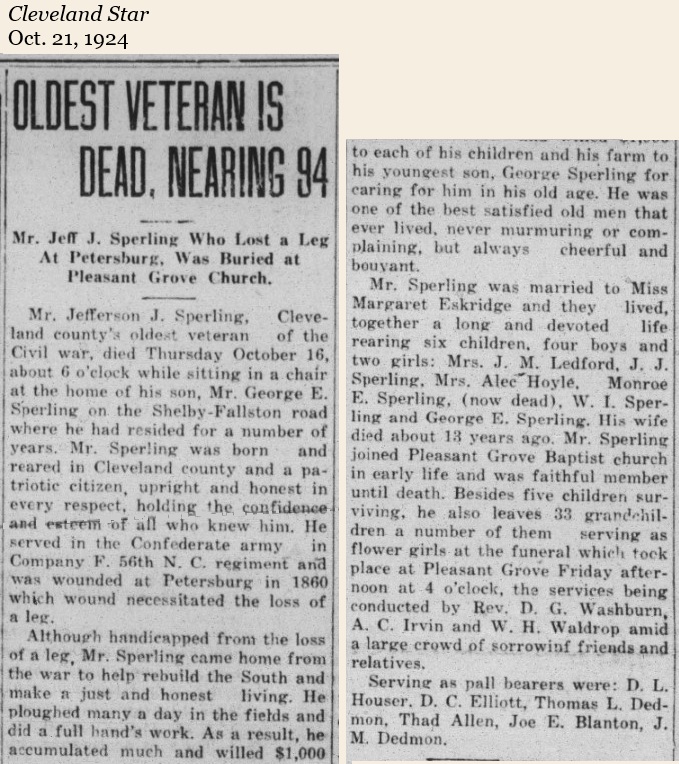
John Jefferson Spurling was Cleveland County’s oldest Civil War veteran. He died in 1924.
 Cleveland County History