Cleveland County has a rich and varied history intertwined with agriculture, forestry, and mining that spans over 200 years. Established in the early 19th century, the county emerged as a significant agricultural hub, characterized by fertile land conducive to farming. Cash crops such as cotton, corn, and tobacco flourished, shaping the local economy and culture. All kinds of vegetables were grown successfully in the county–especially sweet potatoes, cabbage, and pumpkins. Apple and peach orchards did well, as did berry farms.

The authors of this 1896 book detailing the natural resources throughout the state had this to say about Cleveland County:
“Cleveland county is situated on the southern border of the State. Its northern end rests upon the summits of the South mountains, at an elevation of nearly 3,000 feet above sea-level, while along its southern border runs the lower King’s mountains range; from any of the elevations in the county the Blue Ridge is plainly visible. It is drained by several large tributaries of the Broad river, which rise in this chain and cross the county southward into South Carolina. Its agricultural and topographical features are very similar to those of Catawba county, to which its territory is contiguous. Its soils consist of alternating tracts of red or reddish clay and gray and yellow gravelly loams (chiefly the latter), and have their corresponding forests of oak, and of oak mingled with pine. This county produces cotton throughout its territory, even up to the flanks and on the slopes of the South mountains, although this form of agriculture is the growth of two decades, the product having increased twenty-fold in that time. Gold mining is also practiced, placers being common in the north, and vein mines in the south end of the county.
The soil is generally well adapted to grain, especially to wheat, which is of fine quality and unusually productive, 52 bushels to the acre having been reported, and 25 bushels is not uncommon. Oats and corn thrive in unusual luxuriance. Tobacco proves well adapted to both soil and climate, and the finer varieties are in no way inferior to those raised in the counties which for generations have brought up their culture to the dignity of a fine art. And this is the result of diversities in the characteristics of the soil, there being found those alternations from the deep rich mold of the lowlands and the lighter covering of the uplands, not less abounding in the elements of fertility. The surface of the county is undulating, but it is watered by several large rivers and creeks, among which are the two Broad rivers and Buffalo creek. Along these stretch large areas of rich alluvial bottoms, unsurpassed in fertility. Among the subjects of cultivation to which there is every encouragement is that of the grape, which, in the past, received more attention than now.
Among the minerals found in the county is tin, near King’s Mountain, of which great ultimate expectation is entertained; monazite, of which large shipments have been made north and to foreign countries; mica, of which some of the largest pieces yet found have been obtained; gold, copper, corundum, kaolin, etc.
The water-power of the county is great and exhaustless, and is applied to eight cotton mills and other industries. In addition to the water-power, Cleveland has the aid of three important railroads–the Carolina Central, bisecting it nearly from east to west, with its eastern terminus at Wilmington; and a part of the great Seaboard Air-Line system, connecting with Norfolk and Atlanta, and the Ohio River and Charleston, connected on the south with Charleston, with ultimate northern terminus on the Ohio river, but at present completed only to Marion, on the Western North Carolina railroad. These roads pass by Shelby. The main line of the Southern system passes through the southern end of the county touching Grover and King’s Mountain.
Shelby is the county seat, finely situated on a high plateau, well drained on all sides and, in beauty of location and elegance of construction, is unsurpassed by any town of its size in the State. It is intersected by broad, straight and shaded streets, and is adorned with a large, well-planted square, in the center of which is the court-house, the culmination of fine prospects commanding the surrounding country and the distant mountains. An excellent quality of lithia water is piped to the court square from the lithia spring, three miles distant. Here there are good hotels, fine churches, flourishing schools and an industrious population. Two miles east are the Cleveland Springs, celebrated for their varied curative powers, their comfortable accommodations and their agreeable environments. Four miles south are Patterson’s Springs and the same distance north McBrayer’s Springs–both held in high repute. Shelby has a population of 2,200; Kings Mountain, 1,200; and a number of small villages are scattered through the county. At the two former places are located cotton and roller flour mills. A portion of King’s Mountain is in Gaston County, and it has four cotton mills which are included in the eight referred to above.
The material condition of the people of this county is improving; while there has been no decrease in the cotton crop, the county is producing a surplus of breadstuffs which is shipped out, and during the last decade personal debt has been steadily decreasing among the people.
The environment of hills on three sides of the county, with an open southern exposure gives to it an exceptionally fine winter climate, singularly free from snow; therefore very inviting to sufferers from pulmonary diseases, while its altitude and proximity to the mountains makes it one of the most desirable of summer residences.
• The county contains 278,752 acres of land valued at $1,647,705; and 811 town lots, valued at $295,632.
• Of domestic animals there are 2,574 horses; 2,951 mules; 7,607 cattle; 8,247 hogs; 2,321 sheep.
• Products of taxation–For State uses $6,674.81; pensions, $1,365.40; schools, $11,487.93; county, $18,219.97. Population–white, 17,301; colored, 3,093, total, 20,394.”
Agricultural Timeline
- 1800s: Farmers began planting cotton in what is now Cleveland County in 1815. The area’s farms were small and relied on family labor, draft animals, and waterwheels. Prior to emancipation, scores of landowners used slave labor to operate their farms.
- 1860s: Tobacco was grown in Cleveland County in the 1860s. There were four or five tobacco factories in Cleveland County between 1868 and 1885.
- 1871-1888: In 1871, the first cotton mill at Double Shoals began operating–boosting the growth of more cotton. Two other cotton mills followed in 1873 and 1888.
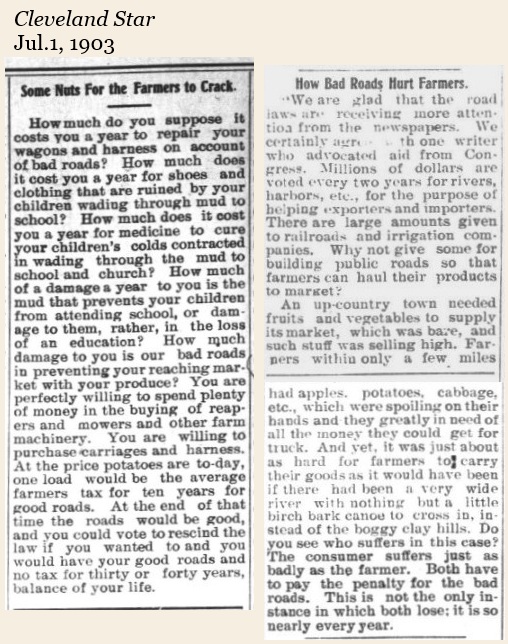
- 1900s: As cars–and trucks–became more common-place, farmers began to recognize the need for better roads to get their crops to market.
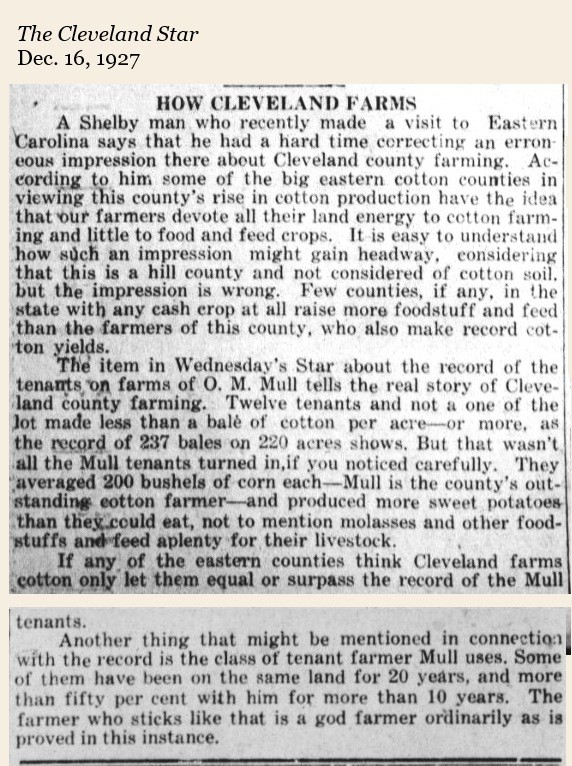
- 1920s: In the early part of the decade, Cleveland County grew nearly 75,000 acres of cotton; about 8,000 bales produced per year. By the end of the decade, 80,000 bales were produced per year.

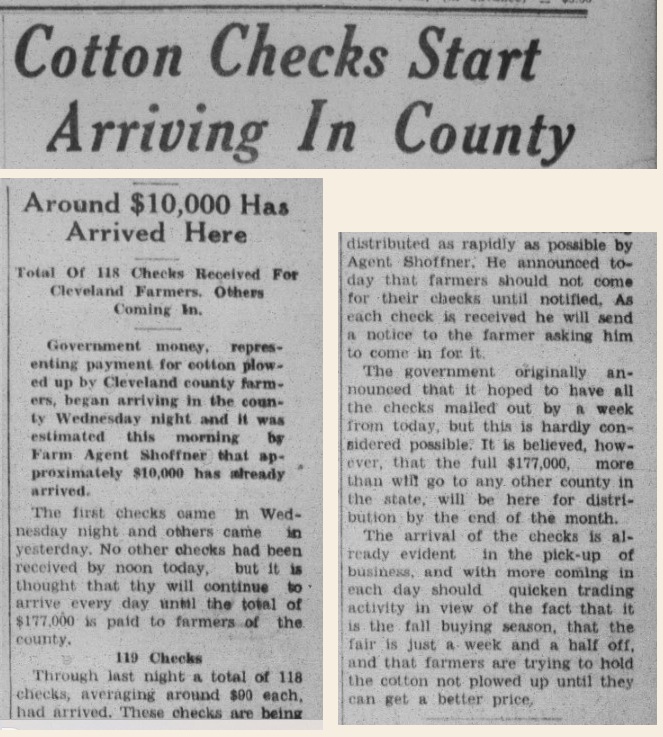
1930s: A drought led to the creation of conservation districts which worked with farmers to conserve resources.
1940s: In 1948, Cleveland County produced the most cotton per acre than any other county in the United States.
1950s: The cotton industry declined due to an increase in boll weevil populations. After cotton prices dropped many farmers switched to dairy farming.
1960s: There were over 125 grade “A” dairies in Cleveland County.
As the years progressed, the region’s timber resources as well as mining led to the rise of robust industries in those two commodities. Additionally, the area’s numerous natural springs became a destination for a multitude of people hoping for their natural healing powers.
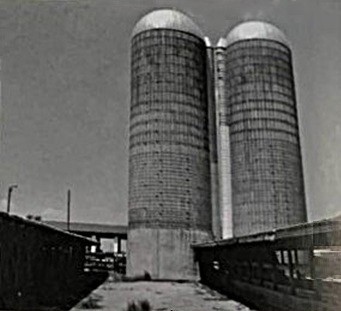
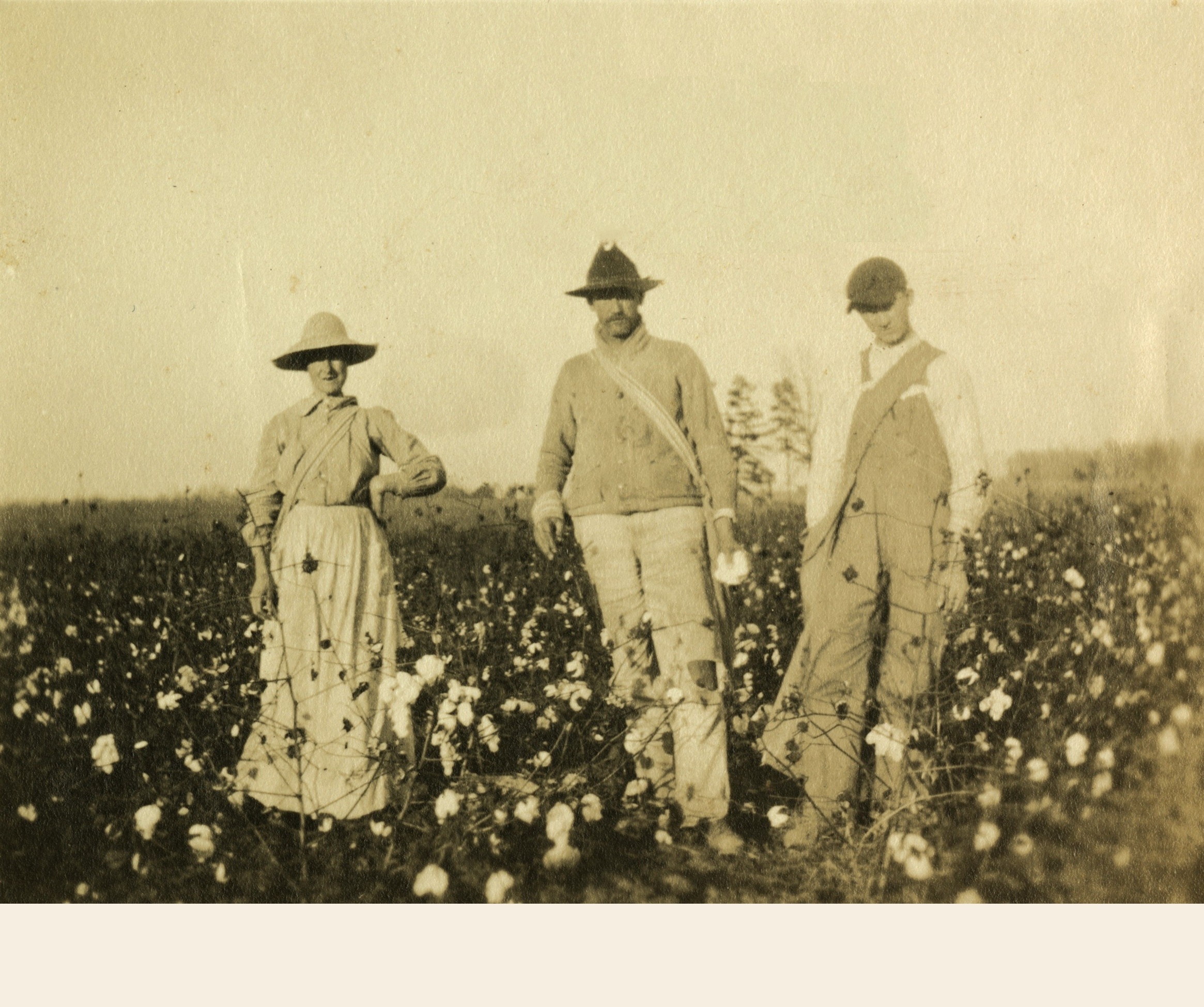
Over the decades, farmers began growing more soybeans, wheat, and fescue, and less cotton. In the early years of the 20th century, there were about 40 or so cotton gins operating in the county. The last two still operating into the 21st century were Boggs Gin in Fallston and Hamrick and Thompson in Boiling Springs. By 2016, no cotton was being grown in the county.

Cleveland County has also been home to large-scale poultry producers. John Hendrick owned and operated Hidden Acre Farm in the Beams’ Mill area until his death in 2005. According to his grandson, Brandon Bridges, Mr. Hendrick’s numerous achievements included his service as president of the National Turkey Federation. Brandon continues with the following article he wrote for Cleveland County News:
“Thanksgiving, a holiday tradition celebrated across America on the fourth Thursday in November, is upon us once again. Hasn’t time flown?
Meats and fixins’ for one of America’s longest celebrated holidays can vary from home to home, but the uncontested centerpiece of Thanksgiving has always been and always will be the turkey.
Here in North Carolina, Cleveland County was once a powerhouse in turkey production, with hundreds of thousands of poults sent to market every year up into the early 2000’s.
One Cleveland County farmer, John Hendrick of the Beam Mill area, started growing turkeys in the 1950’s and quickly became not only one of the largest turkey producers in North Carolina, but one of the largest independent turkey farms in the United States of America.
As the farm grew, so did his involvement in the poultry industry, with John becoming the president of the North Carolina Poultry Federation, North Carolina Turkey Federation, and the National Turkey Federation in 1984.
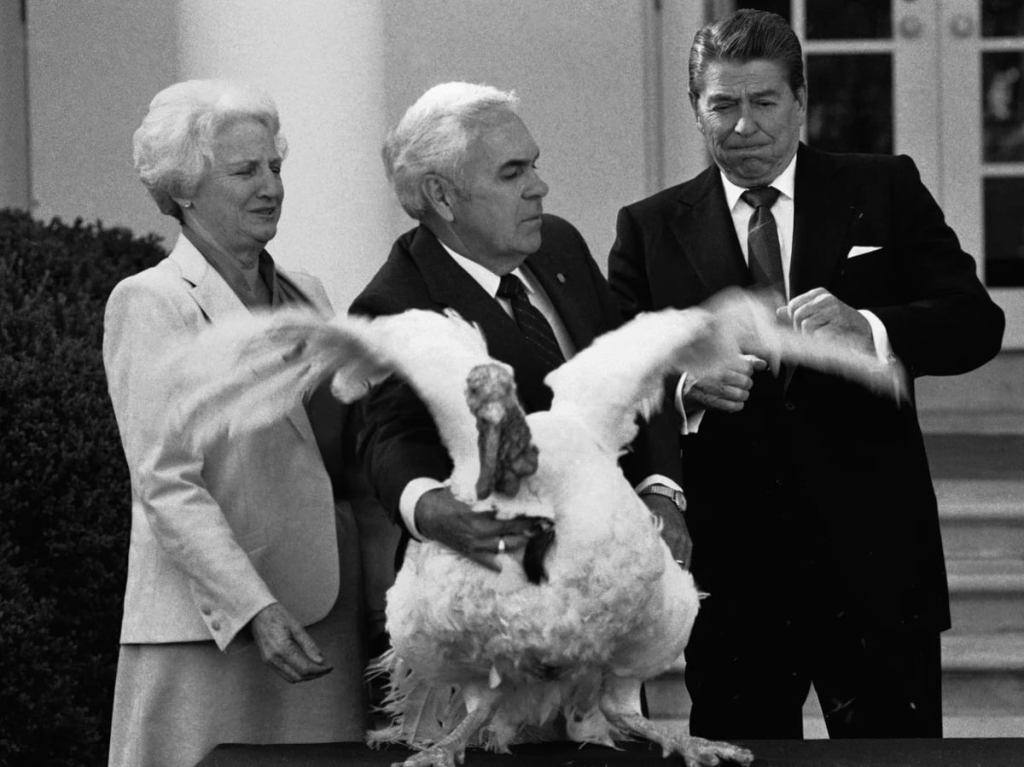
As President of the National Turkey Federation, John and his wife Osteen had the privilege of presenting the turkey to President Ronald Reagan in 1984 for the National Thanksgiving Turkey Presentation.
R.J., short for Robust and Juicy, was one of the first Thanksgiving turkeys to be officially named in the National Thanksgiving Turkey Presentation and was also one of the first turkeys to officially be pardoned. After the presentation and in spirit of the pardon, R.J. was sent to a petting zoo to enjoy the remainder of his natural life, admired for being as famous as a turkey can reasonably get.
Occurring in a time long before social media, bits and pieces of the entire story above can be pieced together from articles and editorials that still reference the event to this day, over forty years later. Sometimes mistakenly referred to as “Hendrix” or “Hendricks”, the legacy of John Hendrick and Hidden Acre Farms in Cleveland County, North Carolina will forever be tied to an American Tradition that will exist in perpetuity.
Regardless of unintentionally erroneous ways in journalism today, everything you’ve just read was verified by a grandson of John and Osteen – that’s me. To this day, I’m proud of what they were able to accomplish and their example that’s still warmly remembered to this day.”
In 1970, the North Carolina State Fair undertook the largest agricultural project in its history to highlight the theme of its 1970 State Fair, “Salute to Agriculture,” by initiating a search for all families who owned a farm in North Carolina for 100 years or more. In 2016, the Bicentennial Farms Program was created. Today, there are about 50,000 farms in North Carolina, but only 1,982 have the distinct honor of being a Century Farm; only 134 farms have been recognized as Bicentennial Farms.
Cleveland County farms which have been recognized as Century Farms are below. They are listed by the name of the farm or the original owner, followed by current owner and date the farm began:
- Robert Nichols Austell, Hugh Austell, Thomas Austell Jr. (1803)
- Beam Family Farms: Charles Lucas Beam (1900)
- The Bingham Homestead: Glenda Bingham Miller (1803)
- Debora Wilson Bridges, John Edward Bridges (1832)
- Deedee W. Canipe (1832)
- Amanda Carpenter, Ronald Carpenter (1890)
- Mitchem Family Farm: Dena Hicks Carpenter (1919)
- Bruce Cooke, Rhinda B. Cooke (1909)
- John Boyles Farm: Barry Crotts, Timothy Crotts, Milton Crotts (1850)
- Charles D. Edwards, Ann Baker Edwards (1846)
- Edwards Farm: George M. Edwards III (1854)
- Grandview Farm: Anita P. Hooker, William G. Hooker (1904)
- Joseph P. Hord Farm: Richard Paul Hord, Jr. (1925)
- McSwain Family Farm: William Mark Jones (1910)
- Martins’ Charolais Farm: William Dennis Martin (1890)
- Mintz Double D Farm: Fred D. Mintz Jr., Diane N. Mintz (1879)
- Frank Morehead (1890)
- Gerald B. Norman
- Wayne Price Farm (1840)
- Caroline Brown Reynolds & Joe Reynolds (1803)
- Webb’s Peach Orchard: Harvey Webb (1925)
- Billy Wilson (1861)
- Shelva Hawkins Wilson (1832)
- Wilson Twin Lakes Farm: Carolyn W. Gaston (1892)
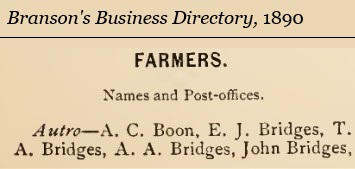
Branson’s Business Directory of 1890 published the names of farmers in each post office community in Cleveland County. The list is digitized below for searchability.
Autro—A. C. Boon, E. J. Bridges, T. A. Bridges, A. A. Bridges, John Bridges, T. S. Bridges, L. M. Gold, J. O. Gold, B. F. Gold, T. Hamrick, R. E. Hamrick, G. W. Hamrick, A. C. Hamrick, D. Hamrick, A. Hamrick, S. A. Washburn, W.W. Washburn, C. G. Washburn.
Beam’s Mills—K. Allen, A. Baker, J. F. Beam, J. M. Carpenter, M. Carpenter, L. S. Carpenter, T. Costner, A. Costner, J. Costner, P. Costner, J. Y. Elliotte, R. V. Elliotte, Jr., K. W. Gardner, L. S. Gardner, J. M. Gillespie, A. C. Gladden, Henry Glascoe, Monroe Glascoe, D. A. Hamrick, A. Hamrick, A. A. Hendrick, J. C. Hendrick, Juan Hendrick, E. Hendrick, M. S. Hoyle, J. G. Hoyle, W. R. Hoyle, E. E. Ledford, J. L Ledford, P. Ledford, Pink Nowell, W. Nowell, G. S. Royster. Frank Royster, Charles Royster, J. R. Smith. M. E. Spurlin, J. Spurlin, J. A. Stroup, T. Vaughn, C. P. Vaughn, D. C. Wallace, Z. Williams, K. Williams, W. W. Williams, W. Williams, L. A. Wright, Perry Wright.
Belwood—D. B. Alexander, W. Boggs, N. E. Boggs, A N. Boggs, W. B. Hoyle, Luther Loutze, H. D. Randall, J. H. Smith, C. P. Welman.
Boiling Springs—X. Blanton, W. Blanton, A. Blanton, G. B. Blanton, G. H. Champion, R. C. Champion, T. A. Bridges, J. O. Bridges, A. R. Hamrick, Wm. A. Hamrick. G. R Hamrick, D. J. Hamrick, E. B. Hamrick, C. J. Hamrick, N. Hamrick, Wiley Hamrick, E. W. Hamrick, L. S. Hamrick, O. W. Holland, G. G. Holland, T. J. Holland.
Buffalo Paper Mill—D. Elexander, E. Hamrick, M. V. Hoyle.
Byarsville—S. H. Humphries, L. J. Humphries, J. Humphries, J. T. Humphries, W. P. Humphries, D. P. Humphries, S. R. Humphries.
Casar—W. H. Pruett, H. Warlick, John Warlick.
Camp Call—E. Z. Champion, A. C. Hord, R. M. Hord, P. G. Washburn.
Cleveland Mills—O. N. Cline, T. J. Dixon, F. Y. Hicks, D. R Hoyle, T. Lattimore, J. C. Lattimore, P. Mauney, T. W. Poston, A. Peeler, G. A. Peeler, J. A Peeler, S. Warlick, D. G. Warlick, N B. Warlick, A. Warlick.
Double Shoals— R. Hord, A. J. R. Hoyle, J. C. Pruett, Andrew Peeler, D. C. Peeler, C. Peeler, W. H. Wright.
Durbro—S. R. Anthony, T. Camp, J. A. Camp, J. R. Dover, J. M. Dover, T. D. Dover, J. C. Putnam, D. C. Putnam, H. Roberts, M. N. D. Roberts, J. A. Roberts.
Earl—A. P. Austell, W. Q. Austell, J. H. Austell, A. Bettis, E. A. Bettis, F. Y. Patterson.
Fallston—]. H. Beam, D. C. Beam, M. R. Beam, R. Beam, R. S. Carpenter, J. C. Carpenter, P. Z. Carpenter, J. B. Carpenter, D. Carpenter, C. V. Cline, I. Z. Falls, Sr., J. Z. Falls, Jr., B. Hendrick, James Lackey, W. D. Lackey, J. C. Lackey, J. Lewis, F. T. Warlick, J. N. Welmon, John Welmon, D. H. Wright, George Wright.
Fancy—J. Y. Hord, T. C. Ware, R. A.Ware, C. J. Ware, G. Ware, M. C. Wolf.
Grover—D. J. Adams, G. Barber, R.G. Barber, S. M. Beam, J. M. Beam, T. Bell, W. P. Bell, D. R. Bell, M. Borders, T. H. Bridges, J. L. Bridges, F. H. Bridges, Nathan Camp, Plato Camp, G. A. Dixon, W. W. Dixon, W. C. Ethers, R. F. Hambright, W. H. Herndon, J. G. Herndon, J. P. Moss, J. Pajenstecher (Patterson?), D. C. Patterson, E. A. Patterson, L. C. Royster, James Rippv, J. W. Sheppard, S. G. Sheppard, W. R. Sheppard, H. C. Sheppard, B. F. Turner, S. White.
Holly Bush—J. Black, J. Hoyle, J. M. Hoyle, D. Hoyle, R. G. Wells.
King’s Mountain—J. H. Allison, L. Arrowood, S. P. Baker, John Bennett, B. Black, T. C. Black, J. Black, L. S. Blaylock, J. Blaylock. W. A. Costner, L. J. Dixon, P. R. Ealem, S. P. Goforth, J. K. Goforth, A. Goforth, J. W. Goforth, J. B. Goforth, B. Goforth, J. L Herndon, J. F. Herndon, W. A. Herndon, A. H. Herndon, G. C. Herndon, W. Herndon, W. A. Mauney, J. S Mauney, T. A. McGill, Isaac McGill, T. Patterson, R. N. Patterson, E. B. Patterson, J. B. Patterson, F. Patterson, A. H. Patterson, Wm. Plank, Mike Plank, T. M. A. Ware, B. Ware, M. L. Ware, J. A. Ware, W.W. Ware, W. B. Ware, T. A. Ware, J. W. Ware, A. B. Ware, R. C. Ware.
Knob Creek—John Carpenter, J. A. Carpenter, D. Costner, T. M. Ledford, J. M. Ledford, W. A. Ledford, W. C. Ledford, M. Randall.
Lark—A. Bumgardner, H. T. Bumgardner, John Bumgardner, A. P. Bumgardner, W. Hoyle, S. Pruett, John Pruett, Asa Pruett.
Memory—E. Humphries, Wm. Humphries.
Mooresboro—J . H. Beam, W. F. M. Green, J. D. M. Green, J. Green, B. Green, E. Green, B. P. Green, R. C. Green, W. H. Green, S. P. Humphries, C. H. McSwain, B. McSwain, J. D. McSwain, W. B. McSwain, G. W. McSwain, G. McSwain, G. G. McSwain, B. F. McSwain, P. H. Pruett, John Pruett, J. L. Pruett.
New House—D. Beam, B. B. Camp, A.G. Philbeck, M. P. Philbeck, J. P. Philbeck, T. J. Philbeck, J. M. Washburn.
Nicholsonville—R. Scruggs, L. B.Scruggs, A. D. Scruggs, T. D. Scruggs, C. C. Simmons, L D. Simmons.
Perry—A. J. Beatly (Beatty?), D. Lackey, R. Lackey, J. P. Lackey, T. Lackey.
Point—John Hoyle, H. Hoyle, A. Pruett.
Polkville—J. Bedford, S. M. Davis, A. J. Elliott, T. F. Elliott, J. R. Elliott, J. F. Hendrick, W. A. Lattimore, J. A. Lattimore, P. Lattimore, J. C. Lattimore, J. B. Lattimore, F. Lattimore, D. D. Lattimore, J. L. Lattimore, W. C. Lattimore, I. D. Paston(Poston?), J. W. Paston, D. J. Philbeck, John P. Philbeck, J. J. Philbeck, R. Philbeck.
Sharon—J. H. Blanton, J. M. Blanton, J. Blanton, B. Blanton, G. E. Davis, Wm. Davis, B. P Davis, N. D Davis.
Shelby—J. H. Anthony, J. C. Beam, C. C. Beam, V. C. Beam, W. P. Beam, J. Bealy (Beatty?), M. W. Beatly, T. J. Beatly, J. Borders, E. C. Borders, A. Borders, E. Borders, J. H. Borders, S. E. Bostick, W. C. Bostic, L. A. Botts, R. M. Botts, J. B. Byars, J. C. Byars, A. M. Cabaness, E. E. Cabaness, Wm. Cabaness, C. Cabaness, J F. Cline, J. E Davis, H. Deelmon (Dedmon?), W. Deelmon, R, Deelmon, J. N. Elliott, D. A. Elliott, A. F. Elliott, T. C. Eskridge, W. N. Eskridge, T. W. Gold, D. A. F. Hamrick, B. Hamrick, James Hamrick, S. H. Hamrick, C. I. Hamrick, Robert Hamrick, C. C. Hamrick, W N. Hamrick, Miles Hamrick, W. A. J. Hamrick, J. J. Hogue, S. M. Hogue, A. S. Hord, T. J. Hord, Martin Hoyle, J. C. Hoyle, T. M. Holland, J. M. Hord, J. Hord, E. P. Hord, G. W. Kendrick, J. C. Ledford, J. D. Ledford, Q. M. Ledford, J. P. Ledford, J. F. Loutze (Lutz?), D. G. Mauney, L. O. McSwain, G. C. McSwain, E. McSwain, R. McSwain, S. Paston (Poston?), D. Paston, John Paston, S. McB. Paston, M. L Putnam, N. Putnam, D. Putnam, N. R. Putnam, S. Putnam, W. S. Pruett, Wm. Roberts, C. C. Roberts, W. J. Roberts, John Roberts, G. H. Simmons, D. D. Suttle. R. W. Weathers, W. S. Weathers, C. M. Weathers, J. D. Weathers, W. Y. Weathers, D. S. Weathers, A. G. Weathers, A. P. Weathers, W. R. Welmon, J. K. Wells, Perry Welmon.
Slice’s Shoals—R. Blanton, C. B. Blanton, C. A. Borders, J. G. Borders, J. Borders, A. J. Borders, D. M. Hamrick, N. K. McSwain, M. McSwain, W. G. McSwain, James McSwain, N. R. McSwain, J. D. Randall, R. S. Randall, J. W. Randall, James Rippy, J. P. Rippy, W. M. Rippy, O. C. Saratt, I. P. Saratt, C. M. Saratt, P. Spangler, W.H. Spangler.
Swangs—W. P. Arendell, J. P. Camp, T. C. Elliott, Jesse Hogue, C. J. Patterson, G. W. Patterson, W. L. Patterson, M. Rippy, E. R. Rippy. R. Roberts, E. Roberts, J. P. Roberts, Jr., T. M. Roberts, J. M. Roberts, J. H. Swangs.
Waco—J. Baker, T. A. Black, T. H. Black, E. E. Black, M . Borders, C. Carmer, L. P. Caimer, M. Carpenter, J. H. Carpenter, S. A. Carpenter, R. W. Elliotte, Sr., B. I. Eskridge, G. A. Gold, E. Hamrick, E. Hendrick, F. M. Kendrick, Thomas Kendrick, D. Mauney, S. Mauney, W. R. Putnam, A. B. Putnam, J. H. Smith, T. Smith, D. K. Tate, M. E. Welmon.
 Cleveland County History