The first newspaper in the county was a four page, letter-size, weekly called Rip’s Pop Gun. Named for the nickname of its publisher, its circulation began in 1854; it is unknown how long it ran. In the same year, The Carolina Intelligencer began circulating. Edited and printed by A. J. Cansler, it was a Baptist denominational paper.
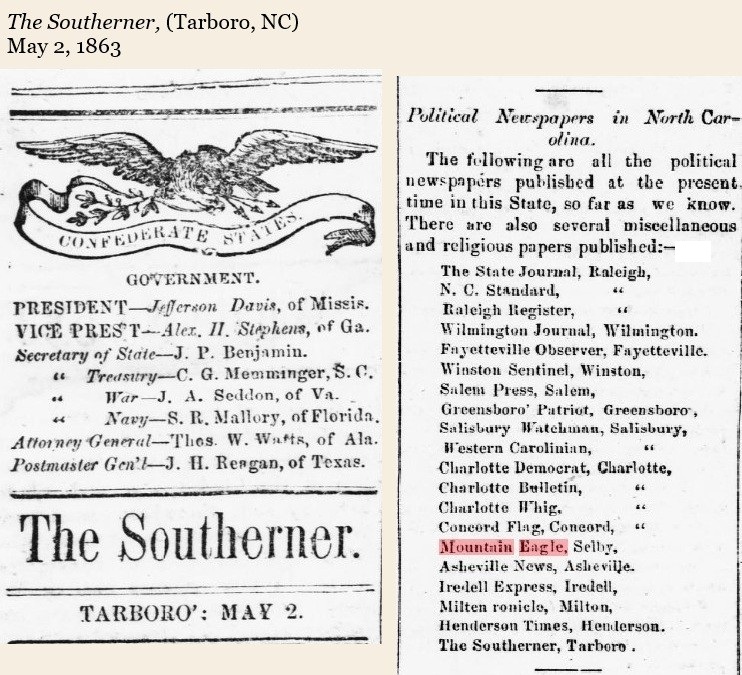
Over the next several decades, newspapers came and went. Dozens of Cleveland County newspapers have been digitized and can be accessed at DigitalNC.org or Chronicling America. Lincoln County newspapers can be accessed here. Rutherford County newspapers can be accessed here.
Below is a summary of historical newspapers, along with their publication periods, and first publishers and/or editors.
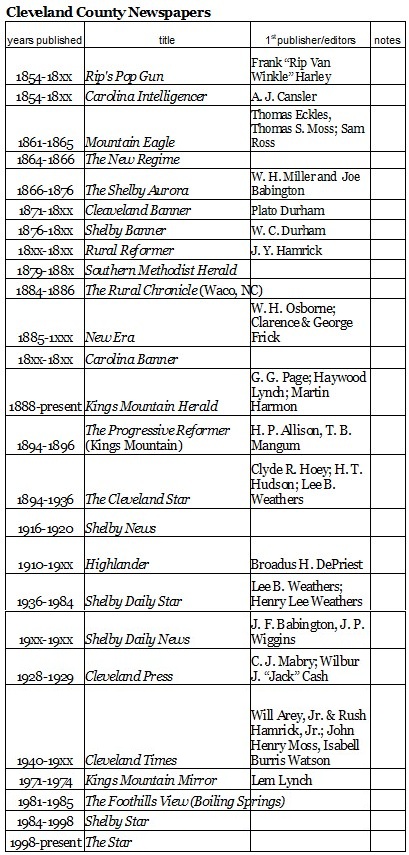






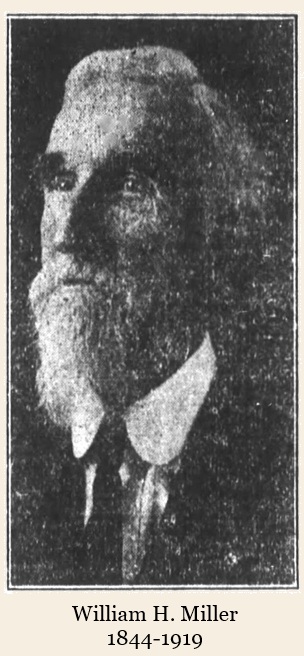
William H. Miller established the Shelby Aurora in 1866. It was published longer than any other newspaper other than The Cleveland Star (which became The Shelby Daily Star, renamed Shelby Star, presently named The Star.)





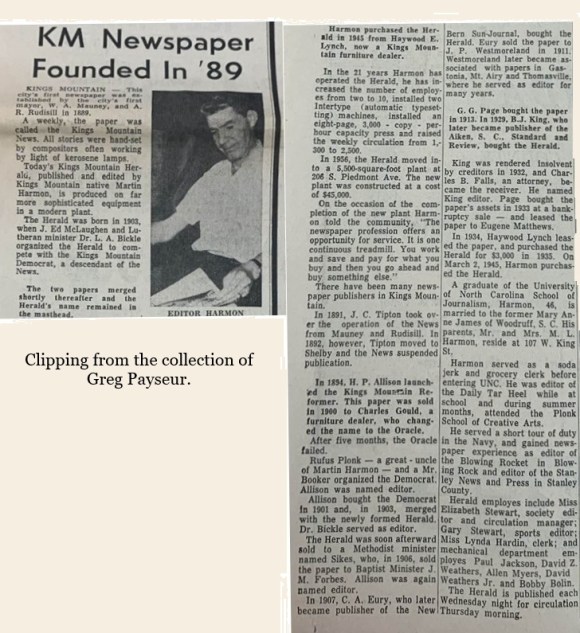
A Sampling of Local News Over the Years
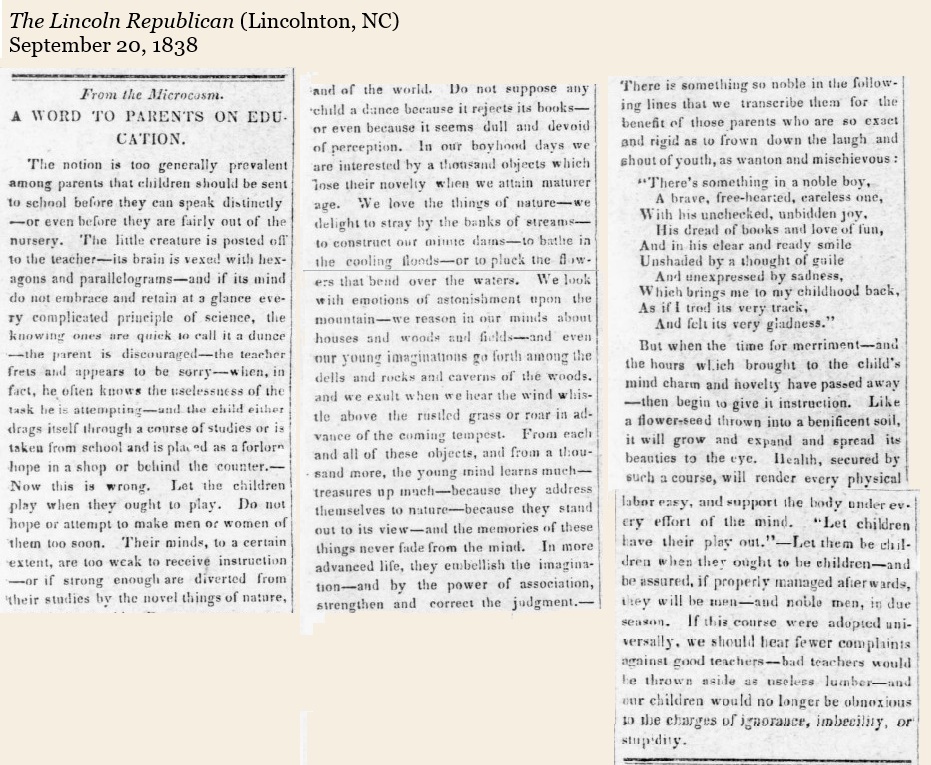
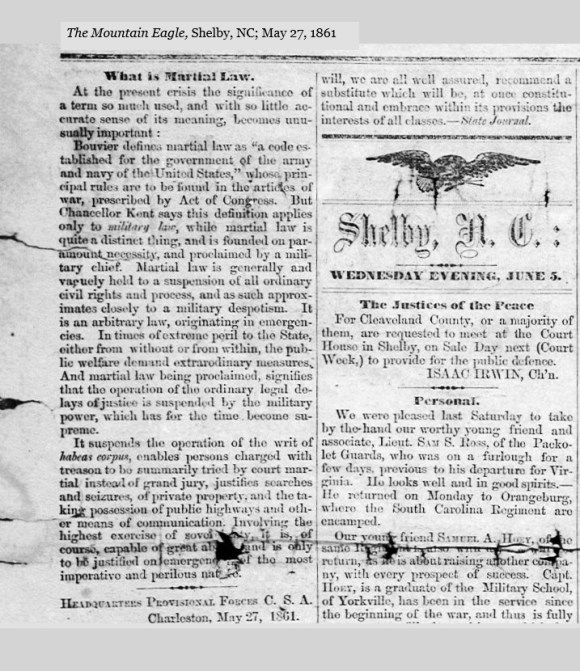
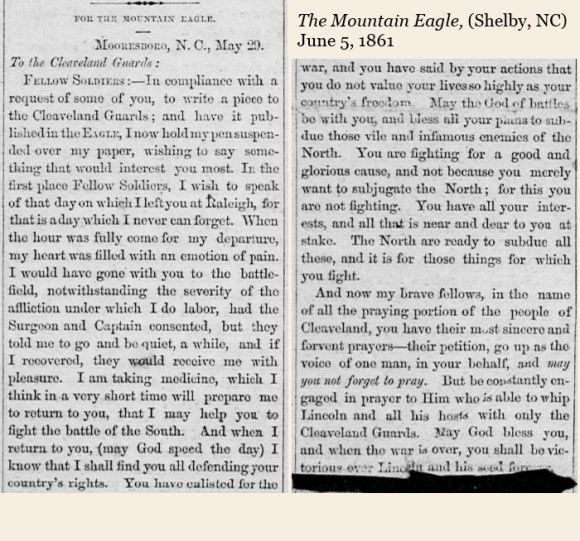
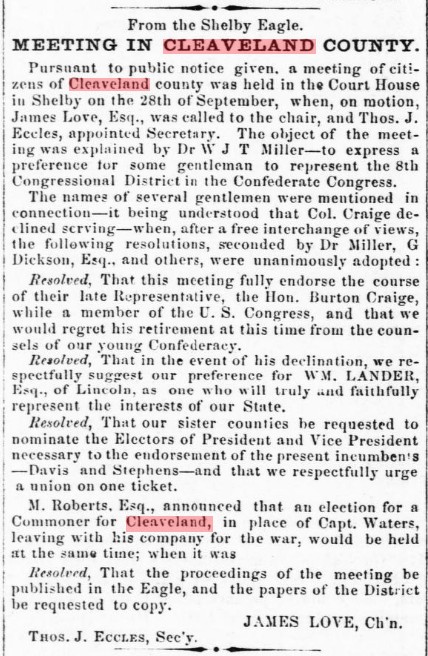
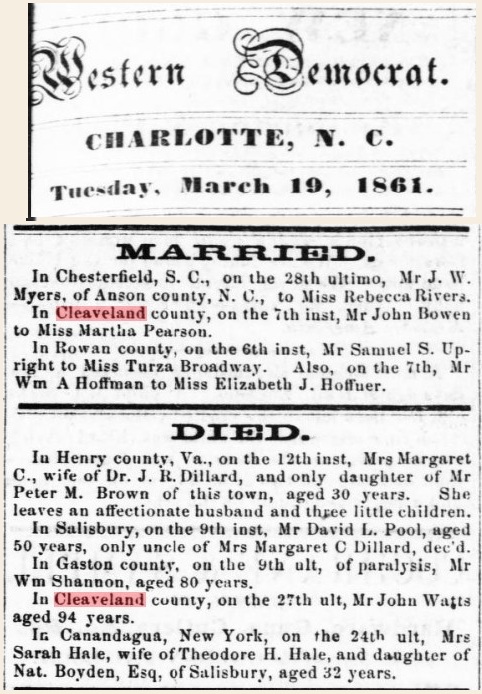
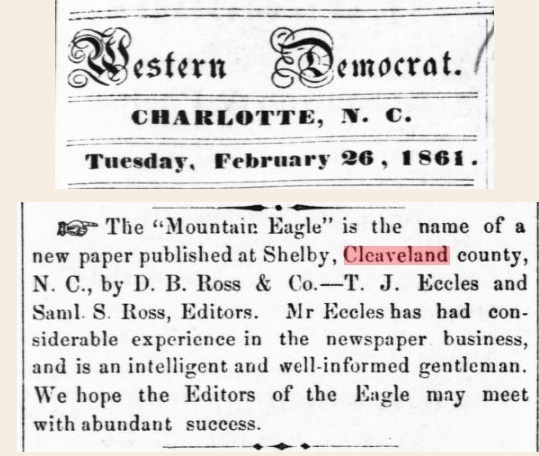
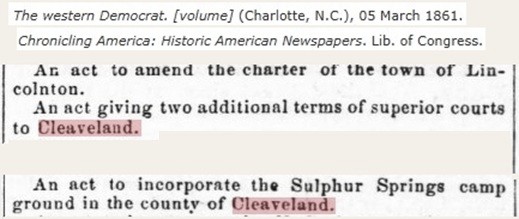
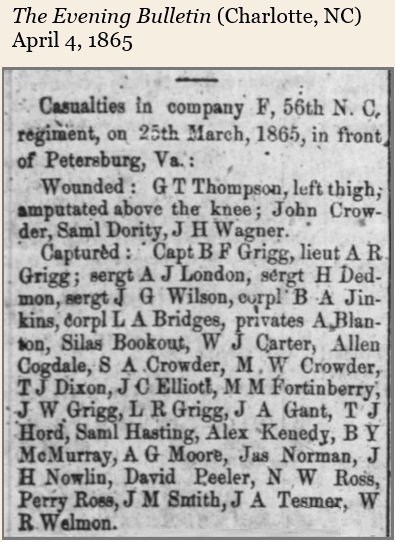
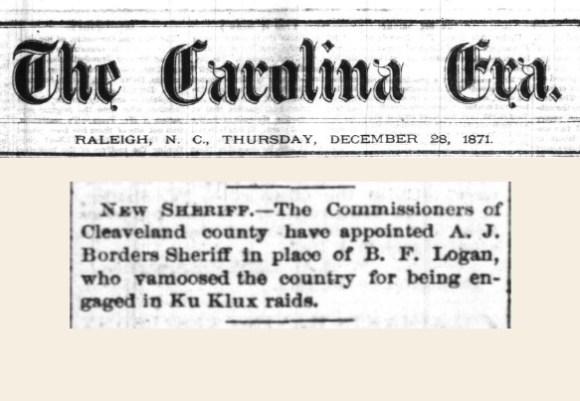
Some of these articles have been automatically clipped from the online images, then organized into two or three columns for optimal display on your computer screen. As a result, they may not look exactly as they did on the original page. The articles can be seen in their original form by visiting the cited online source.
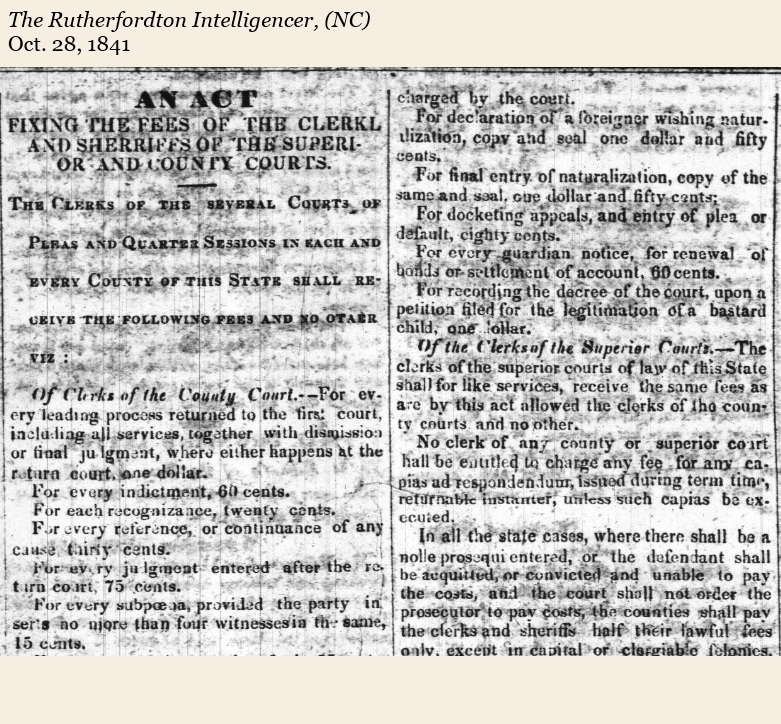
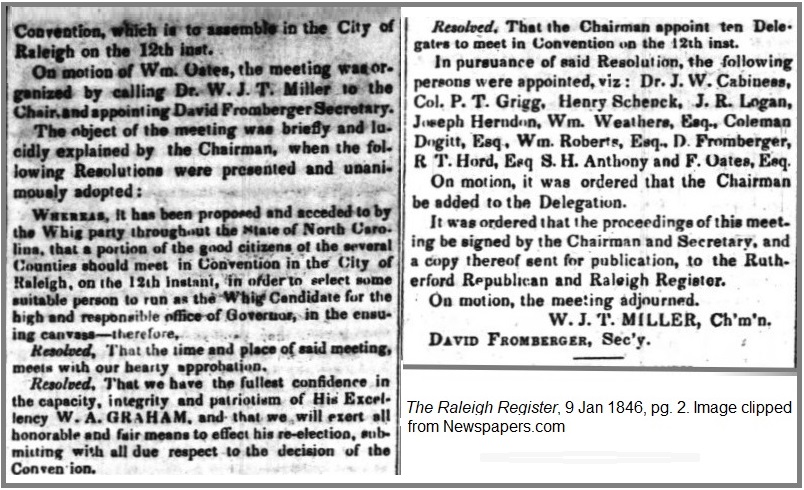
Antebellum Years, 1836-1861
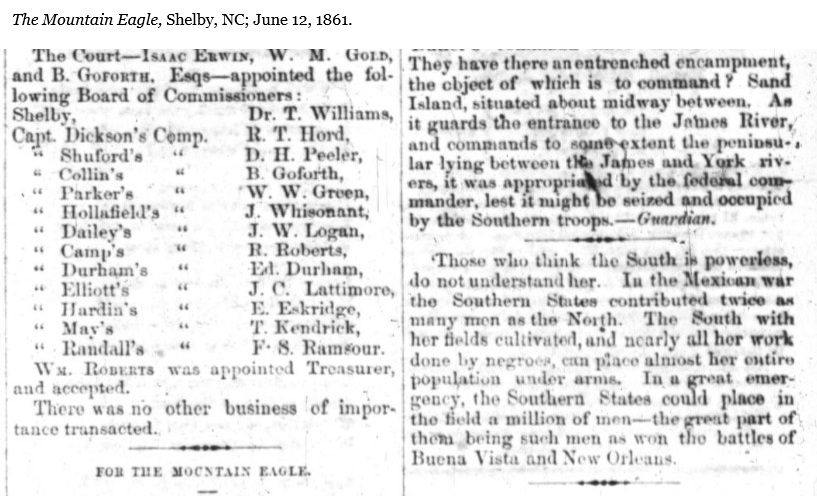
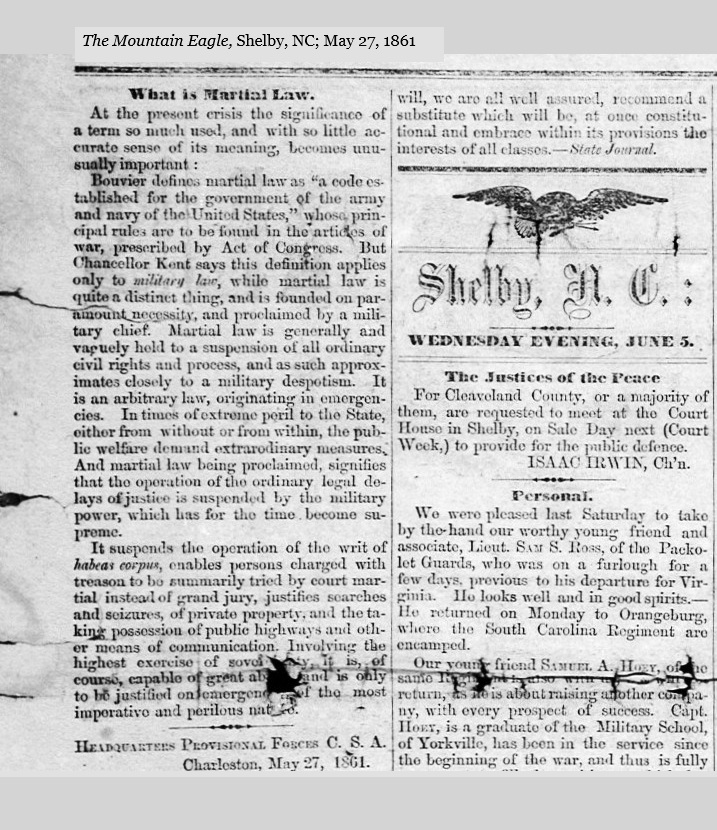
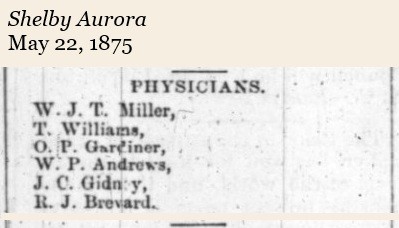
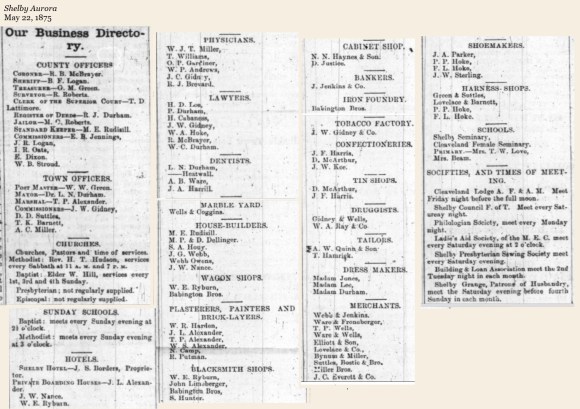
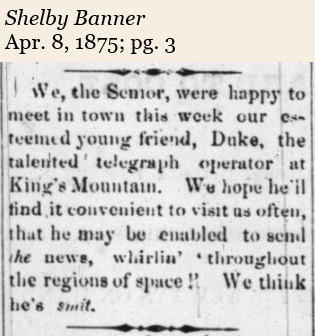
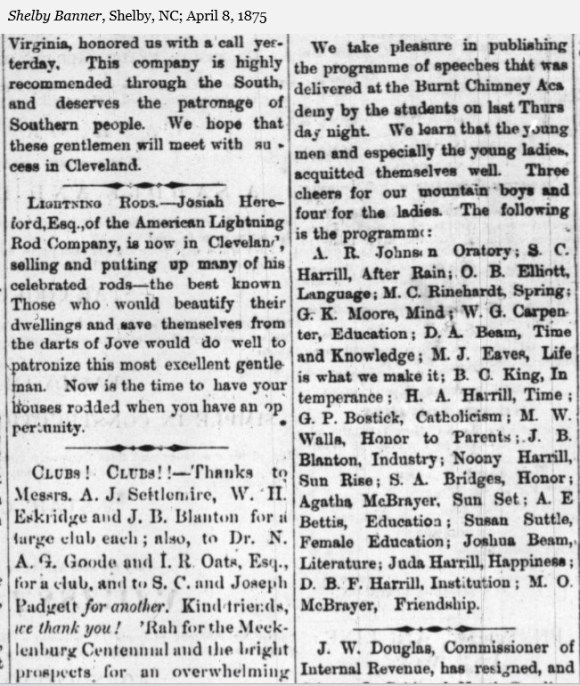
The Civil War and Reconstruction, 1861-1875


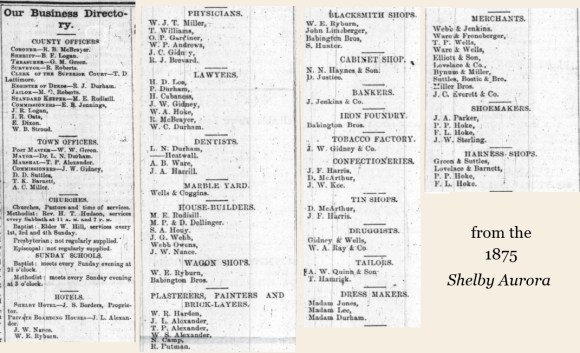
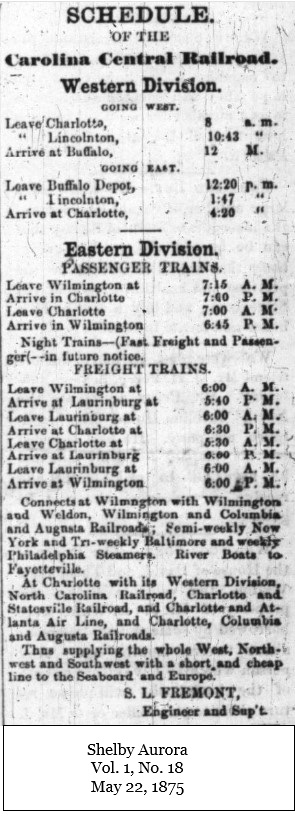
The Rise of Industry, 1876-1890
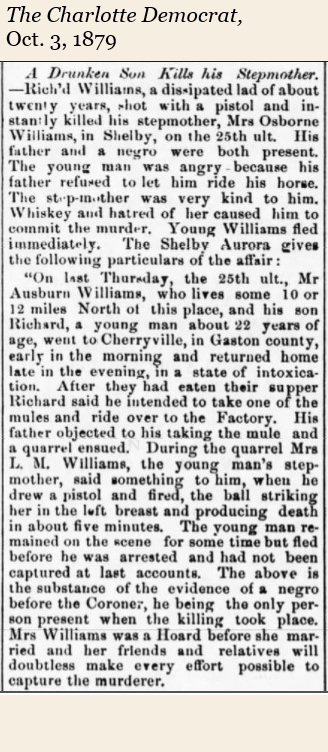
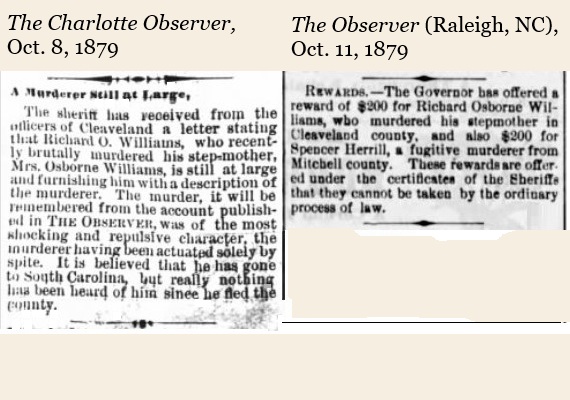
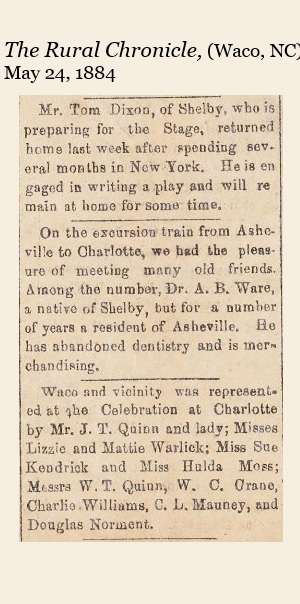
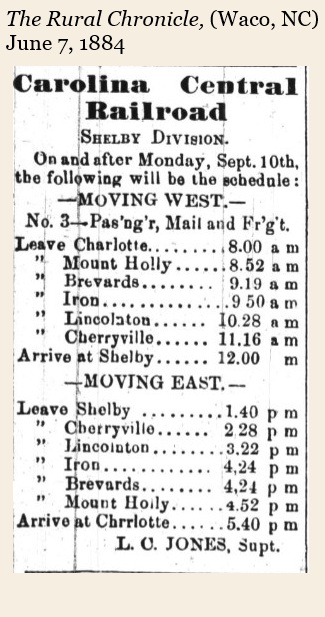
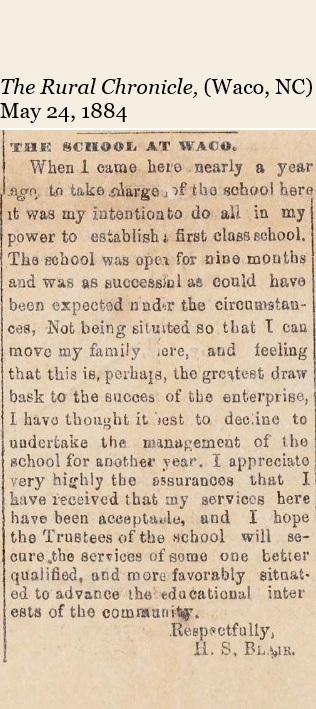
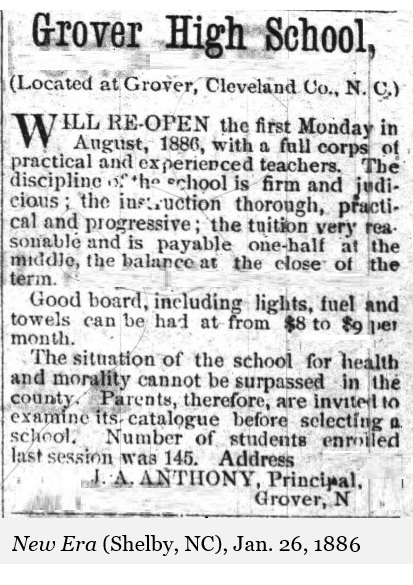
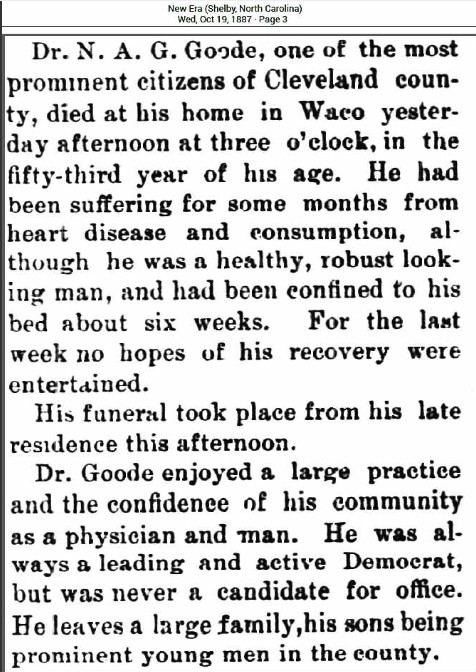
The Progressive Era, 1890-1929
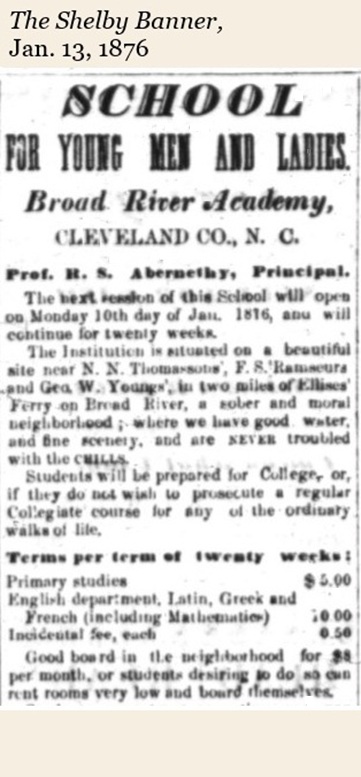
1876 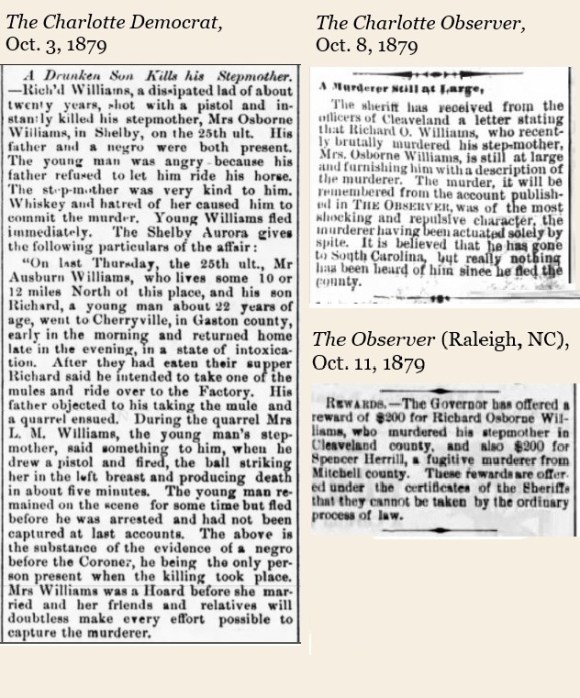
1879 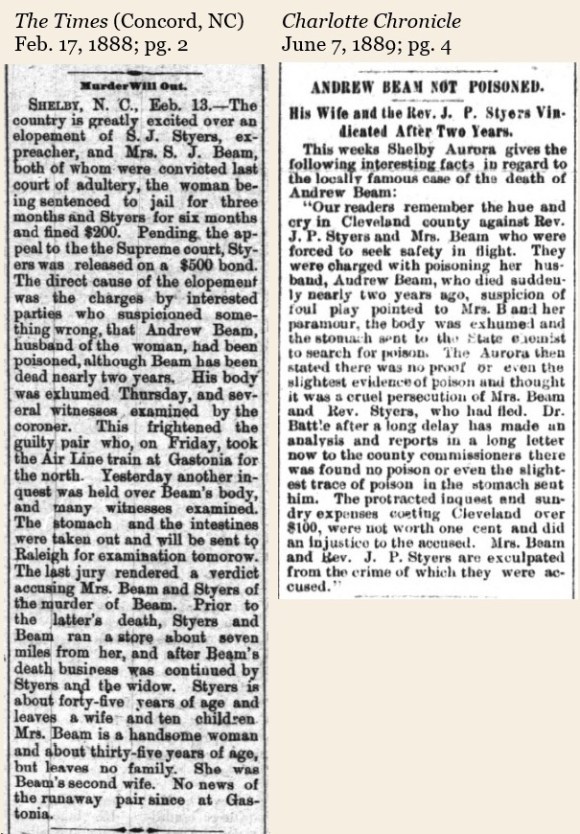
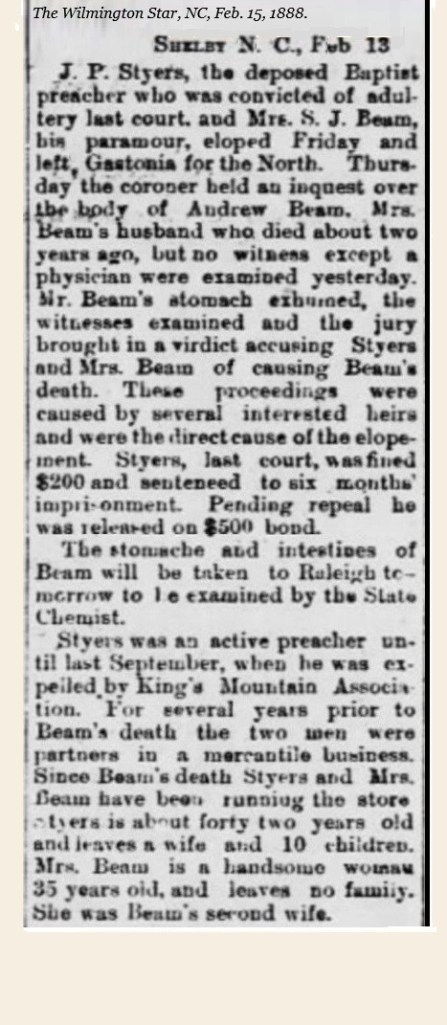
1888 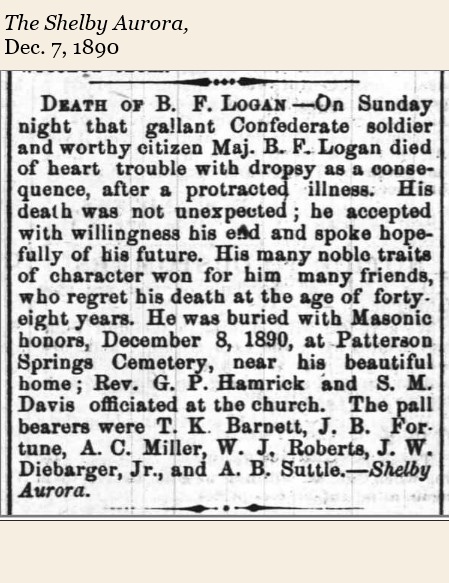
1890 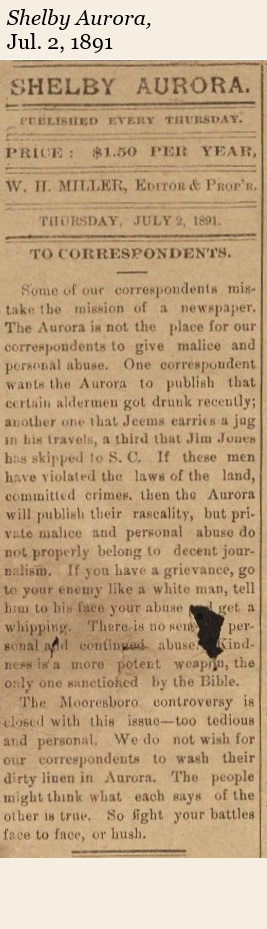
1891 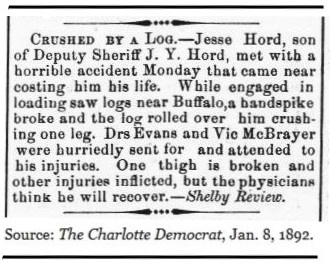
1892 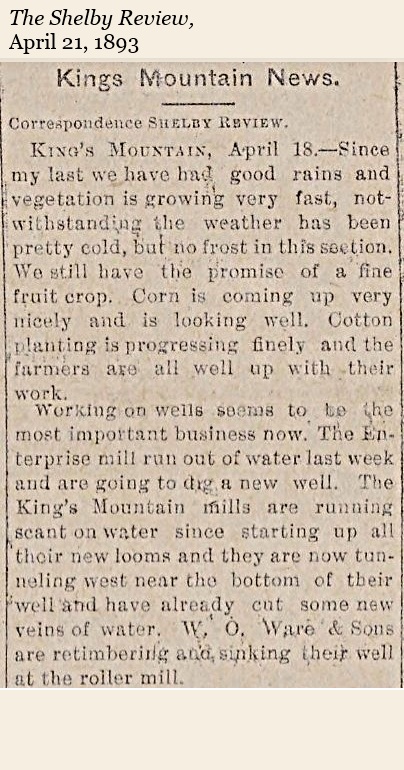
1893 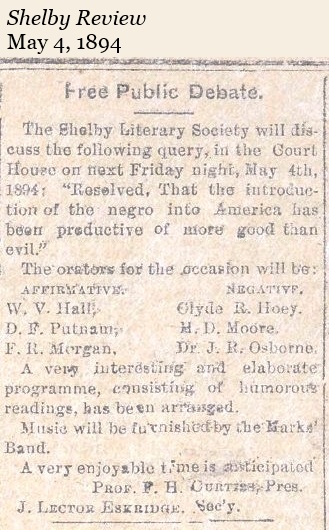
1894 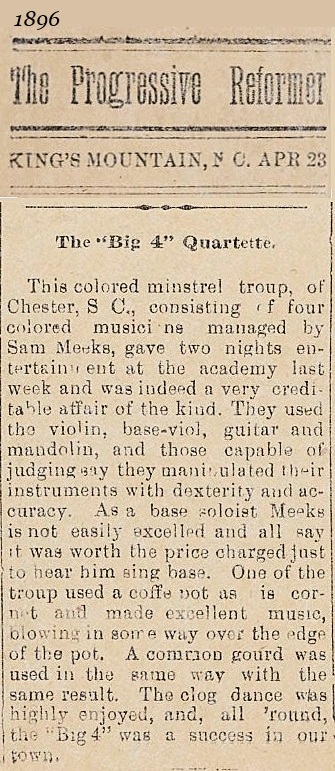
1896 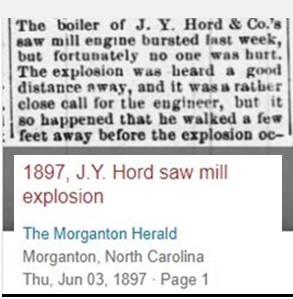
1897 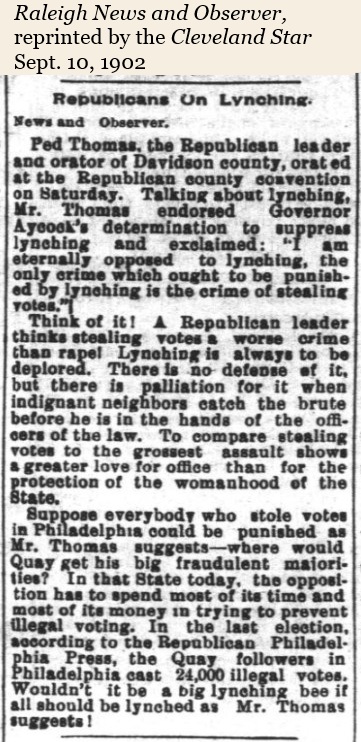
1902 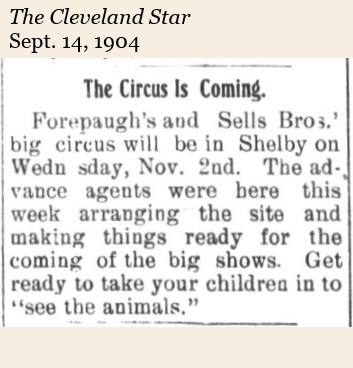
1904 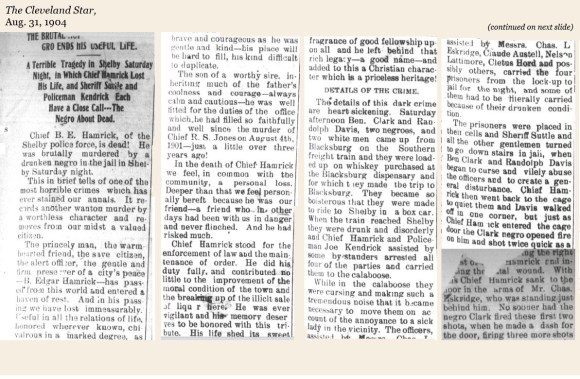
1904, slide 1 of 3 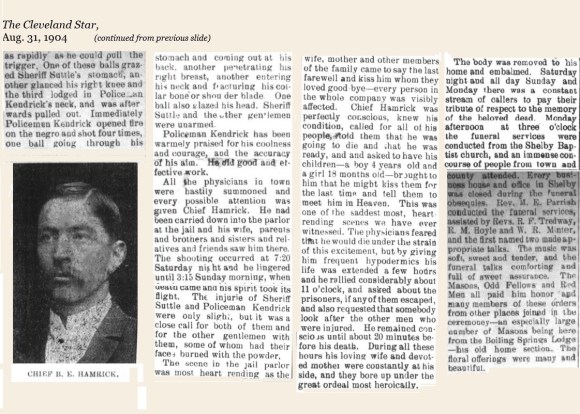
1904, slide 2 of 3 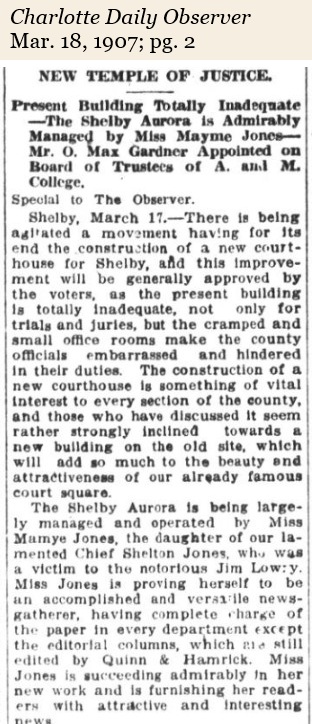
1907 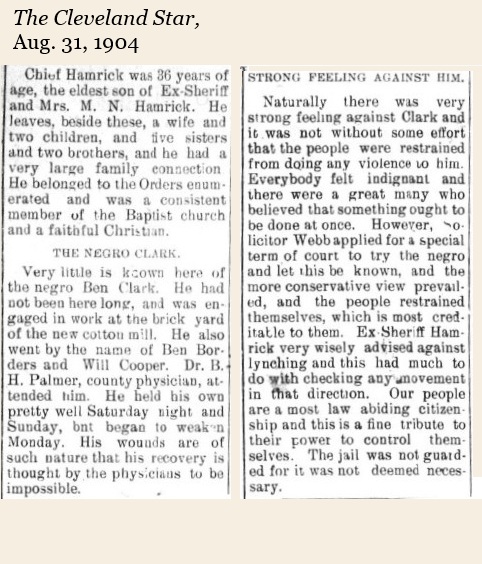
1904, slide 3 of 3 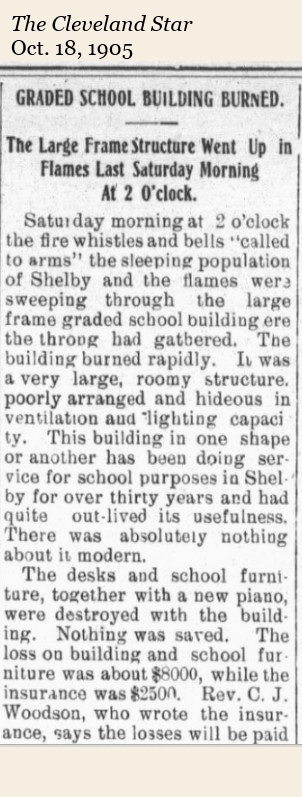
1905 
1906 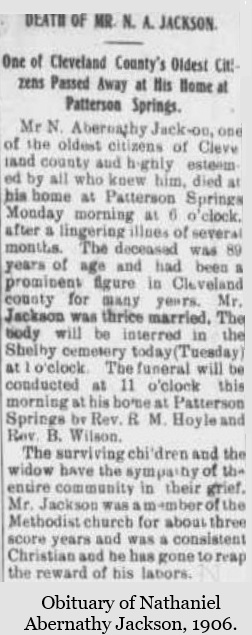
1906. Nathaniel Abernathy had built the first mill in Cleveland County–the Double Shoals Mill in 1871. 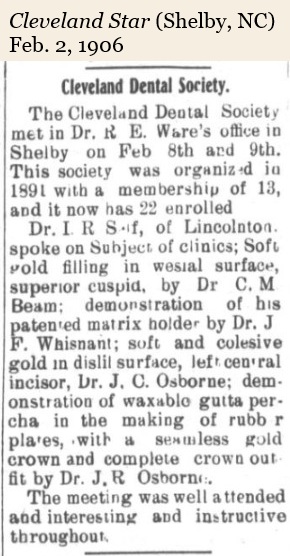
1906 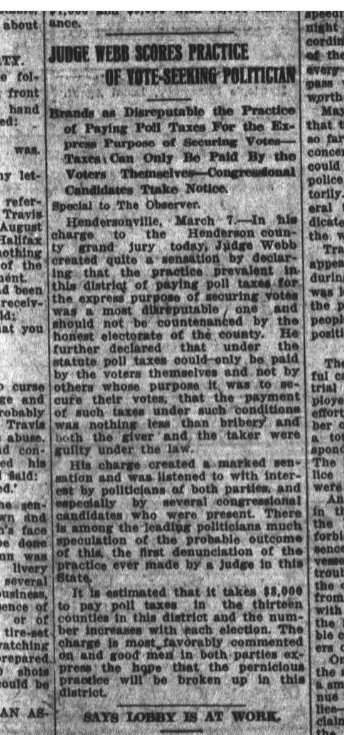
1910 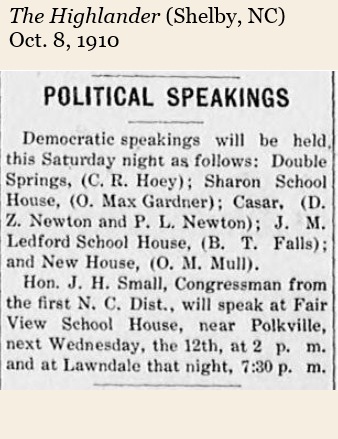
1910 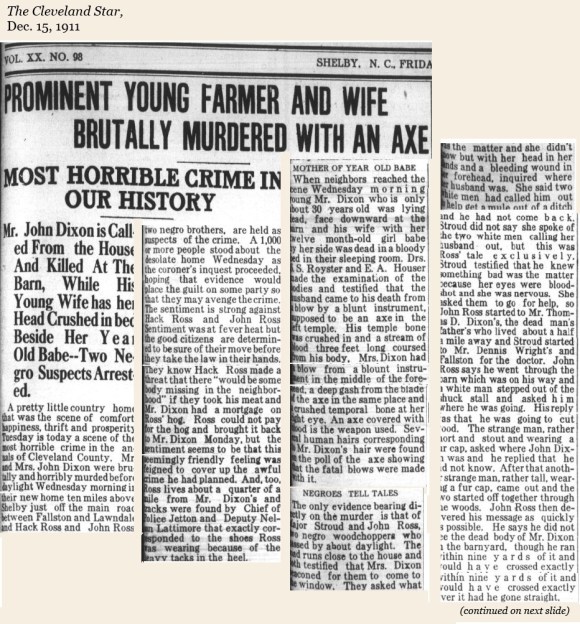
1911 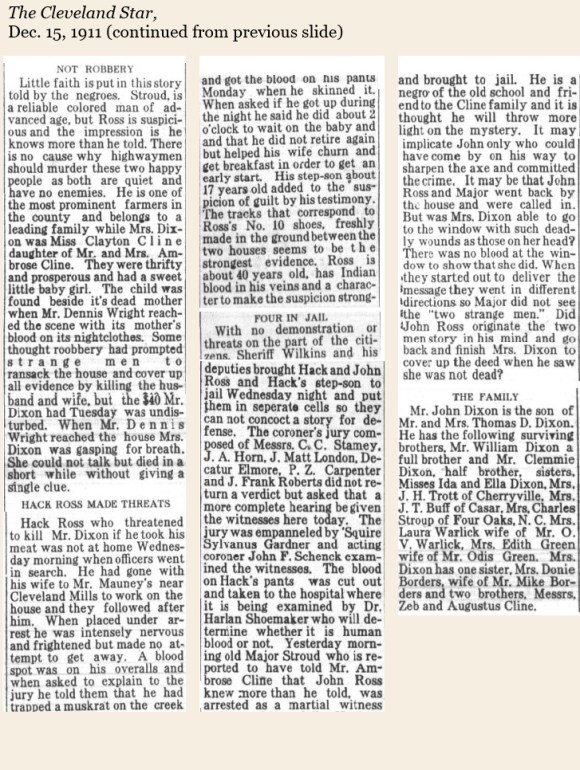
1911 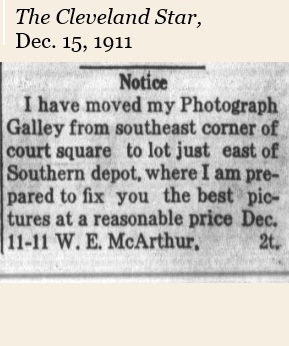
1911 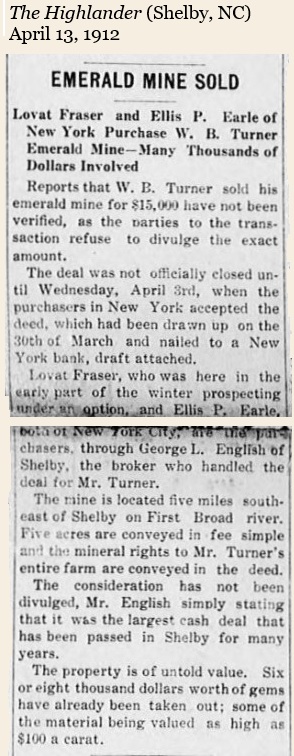
1912 
1912 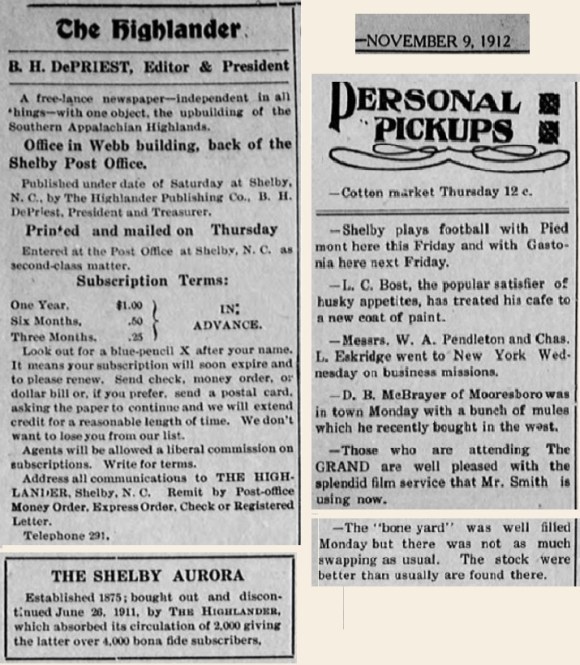
1912 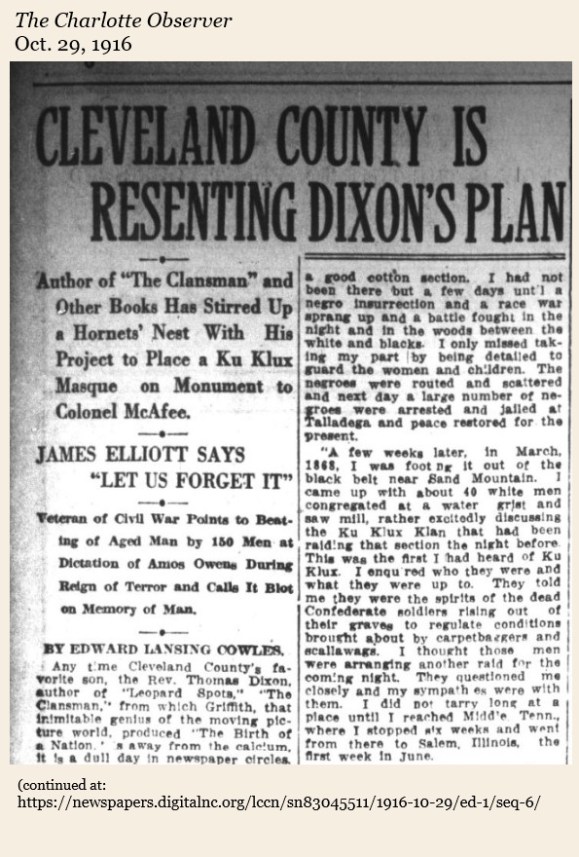
1916 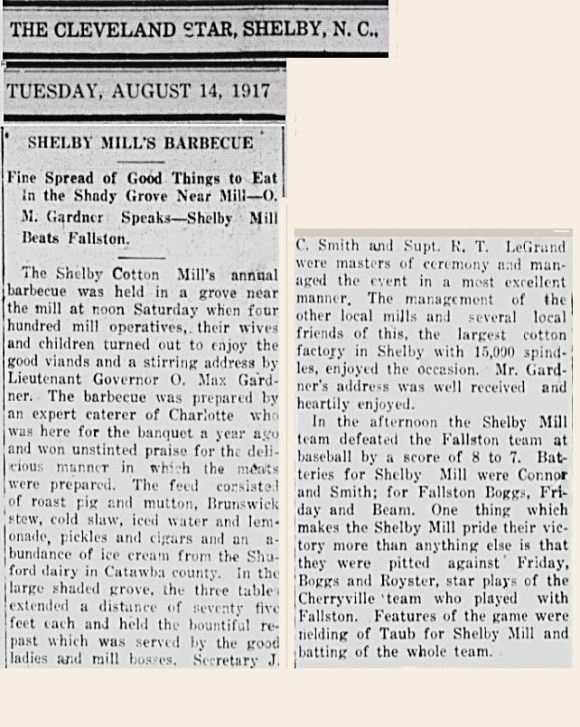
1917 
1918 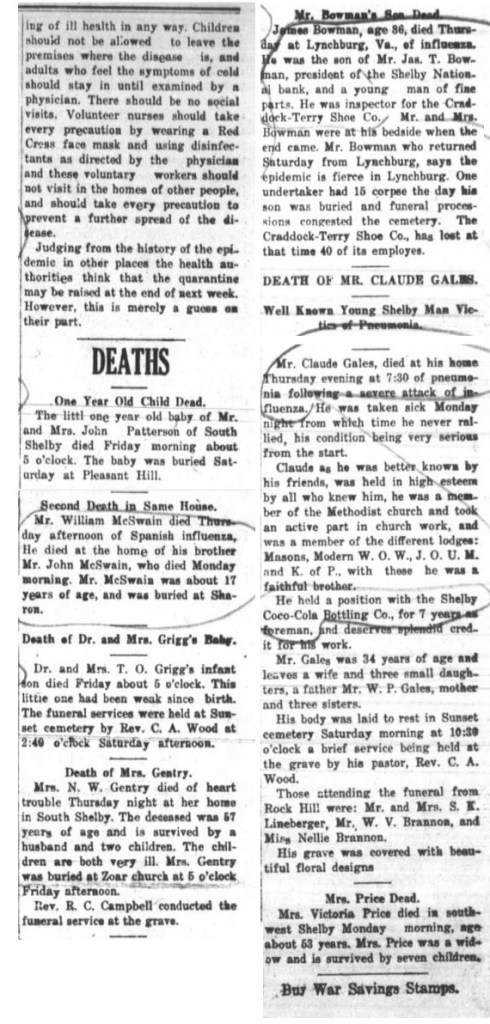
1918 
1919 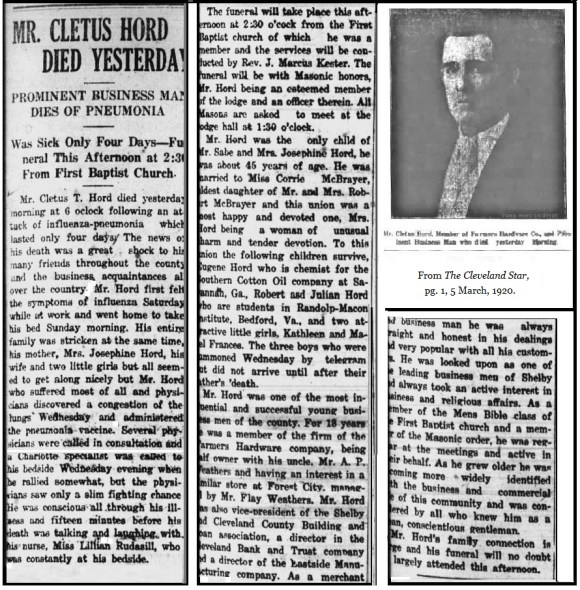
1920 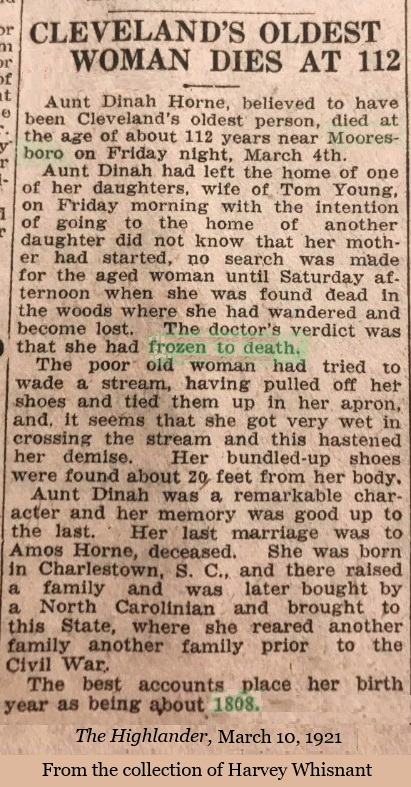
1921 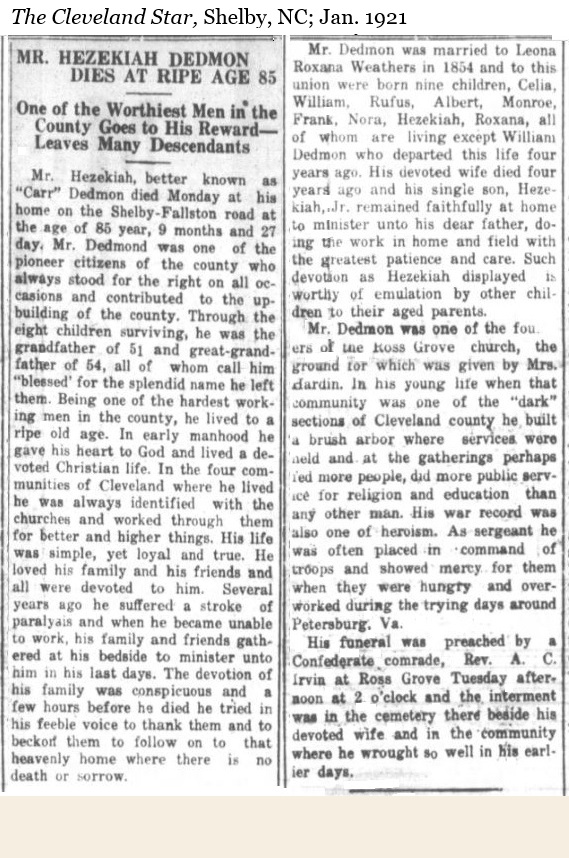
1921 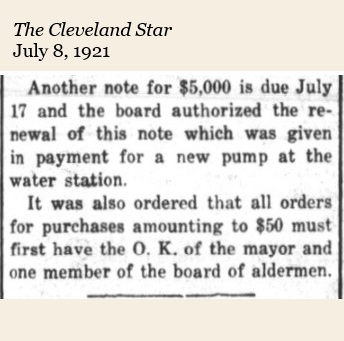
1921 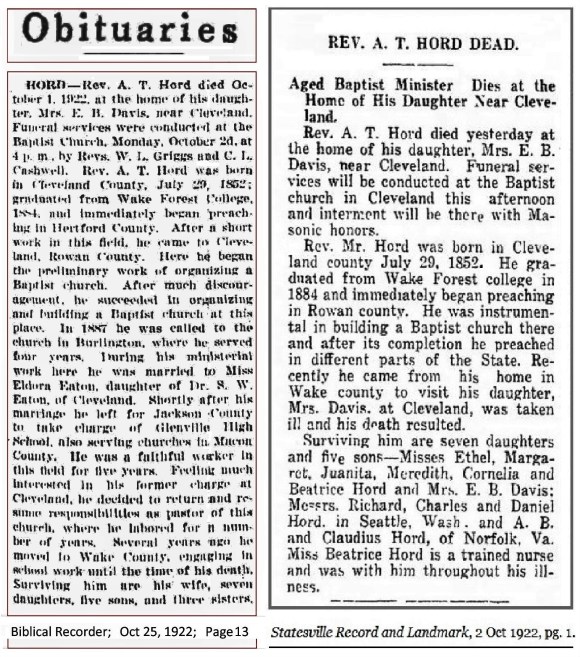
1922 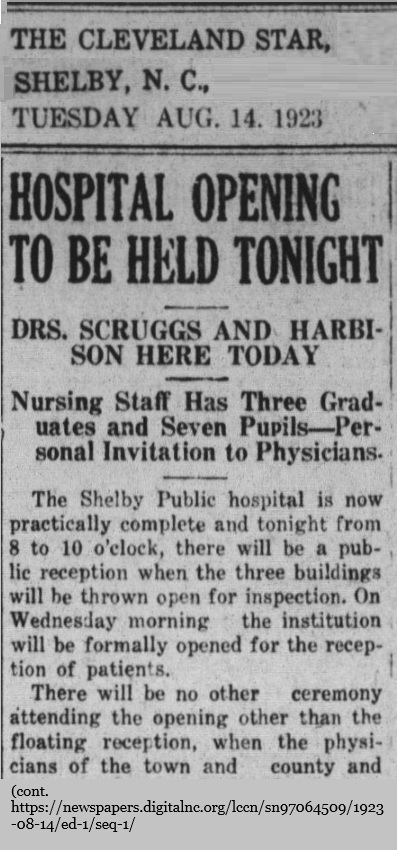
1923 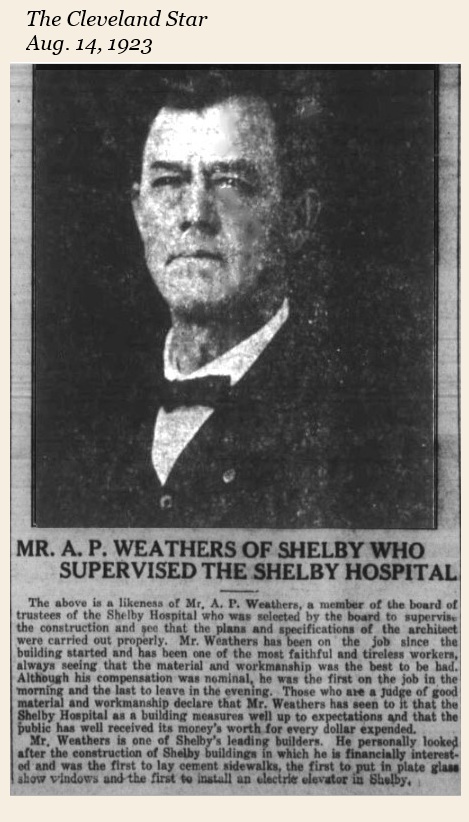
1923 
1916 – the slogan goes back a long way. 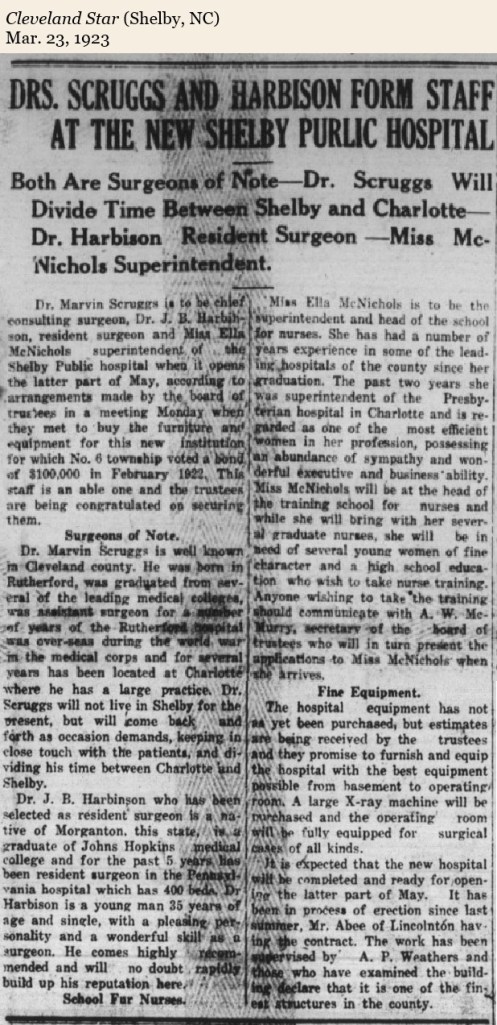
1923 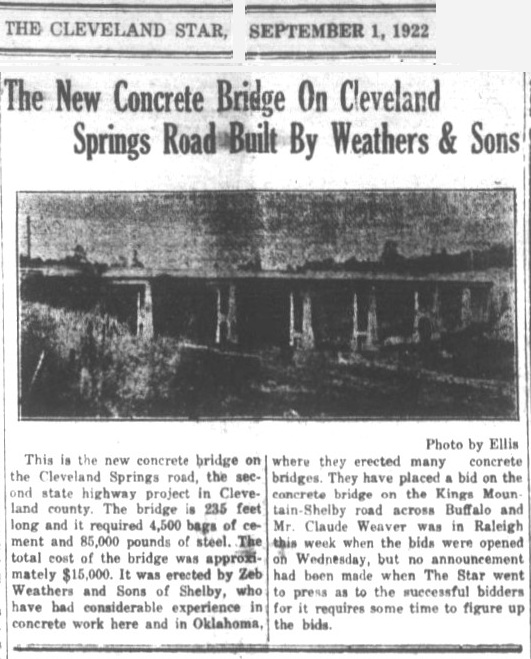
1922 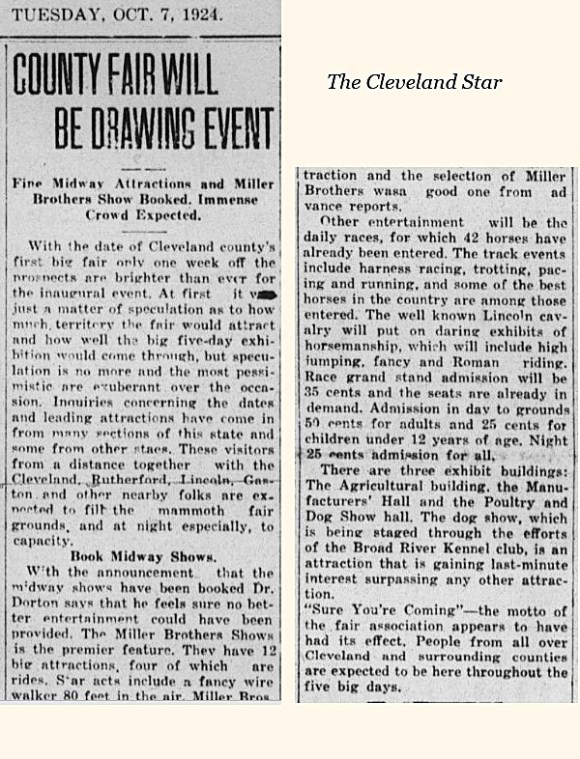
1924 – the 1st CC Fair 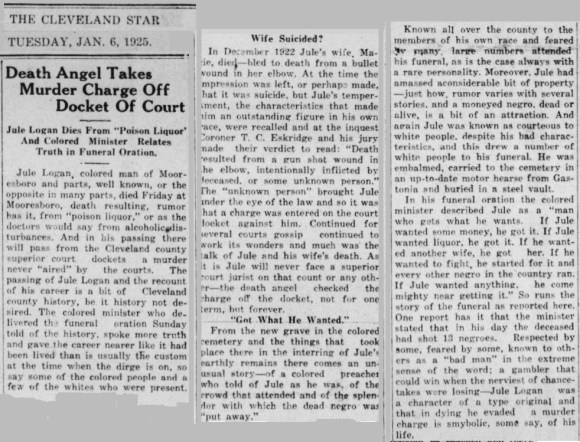
1925 
1927 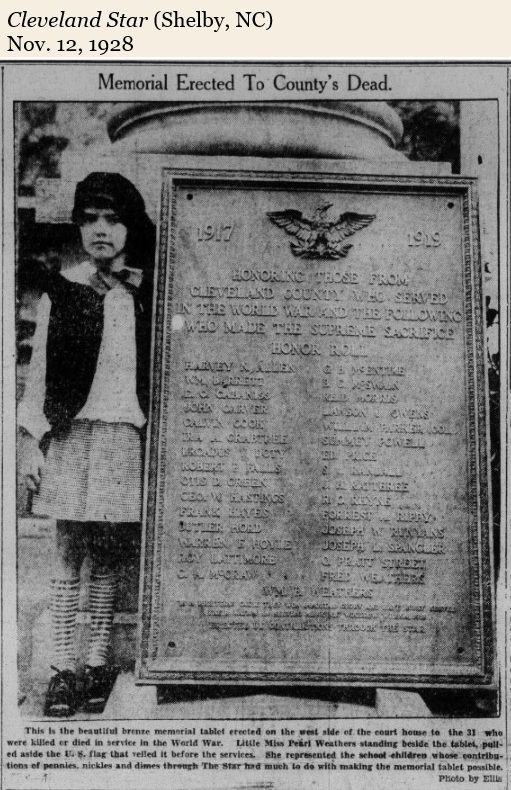
1928 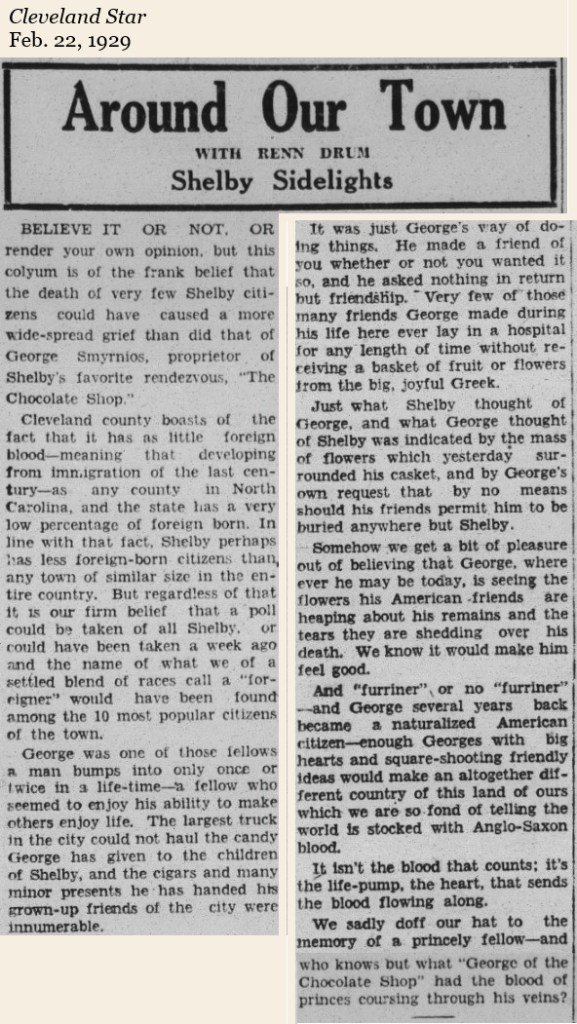
1929
The Great Depression and World War II, 1929-1945
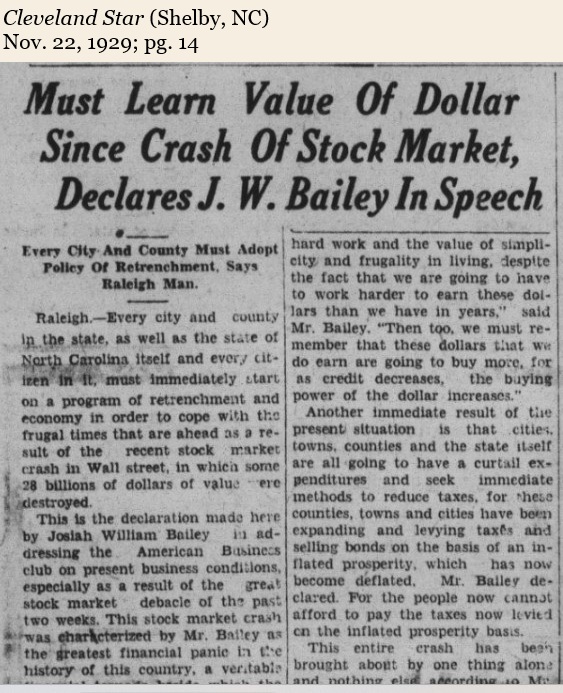
1929 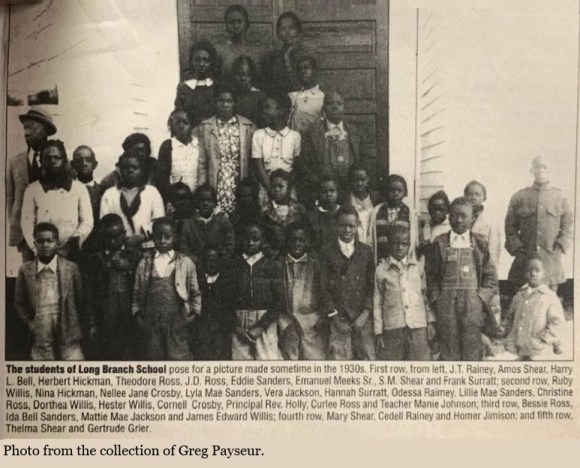
Long Branch School; 1930s. 
Clipping from the collection of Greg Payseur. 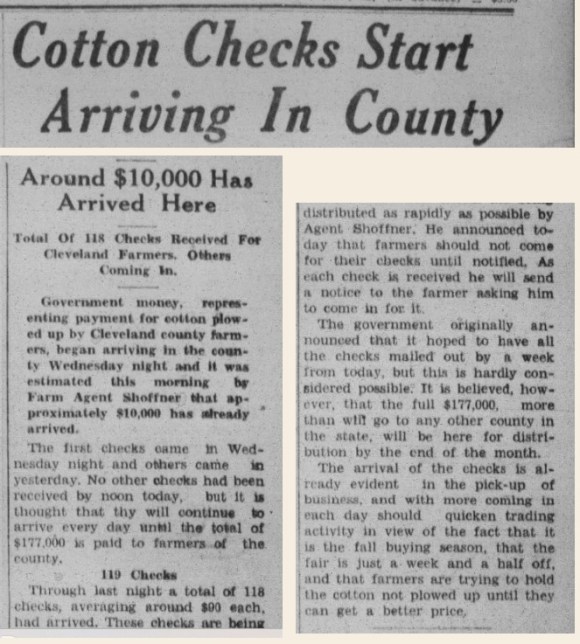
1933 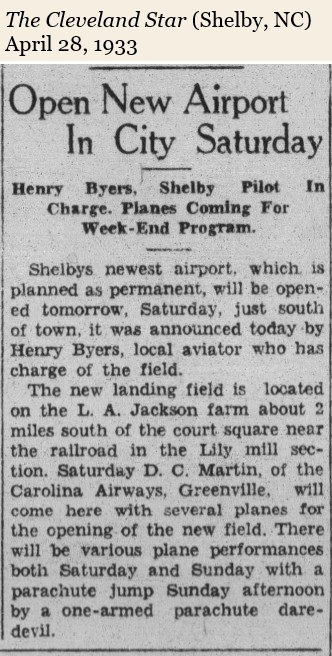
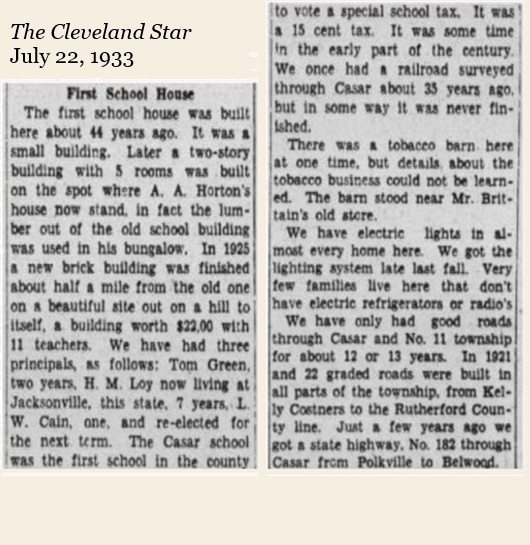
1933 article about the history of Casar School 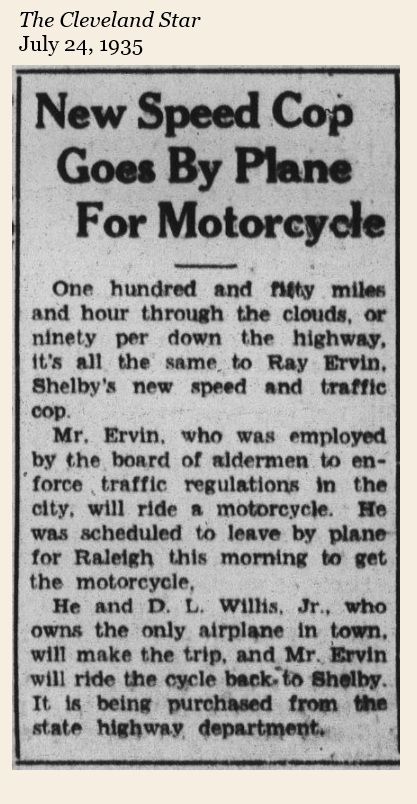
1935 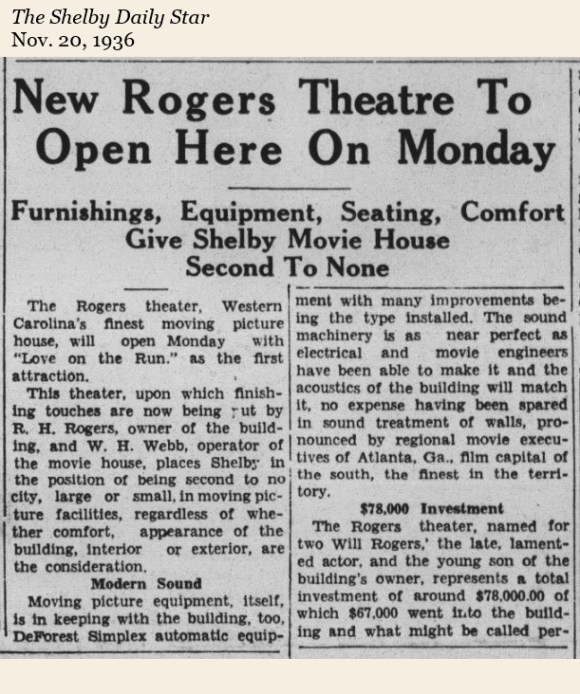
1936 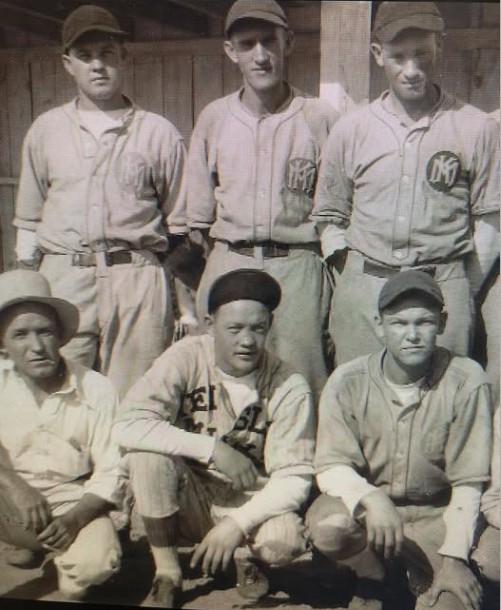
Minette Mills Baseball Team; 1930s. From the collection of Greg Payseur. 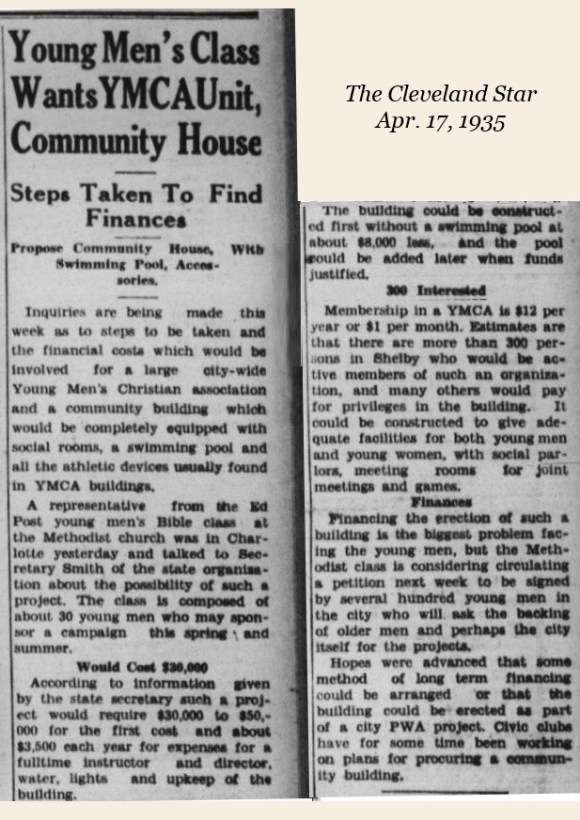
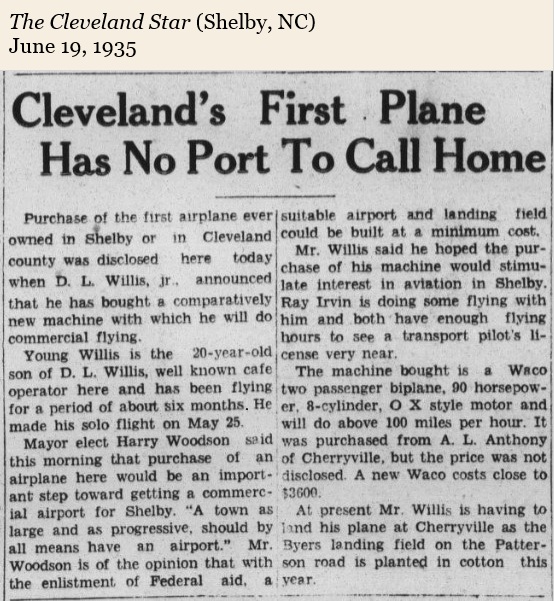
1935 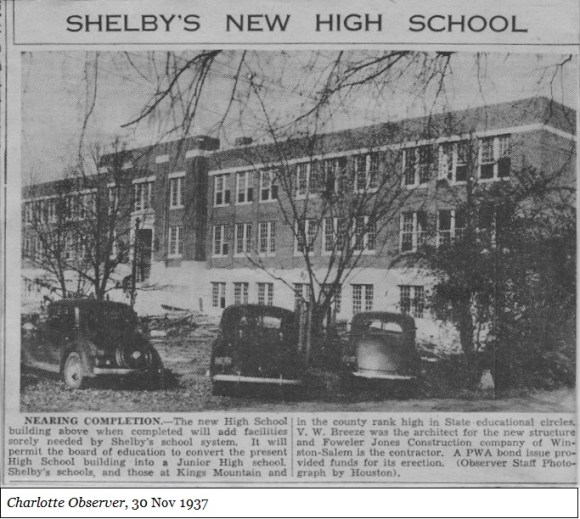
Shelby High School, 1937. 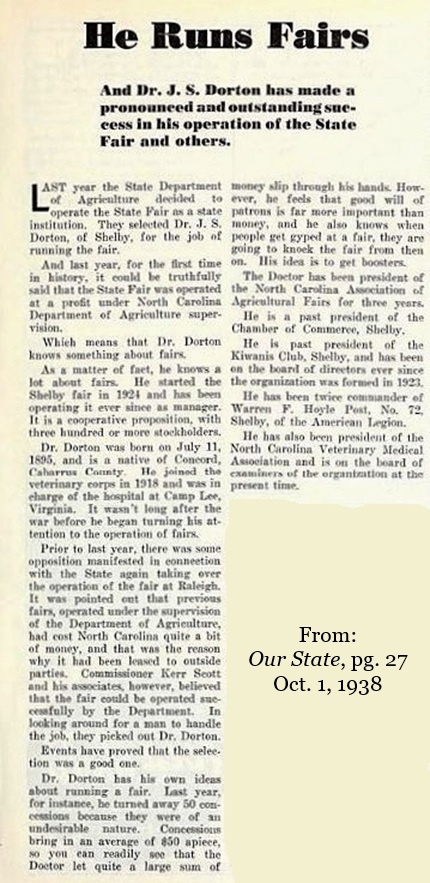

1945 – Train carrying FDR’s body travels through Grover and Kings Mountain. 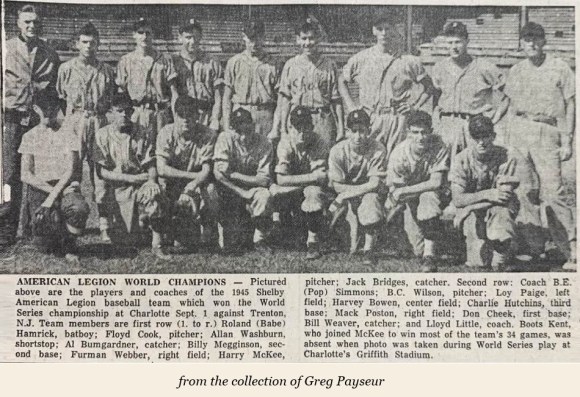
1945 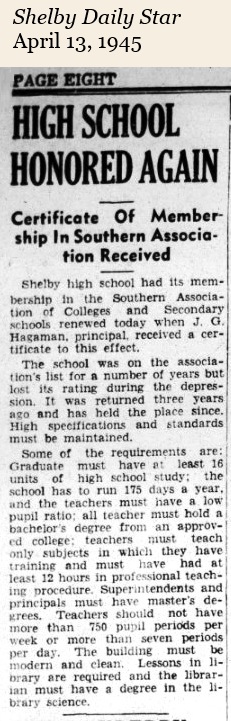
1945
Post-War, Civil Rights, and Cold War Era, 1945-1991
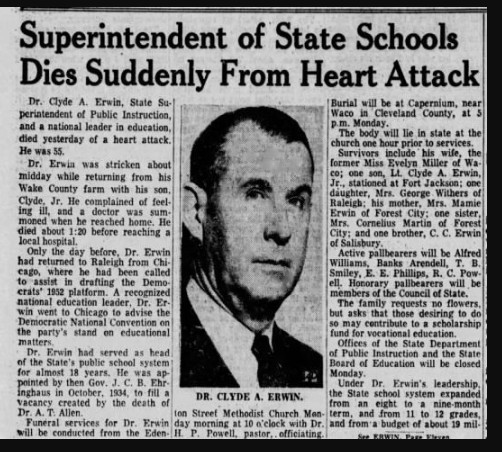
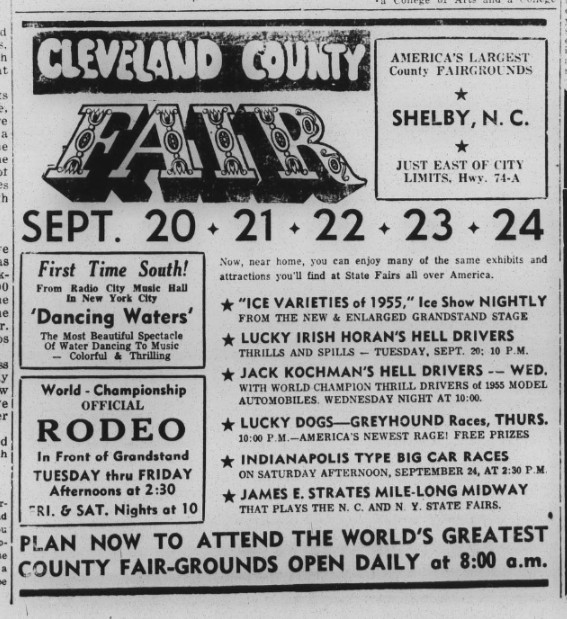
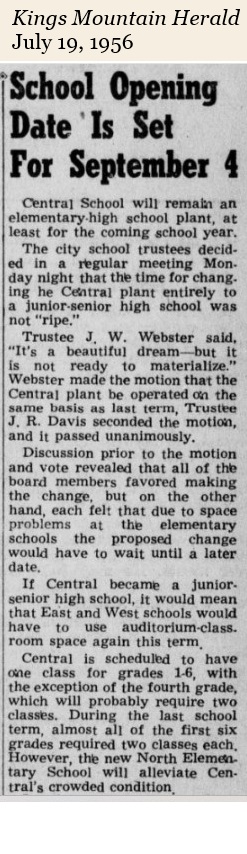
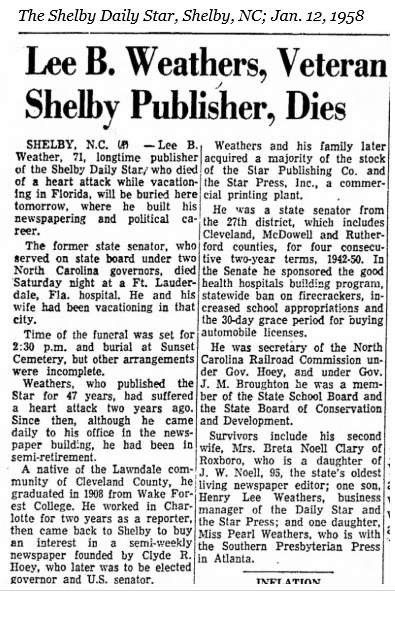
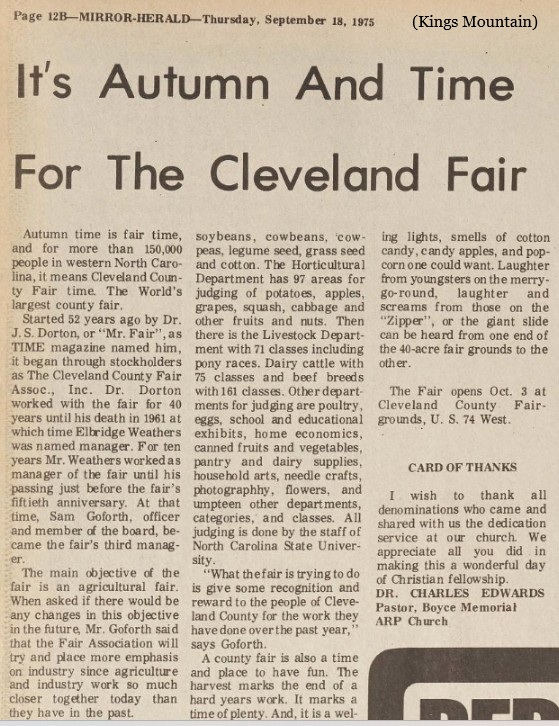
There were also earlier articles about people and events in the Charlotte and Raleigh newspapers of the day. Those may be found at Newspapers.com, although a paid subscription is required.
Radio
WOHS. The first radio station in Cleveland County started in 1946 as WOHS, 730 AM. Robert Wallace was the manager and soon turned over the programming to Hugh Dover. Dover had a popular morning show called “Carolina in the Morning.” One segment of his show was wishing happy birthday to those having a birthday, and so became known as the “Happy Birthday Man.”
The history of radio in Cleveland County continues here.
 Cleveland County History