The area that is now Cleveland County was once treasured for its numerous natural mineral springs. These springs included chalybeate, red sulfur, white sulfur, lithia, and other elements. Local lore maintains the Cherokee valued the various springs for the healing powers they held.
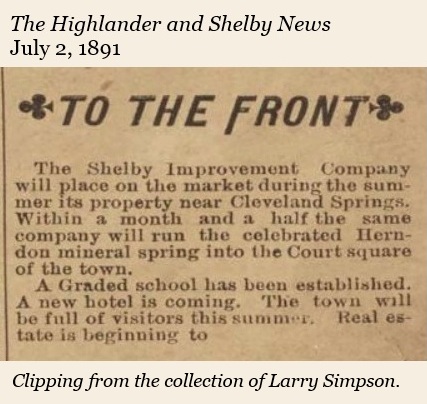
This newspaper clipping from 1891 documents the plan to run the Herndon mineral spring water into the court square. It is unclear where the Herndon spring was located or whether it was a different spring from the one known as Lithia Springs.
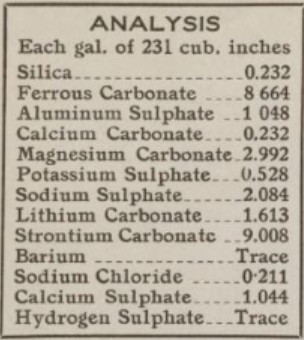
A 1917 survey published by the Shelby Lithia Water Company provided the analysis of the water at Lithia Springs four miles north of Shelby.
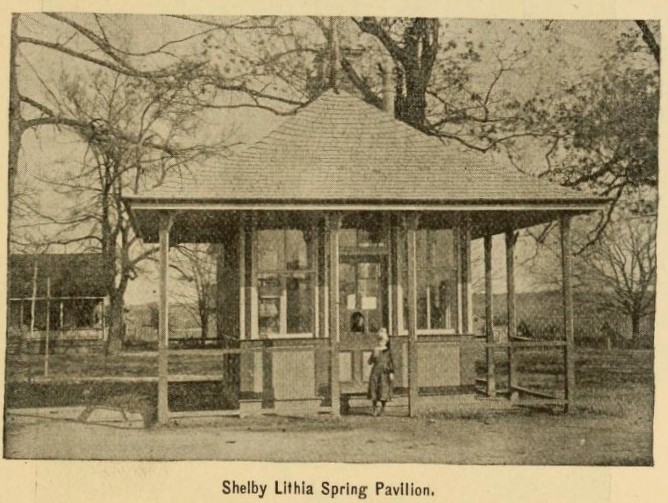
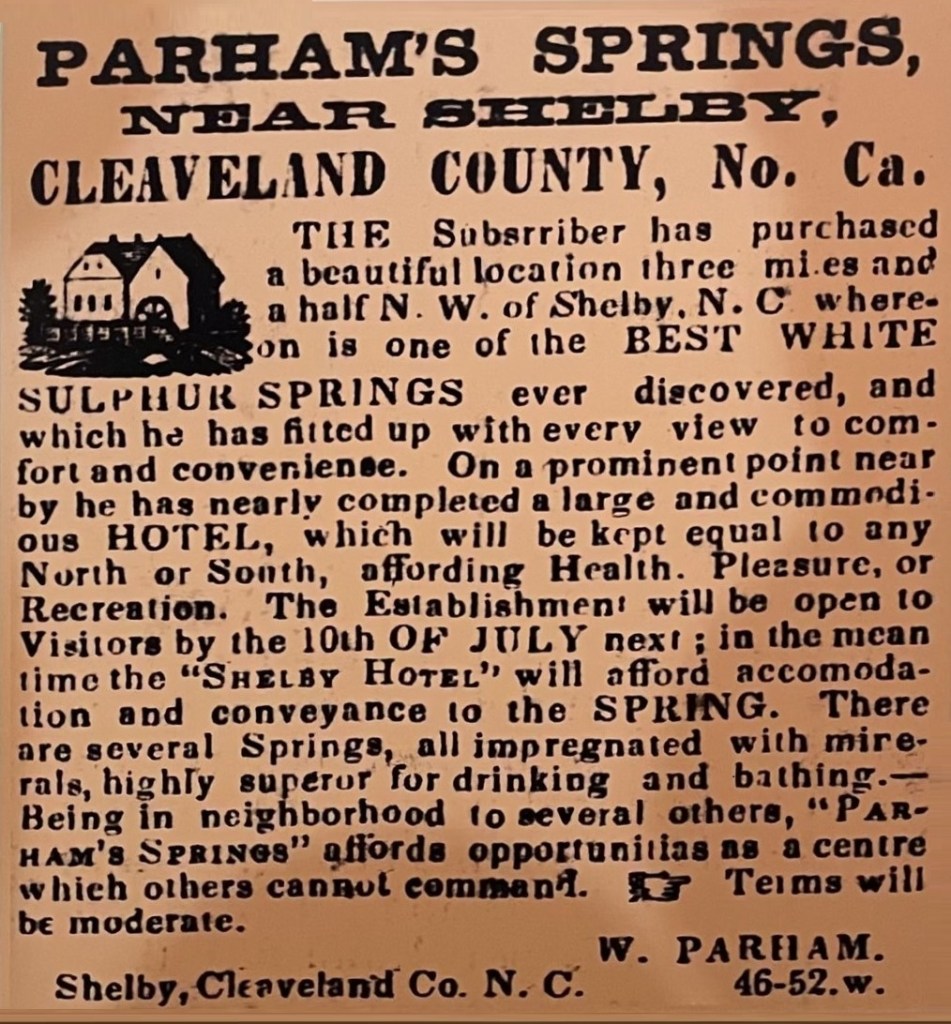
Parham’s Springs may have been on the land of Dr. William Parham. This ad spells the county as “Cleaveland,” indicating it was pre-1885.
William Parham was born in South Carolina in 1804. He was living in Cleveland County by the time of the 1850 census. Dr. Parham died of typhoid fever in June of 1879. It is unclear if his plan to build a hotel came to fruition. There is some speculation his hotel became the McBrayer Springs Hotel. From the description of the location of the springs in the above ad, this is not likely–unless the description of the location was off by six miles.
At one time, as many as 18 springs were counted within the bounds of Cleveland County. Several of our towns and communities were named after the springs located there–Boiling Springs, Patterson Springs, and Poplar Springs to name a few. The city of Shelby alone was known in the 19th and early 20th century as the “city of springs.”
The mineral springs around the county were predominately chalybeate (pronounced kuh-LIB-ee-uht), lithia, red sulfur, and white sulfur. The map below indicates the general vicinity for the springs mentioned in the history of Cleveland County.
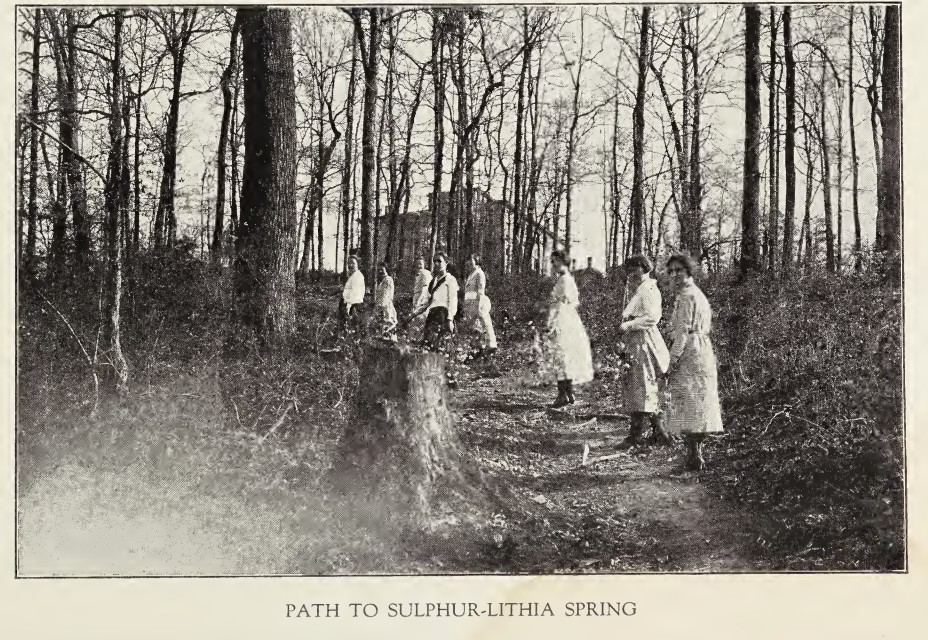

In 1894, George H. Chapin wrote the book, “Health Resorts of the South.” The entire book is available to read on The Internet Archive. The book’s chapter on Shelby begins on page 157. The chapter also includes some photographs of Shelby in the late 19th century.
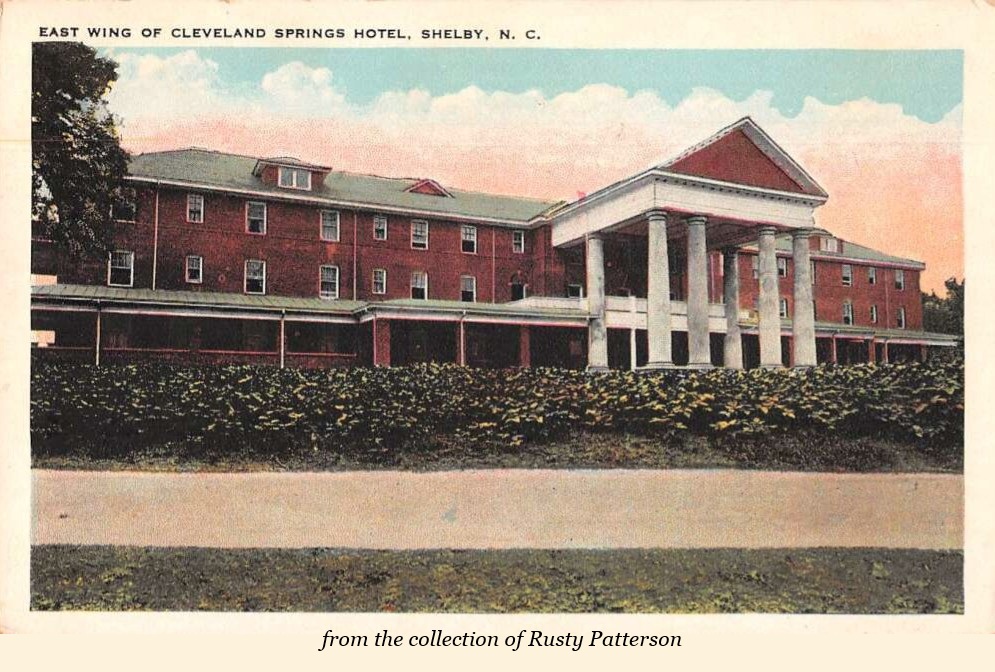
Of all the springs, Cleveland Springs is the most well known. Originally known as Wilson Springs, the springs were known for their healing properties and became a tourist mecca for a time. Visitors would bathe in and drink the mineral-rich water. Its history is documented below by Larry Simpson, a descendant of the Wilson family.
Larry Simpson: “on the left is the second built around 1865. The long section on the right was added later. Together it’s considered the second (Cleveland Springs Hotel). Many improvements were made over several years. It was once used as a female academy in the off season.”
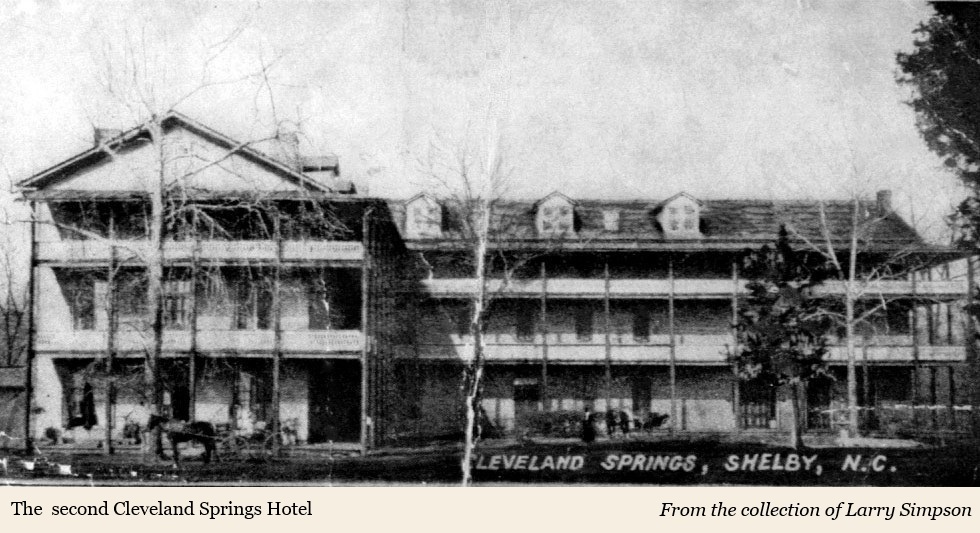
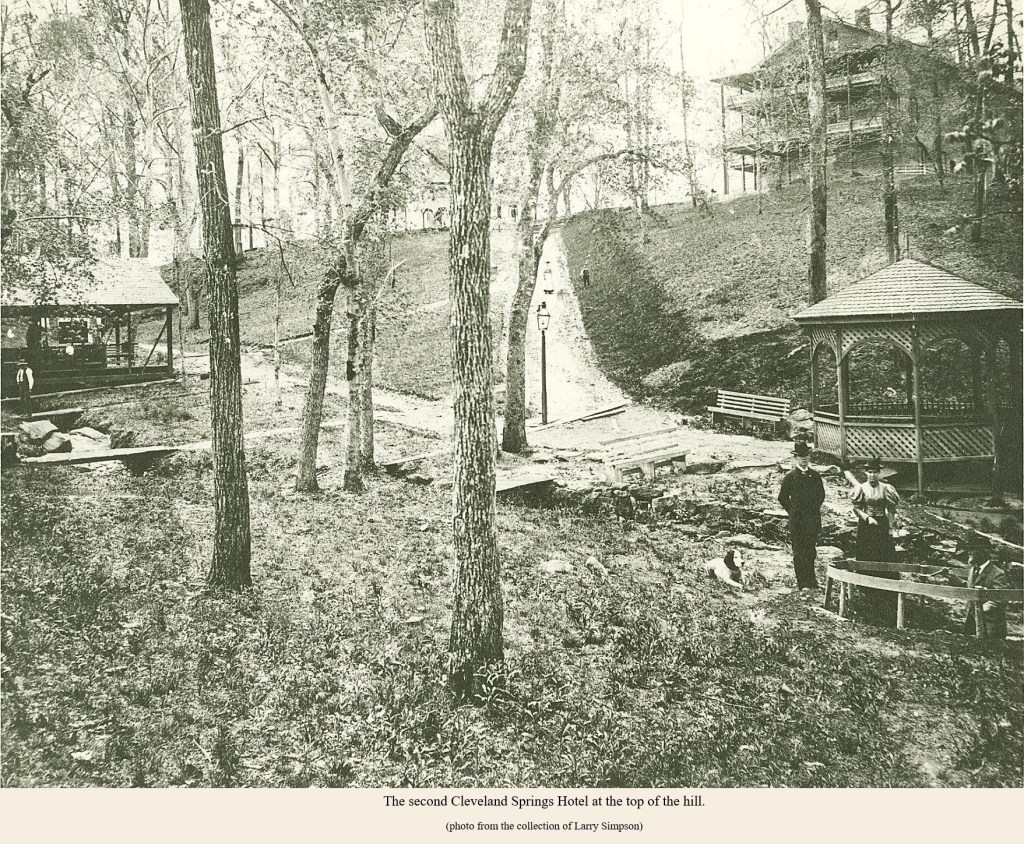
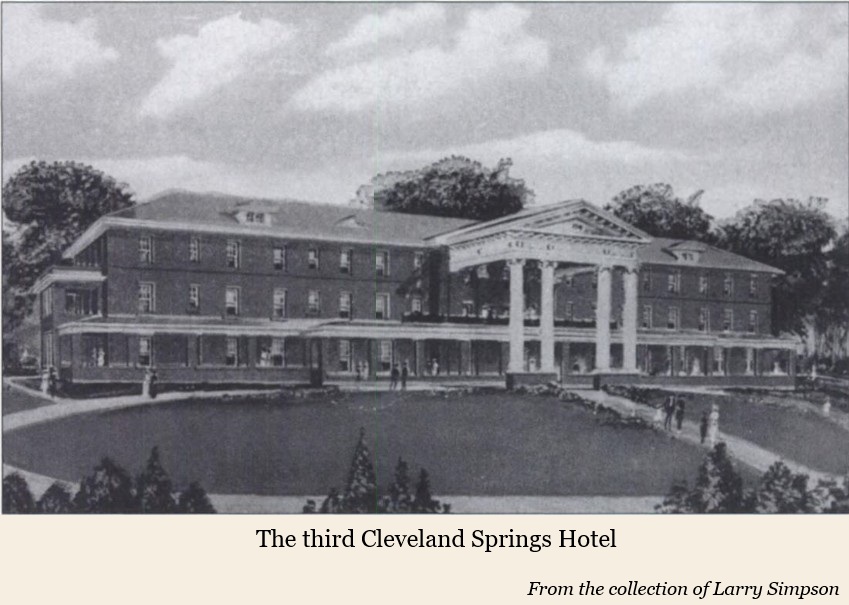
Larry Simpson put together a slideshow of the history of Cleveland Springs and set it to music generated by ChatGPT. Take a listen. . .
 Cleveland County History