Key Events in the History of Healthcare in the County
1910
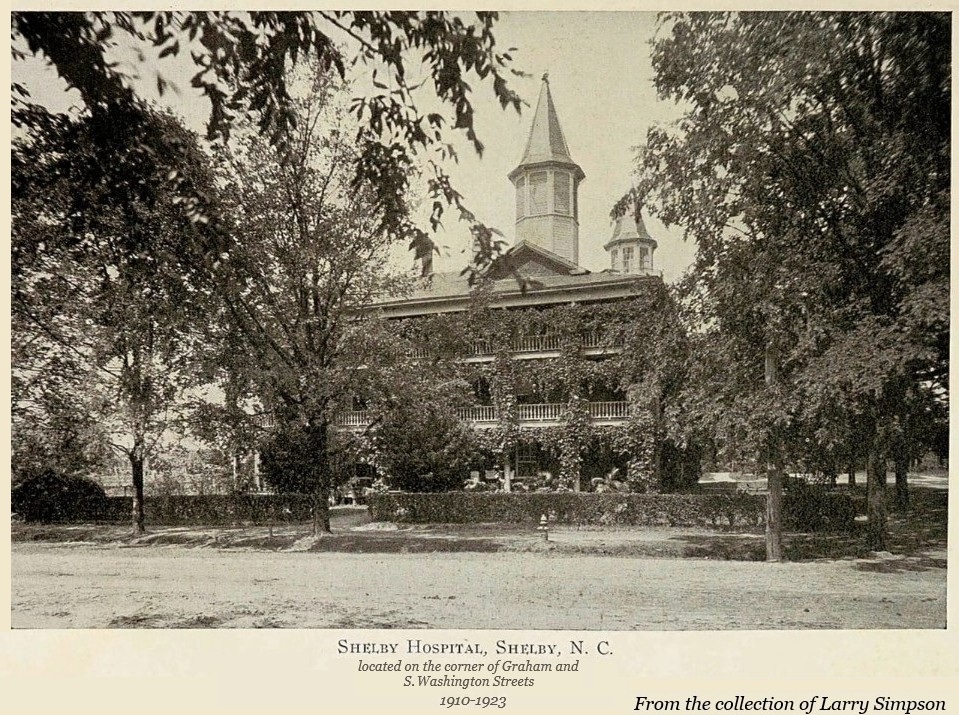
Dr. Timmons Greenberry Hamrick starts a private hospital in the former Shelby Female Academy building at the southwest corner of Graham and Washington Streets.
1918
The Spanish Flu pandemic hits Cleveland County. By the fall, 25 people are dead, three in one family.
August 15, 1923
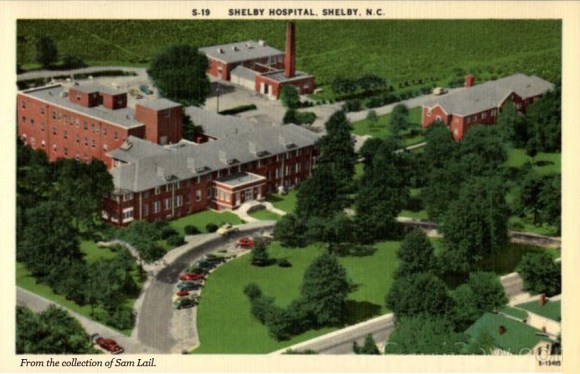
The county’s first public hospital, known first as Shelby Hospital and later as Cleveland Memorial, opens on Grover Street in Shelby. All 22 Cleveland County physicians become members of the first hospital staff.
1923 Shelby Hospital Medical Staff. Boiling Springs: James Yates Hamrick and John W. Wood Earl: John Prior Aydelotte Fallston: Franklin Harris Lackey, Sr. Grover: George Oates Kings Mountain: James E. Anthony, J. F. Norman, B. P. Stokes Lattimore: Lawrence V. Lee Lawndale: Thomas B. Gold, Sr. and William Thomas Grigg Shelby: Emmett W. Gibbs, Benjamin Gold, Robert C. Ellis, Timmons G. Hamrick, John Wm. Laxton Harbison, Emanuel A. Houser, William F. Mitchell, Reuben A. McBrayer, Benjamin H. Palmer, and Stephen S. Royster. Toluca: Forrest Decator Edward 1920s
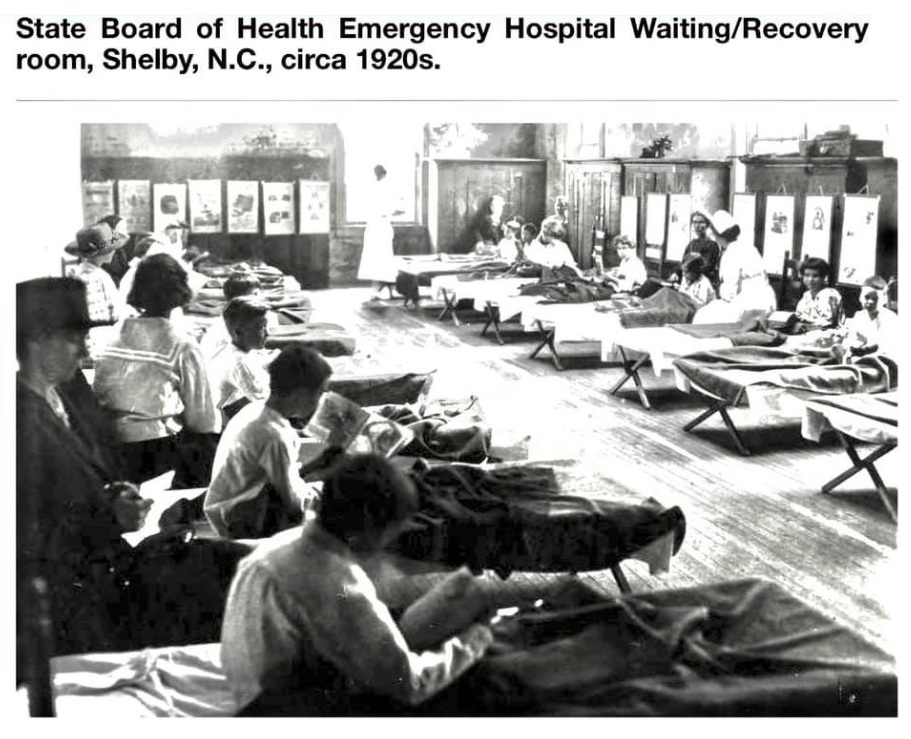
Photo shared by Harvey Whisnant. 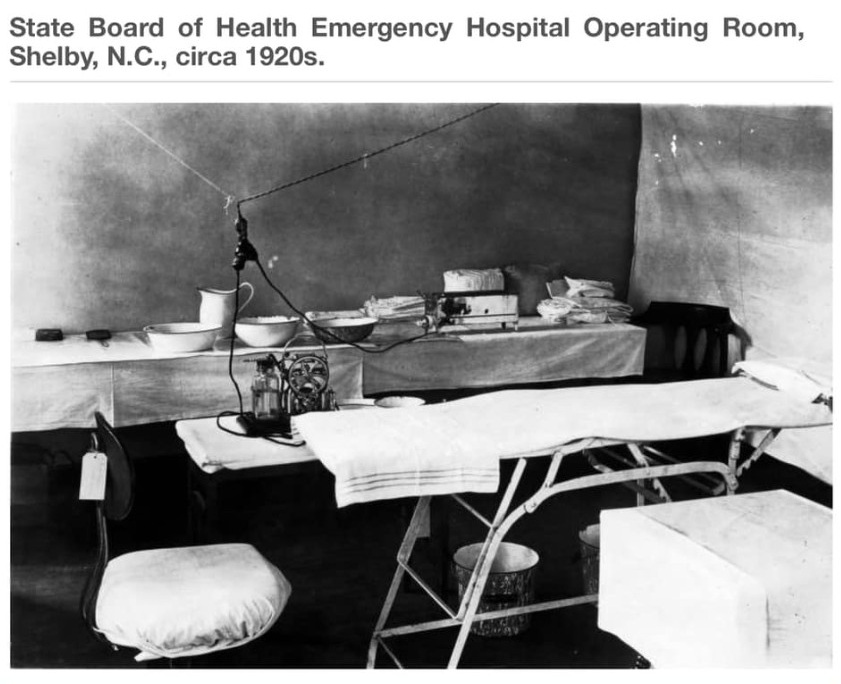
Photo shared by Harvey Whisnant. 1935
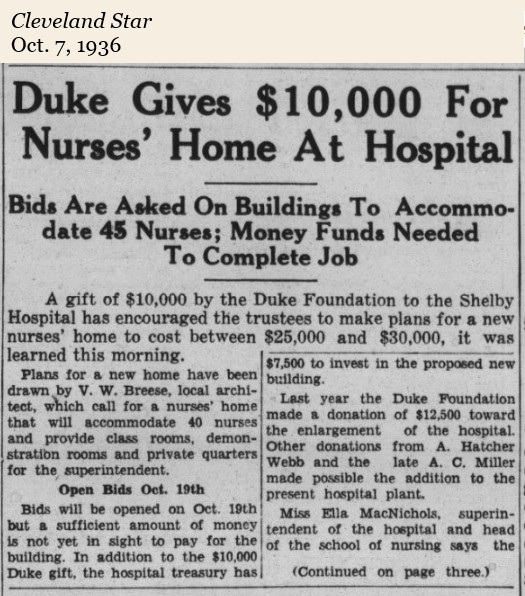
Through funds donated by Hatcher Webb and A. C. Miller, as well as Duke Endowment funds, a new maternity ward is built as an addition to Cleveland Memorial Hospital’s east wing. A nurses’ home is built beside the hospital using WPA funding.
October, 1936
The Duke Foundation donates funds for the construction of housing for nurses on the campus of Cleveland Memorial Hospital.
1938
The Cleveland County Health Department is organized in 1938. Doctors A. Pitt Beam and Ben Kendall and others helped the department from its beginnings.
1945
Cleveland County takes over the Shelby Hospital.
1949
A hospital is built in Boiling Springs and named for Dr. Stephen S. Royster, who provided the majority of the funding for it.
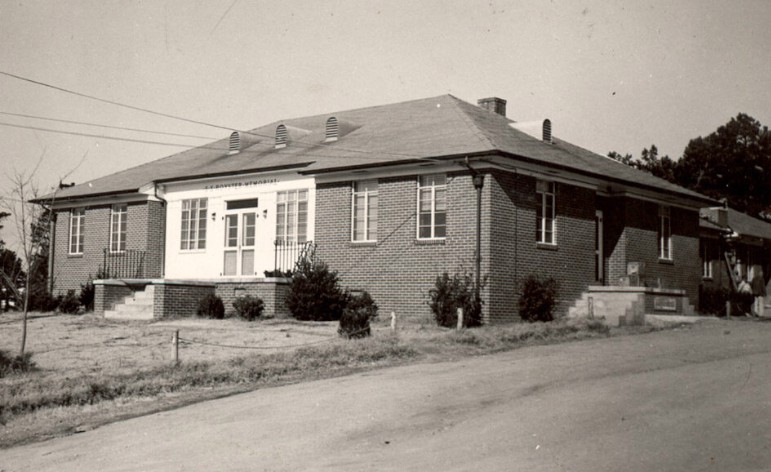
Royster Memorial Hospital began as a 12-bed infirmary and diagnostic center. It was staffed by Drs. W. Wyan Washburn, H. Gene Washburn, and Sam J. Crawley. 1951
Kings Mountain Hospital opens with a 41-bed capacity.
1957
Shelby Hospital is renamed Cleveland Memorial Hospital.
1967
Cleveland Memorial undergoes an expansion program increasing bed capacity to 290 beds.
1970
Kings Mountain Hospital is expanded increasing bed capacity to 102.
1974
The nurses’ home beside Cleveland Memorial Hospital is demolished to make way for more expansion.
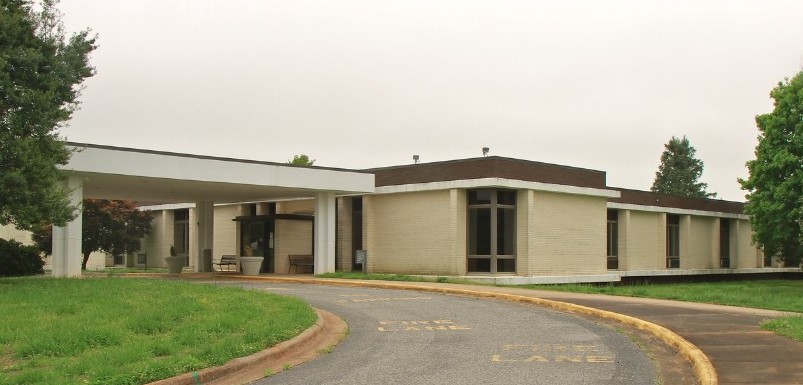
John P. and Marion Bridges Crawley donate $100,000 toward a new hospital in Boiling Springs serving both Gardner-Webb College and the community at large as an acute-care, 60-bed hospital.
1975
Cleveland Memorial Hospital completes a 38,000-square foot addition and expansion. This includes a new main entrance and lobby, admitting and discharge offices, coffee and gift shops, elevators to patient floors and various facilities that serve both inpatients and outpatients.
1985
Crawley Memorial Hospital begins converting acute care beds to skilled care beds.
1986
Adventure House, a clubhouse model mental health rehabilitation program, begins in March. It expands to a larger space in October 1987.
1992
The Sanger Heart and Vascular Institute opens a facility in Shelby.
1994
A management services agreement is signed with Carolinas HealthCare System and Cleveland Memorial Hospital.
1996
Cleveland Memorial Hospital is renamed Cleveland Regional Medical Center. Crawley Memorial Hospital enters into a management services agreement with Cleveland Regional Medical Center. The hospital’s skilled-care operations are moved to Kings Mountain; Gardner-Webb leases the building for office and classroom space.
1997
Carolinas HealthCare System leases CRMC from Cleveland County and begins operating it.
2003
Kings Mountain Hospital merges into CRMC, forming the Cleveland County HealthCare System.
December, 2009
Crawley Memorial Hospital in Boiling Springs closes. Gardner-Webb University purchases the building in 2014.
2015
The system is renamed Carolinas HealthCare System – Cleveland and Carolinas HealthCare System – Kings Mountain.
2018
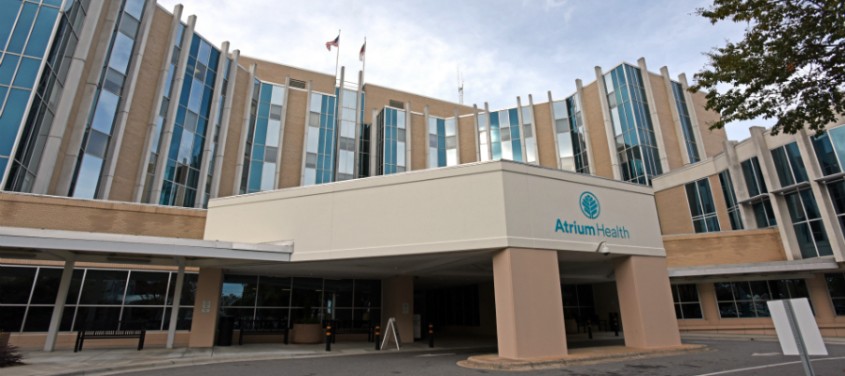
Carolinas HealthCare System is renamed Atrium Health. Recollections of Karen Crawford and Dotty Leatherwood.
March, 2020
Cleveland County registers its first case of coronavirus. The COVID-19 pandemic begins.
North Carolina established a formal system of public health with the creation of the State Board of Health in 1877. These early public health initiatives were primarily focused on addressing epidemics and communicable diseases through measures like quarantine and isolation. The state authorized counties to create their own health departments in 1911, providing vaccinations, vital statistics, and postmortem exams.
The Cleveland County Health Department was officially established in 1938. Dr. A. Pitt Beam, a Shelby dentist, and cardiologist, Dr. Ben Kendall were instrumental in its creation.
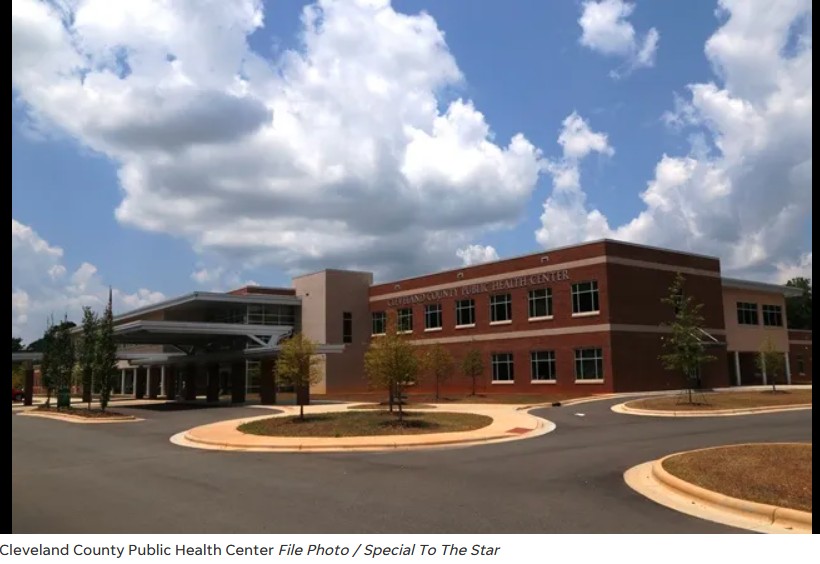
In March 2016, the Cleveland County Health Department relocated from its previous location on Grover Street to a new facility on S. Post Road in Shelby. The Department of Social Services was also co-located in this facility.
When Cleveland County was formed in 1841, one of the first orders of business was to appoint “Wardens of the Poor.” By May of 1842, seven men serving in this capacity presented to the court their recommendation with regard to the acquisition of land for a “poor house:”
“The Wardens of the Poor returns the following Report to the Court (To Wit) we as the Wardens of the Poor have shewn a place whereupon Joseph Carroll formerly lived, supposed to be 200 acres with several good buildings on said land, it can be got for $1.50 per acre, we those of the Poor all have agreed on same place this 10th day May 1842.” signed, Jacob Anthony, John Bailey, Lewis Corbett, William Covington, John McIntire, John Poston, and David Warlick, Wardens of Poor.
The Court tabled the matter. It would be five years before the matter was taken up again. This time, in August of 1847, the purchase of 200 acres for $170 was approved. From Our Heritage:
“The land was situate on Post Road leading from Spartanburg via Ellis Ferry bridge to Lincolnton on the Machine branch on Buffalo Creek.
The Commission also stated that it had contracted with John M. Tucker, subject to the approval of the court for the creation of a framed double cabin 18 feet square nine feet high and two foot pillars and roofed with rafters and covered with good heart shingles— each cabin with good weather boarding plank.
Floors to be layed above and below — extending to the entry. The lower floor to be good quartered 1-3/4 inch and layed down square jointed with 10 penneys. The loft to be convenient height layed on joists 3 inches by 7. 2 windows in each cabin with 12 lights in each, with sash, and glass, and bottom shutters. A good brick chimney in each end of cabin. The double cabin, partially described, was to be built for $216.
The Court approved the contract with the stipulation that John M. Tucker be allowed $5.00 extra if he completed the job by February 1848. It was completed by then and Mr. Tucker got his extra $5.00.“
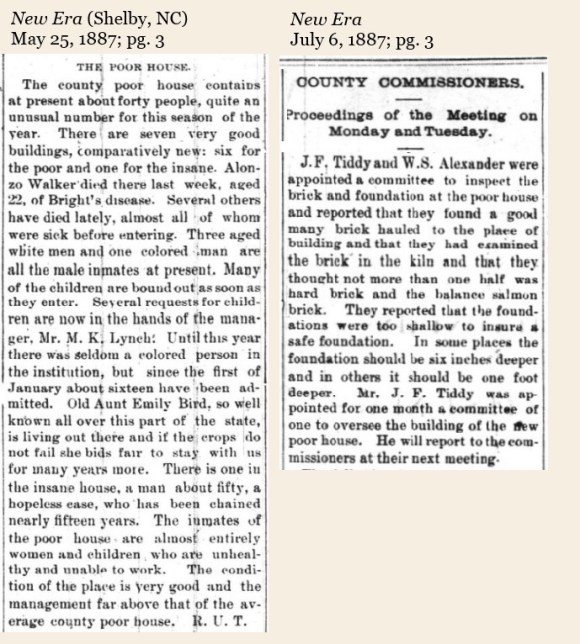
An 1887 New Era article provides a glimpse of how the county home had evolved to serve the needs of the community:
The county home pictured below operated for many years in the location of what is now the northwest corner of the Cleveland Community College campus. It closed in the 1960s.
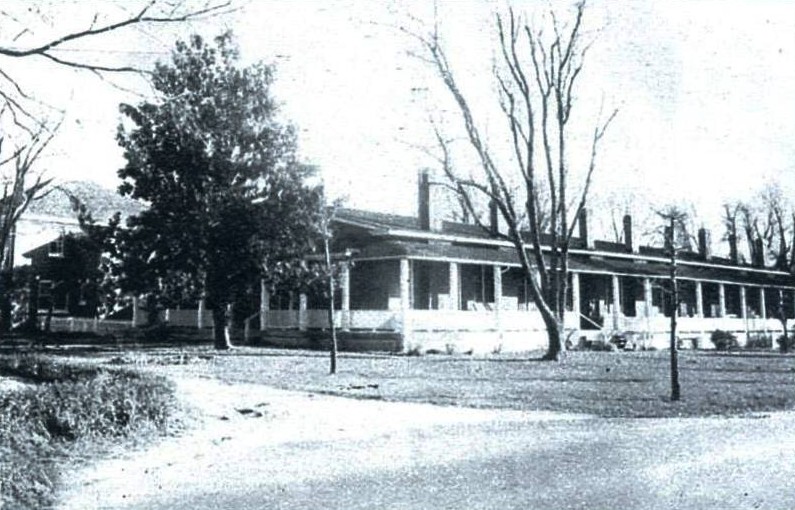
After the closure of the county home, the needs of the community were met by the Department of Social Services and area nursing homes.
In 2025, Cleveland County consolidated its Health Department and Social Services into a single entity, the Consolidated Human Services (CHS) Board, creating one leadership team for both agencies to improve efficiency and coordination for residents.
 Cleveland County History