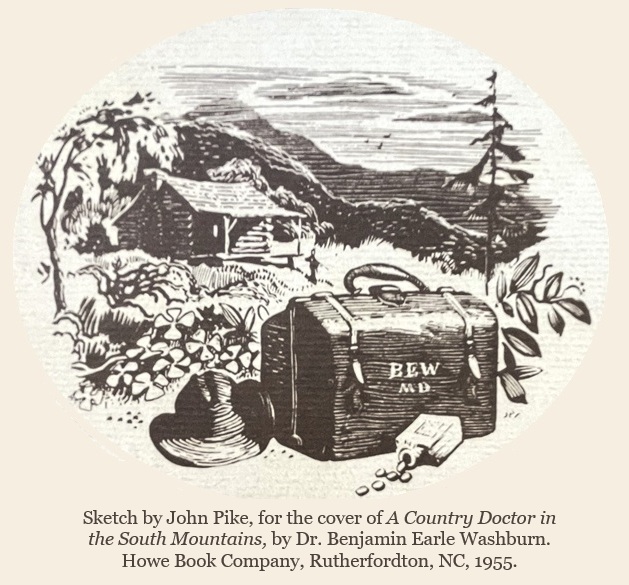
Early Doctors
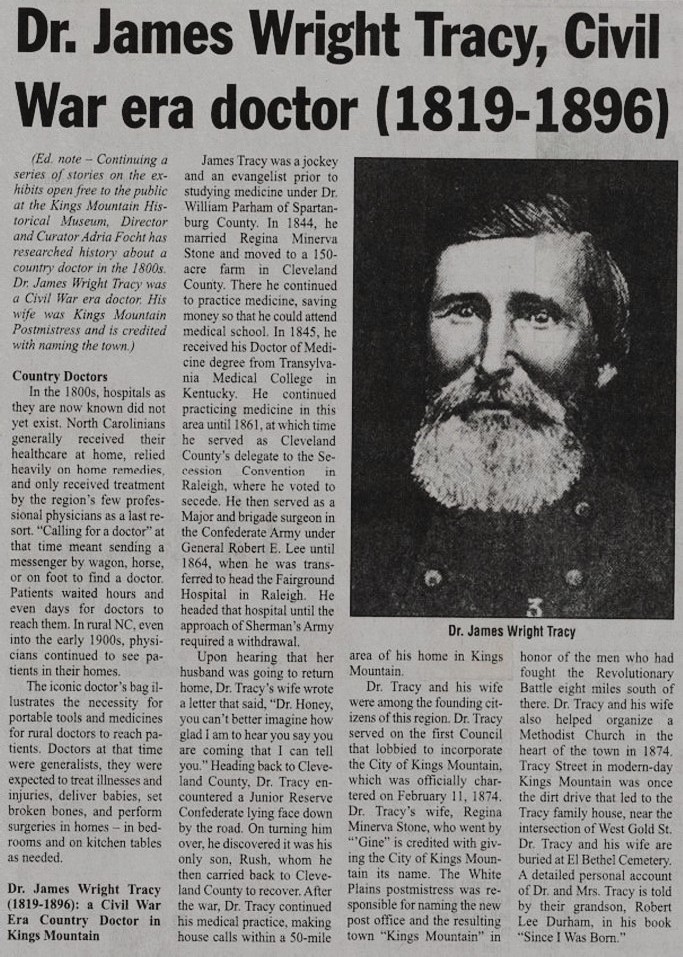
Two of the earliest known doctors in Cleveland County were Dr. James Wright Tracy and Dr. Ben F. Dixon, both of Kings Mountain. The article below (publication unknown, but possibly The Kings Mountain Herald) paints a picture of healthcare in the mid-19th century.
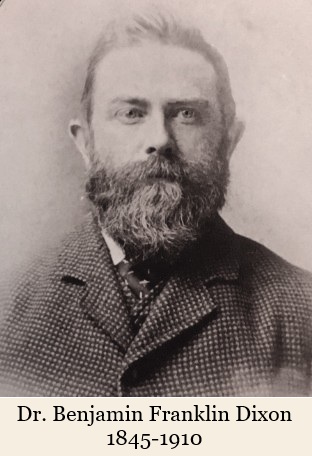
Dr. Ben F. Dixon, Sr. was a licensed physician, ordained Methodist minister, served in the Civil War and the Spanish-American War. He was also elected NC State Auditor.
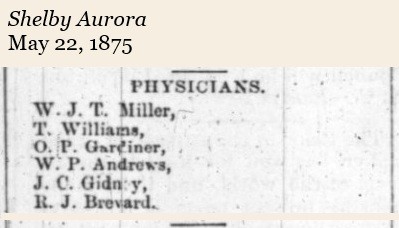
Shelby’s first doctor was Thomas Williams. Dr. Williams was born in South Carolina in 1806. He spent his life serving the medical needs of his adopted hometown. He died in 1879 and is buried, along with his wife Permelia and unofficially adopted daughter, Mary C. Elliott, at Sunset Cemetery. Read more from Joe Depriest here.

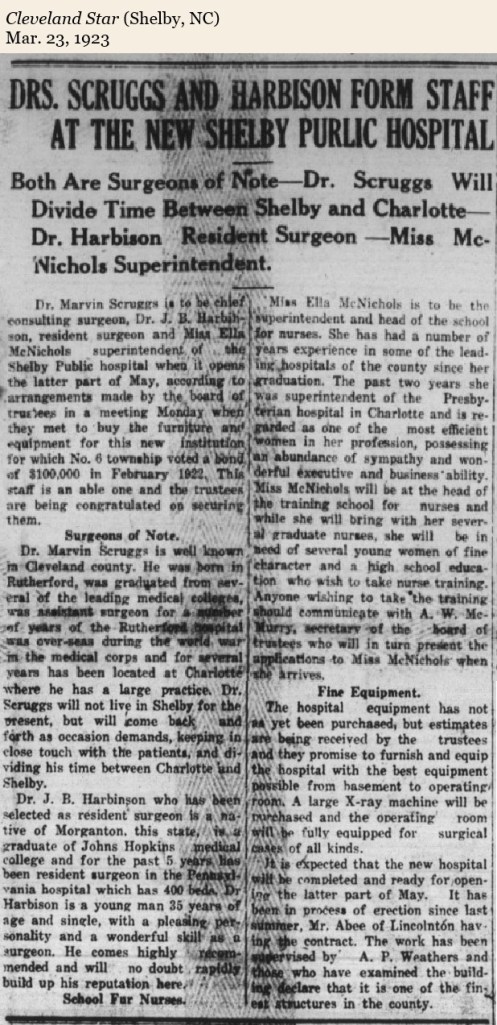
| 1923 Shelby Hospital Medical Staff. |
| Boiling Springs: James Yates Hamrick and John W. Wood |
| Earl: John Prior Aydelotte |
| Fallston: Franklin Harris Lackey, Sr. |
| Grover: George Oates |
| Kings Mountain: James E. Anthony, J. F. Norman, B. P. Stokes |
| Lattimore: Lawrence V. Lee |
| Lawndale: Thomas B. Gold, Sr. and William Thomas Grigg |
| Shelby: Emmett W. Gibbs, Benjamin Gold, Robert C. Ellis, Timmons G. Hamrick, John Wm. Laxton Harbison, Emanuel A. Houser, William F. Mitchell, Reuben A. McBrayer, Benjamin H. Palmer, and Stephen S. Royster. |
| Toluca: Forrest Decator Edward |
Dentistry
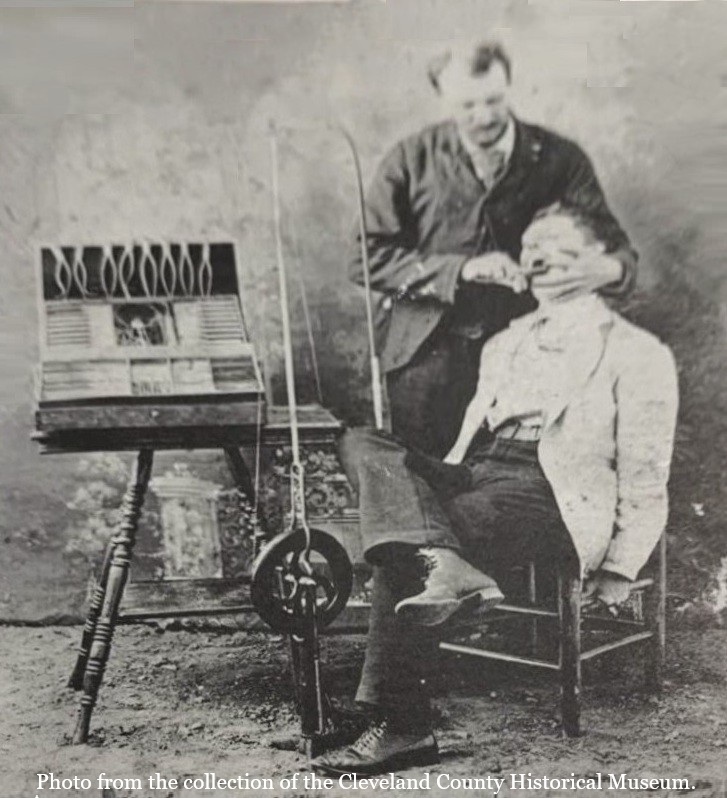
The history of dentistry in Cleveland County, North Carolina, reflects the broader development of the profession in the state, evolving from general health care practices in the 1800s to a structured public health initiative and professional practice in the 20th century.
Before the formal establishment of dental schools, dental procedures in Cleveland County, as elsewhere, were often performed by individuals with varied training, including barber-surgeons. The North Carolina Dental Society, the third oldest in the U.S., was founded in 1856.

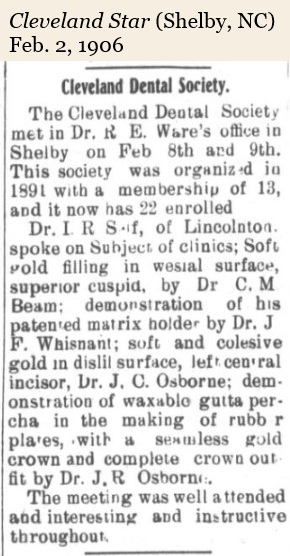
During the early 1900s, a “Cleveland Dental Society” existed, which included dentists from Charlotte and the Piedmont area, though it ceased to exist during the First World War.
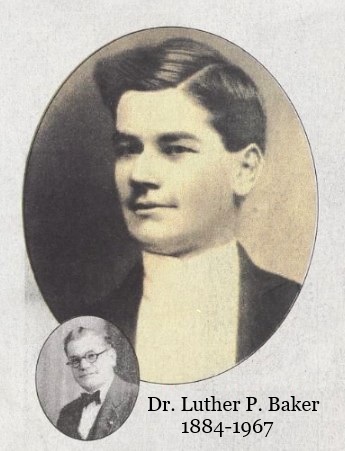
Dr. Luther P. Baker opened a dental office in Kings Mountain in 1907. The practice has continued in the same family since that time. Read more from the Kings Mountain Herald.
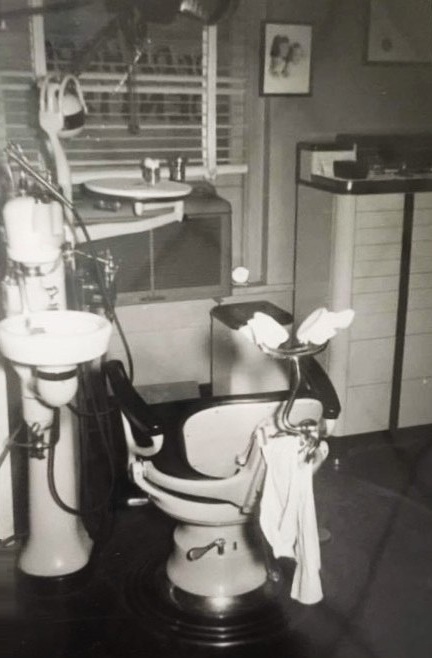
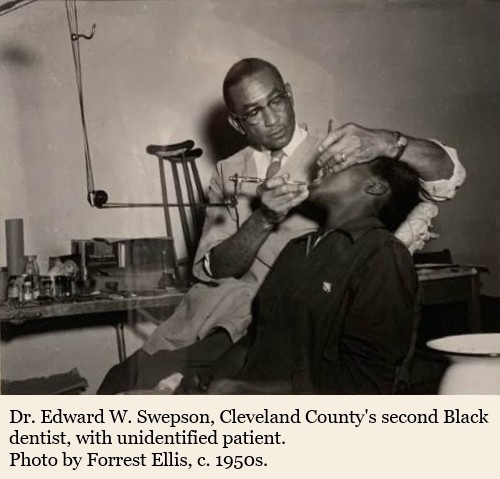
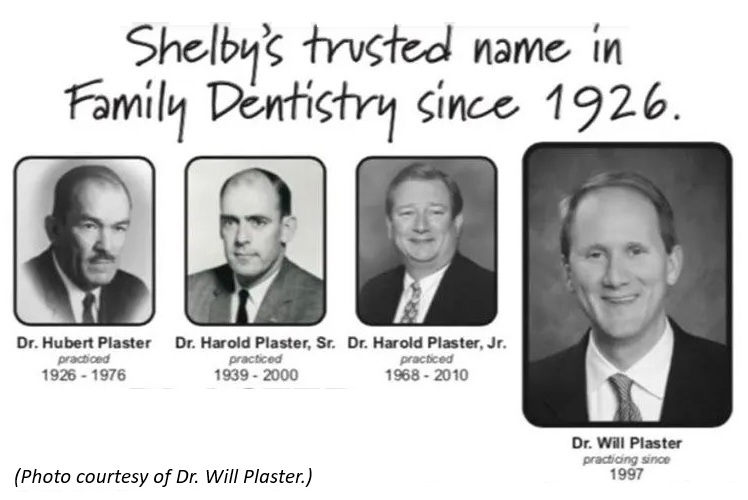
Dr. Hubert S. Plaster opened his practice in Shelby in 1926. His office was on the second floor of the Royster Building on East Warren Street. He served a multitude of patients for 50 years. He also served as Shelby’s mayor from 1963 until his death in 1976.
Hubert’s brother, Dr. Harold Plaster, Sr. had an office in the Webb Building just adjacent to his brother’s office. He practiced from 1939 to 2000. Following in his footsteps were his son, Dr. Harold Plaster, Jr. and his grandson, Dr. Will Plaster. All are pictured below.
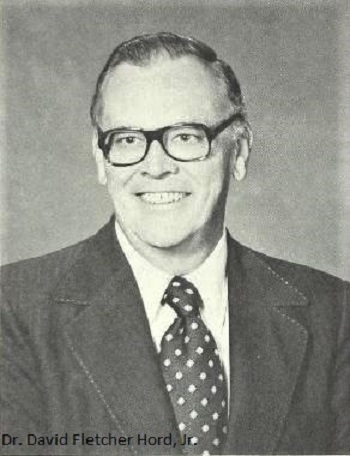
Dr. Dwight Beam Hord graduated with UNC’s first dental class in 1954. He practiced for 48 years in his hometown of Lawndale. He was also a dedicated community member, serving as a deacon at Lawndale Baptist Church, a leader in the Lions Club, and served on the board for the Upper Cleveland Rescue. His long tenure made him a well-known fixture in the history of the Lawndale community.
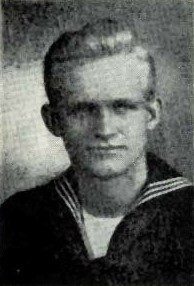
Dr. Hord also served in the U. S. Navy during World War II.
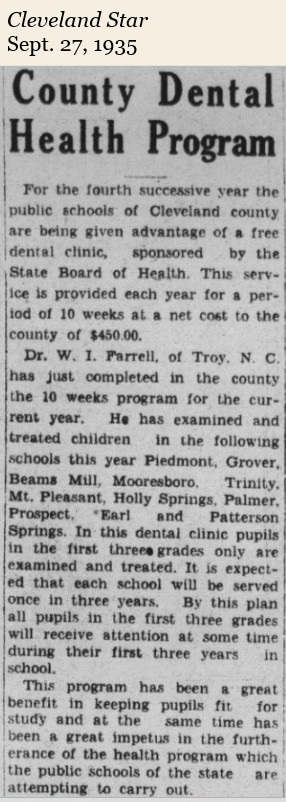
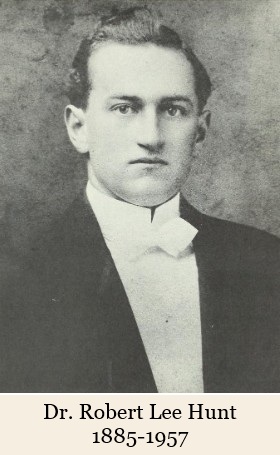
Dr. Robert Lee Hunt graduated from Atlanta Dental College (now Emory University) in 1910. He started his practice on the second floor of the Verner Oil Company in Lattimore. His interests turned to farming until World War II brought him back to dentistry. Read more.
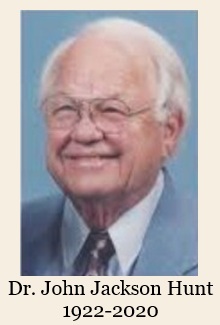
Dr. John Jackson “Jack” Hunt followed in his father’s footsteps, graduating dental at Emory University before setting up his dental practice in Lattimore. He was a true public servant, serving in the NC legislature and on numerous boards. Read more.
Nurses
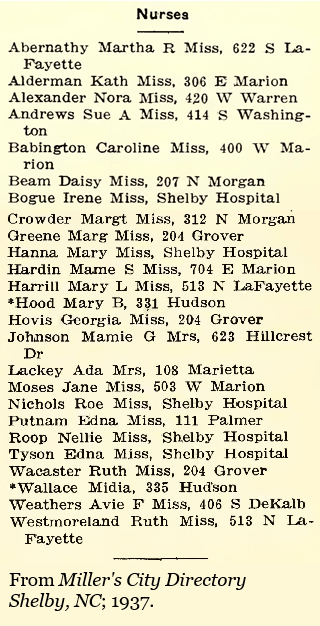
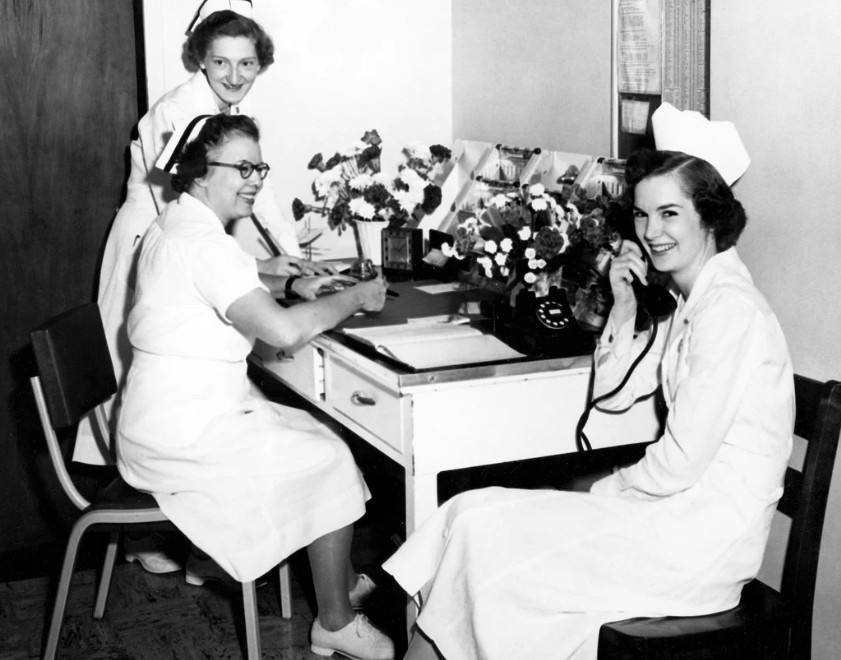
Prior to vaccines and antibiotics, nursing care was the primary intervention, making nurses the main hope for survival. The United States’ involvement in World War I coupled with the Spanish Flu pandemic in 1918 profoundly elevated the nursing profession, transforming it from a marginal vocation into an essential, highly respected, and skilled workforce.
The pandemic severely strained the American Red Cross, forcing it to juggle pandemic relief with ongoing World War I efforts. Volunteers shifted focus to producing massive quantities of gauze masks, clothing, and supplies, while nurses and staff were overwhelmed providing care, with many contracting the virus themselves. Nurses taught infection control, hygiene, and ventilation to families.
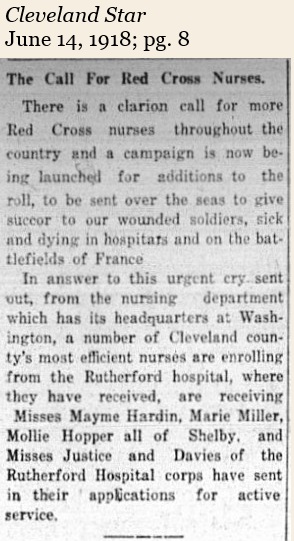
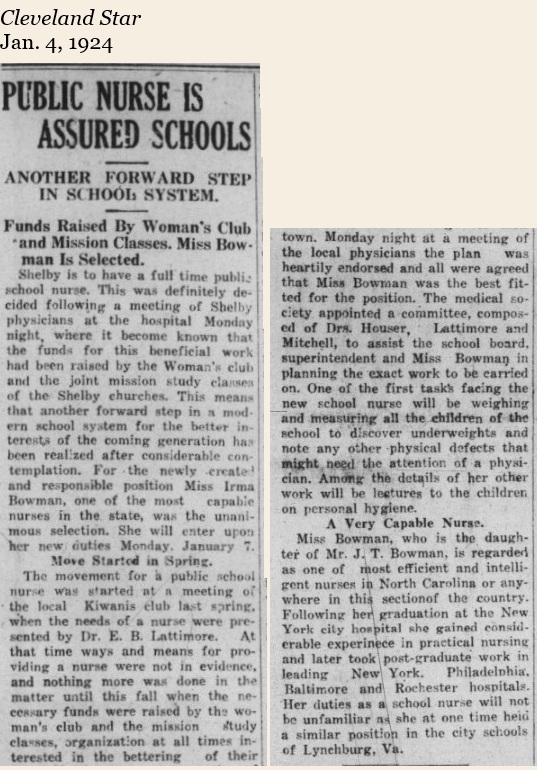
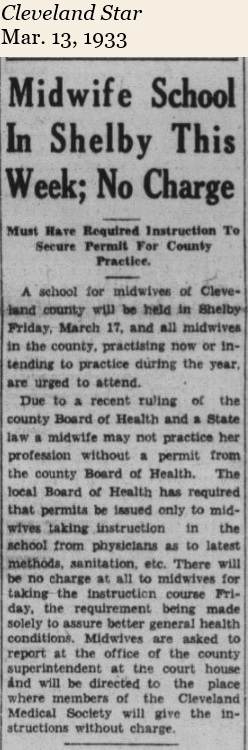
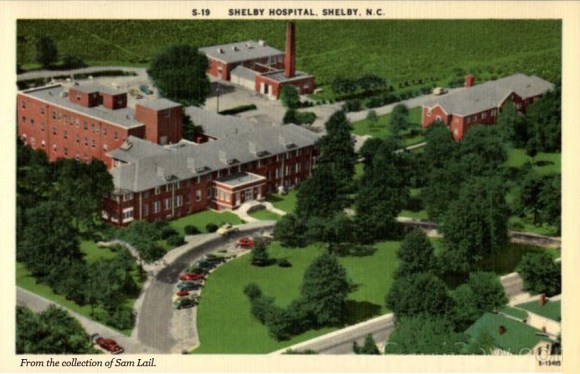
In 1935, a nurses’ home was built with funds provided by the Works Progress Administration and the Duke Foundation. It was located on the east side of Cleveland Memorial Hospital’s campus on Grover Street in Shelby. The building was demolished in 1974 to make way for expansion by the hospital.
Veterinarians
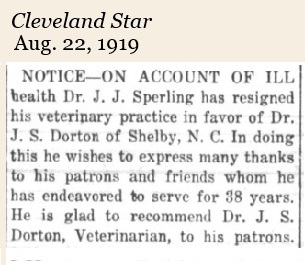
The earliest known veterinarian in Cleveland County was John Jefferson Spurling. According to his retirement announcement, he would have started his veterinary practice in 1881.
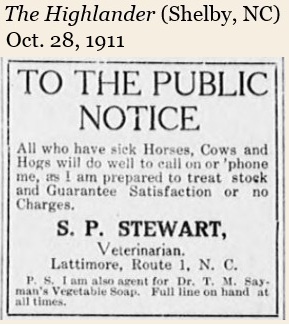
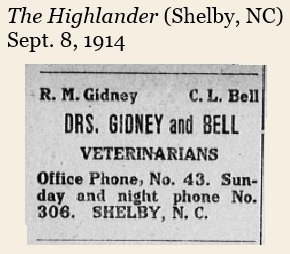
S. P. Stewart had a practice in Lattimore beginning in 1911. By 1914, there were at least two veterinarians practicing in Shelby–Drs. Robert M. Gidney and C. L. Bell.
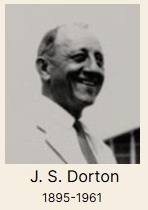
Dr. Joseph Sibley Dorton started his veterinary practice in Shelby in 1919. He went on to become known as “Mr. Fair.” He managed the Cleveland County Fair for many years before taking on management of the NC State Fair.
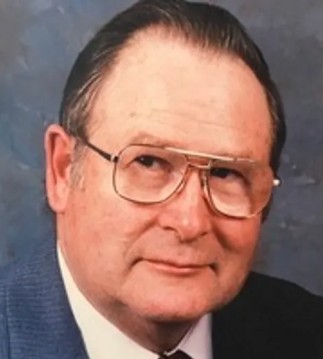
Dr. Lewis Gene Yarboro opened Cleveland Veterinary Hospital in Shelby in 1951. He continued until his retirement in 2012 at age 86. He was awarded the Order of the Longleaf Pine by Gov. Beverly Perdue the following month.
 Cleveland County History
