In 1923, the Shelby Kiwanis Club created a plan to combine the community fairs of Boiling Springs, Fallston, and Union into one event. Under the leadership of club president, O. Max Gardner, $15,000 was raised through the sale of stock to establish the fair.
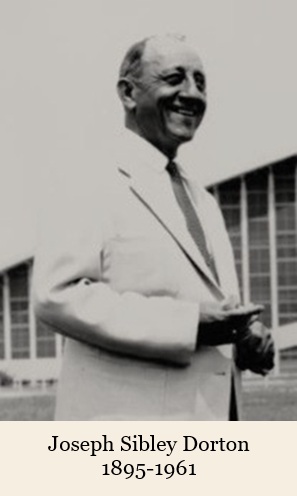
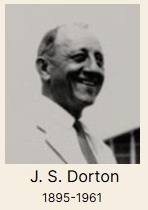
The Kiwanis Club members nominated one of their own to manage the project–Dr. Joseph Sibley Dorton, a local veterinarian.
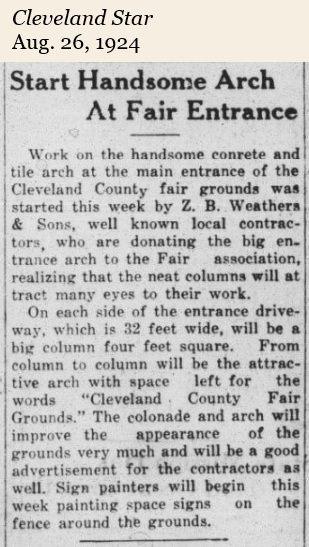
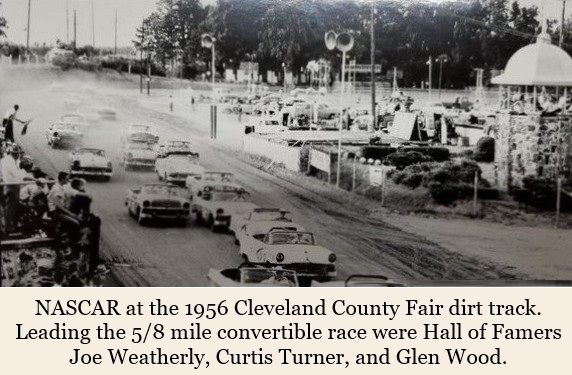
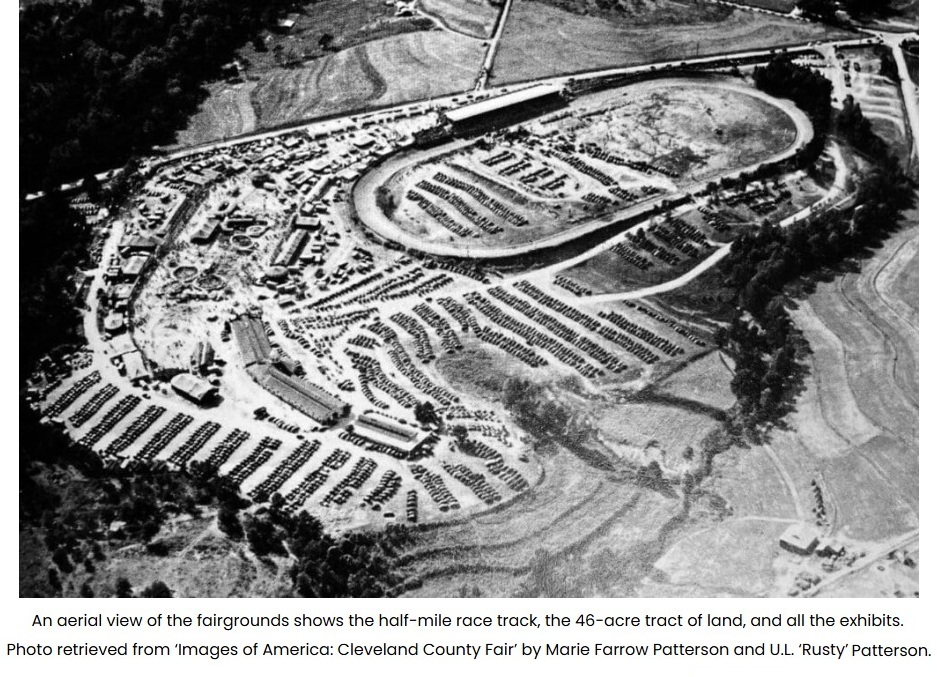
The first fair was held in 1924 with 70,000 attendees. Aside from the typical exhibits a county agricultural fair offers–livestock, agricultural exhibits, homemade crafts, etc.–the first fair included a half mile race track. Initially for horse racing, it later evolved into car racing.
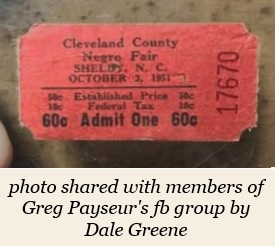
In 1927, the duration of the fair was extended so that African American families could take part. There were separate fairs until the Civil Rights Act was passed in the mid 1960s.
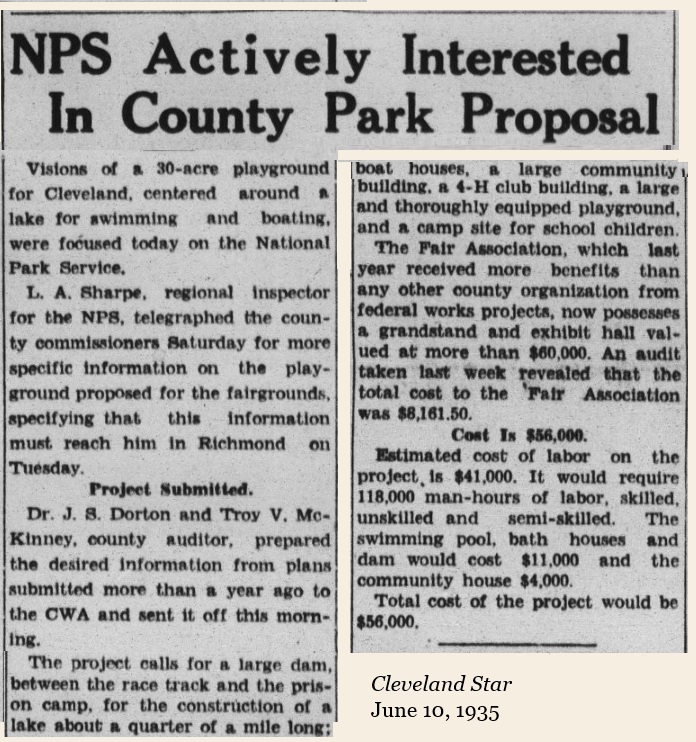
In 1935, Dr. Dorton envisioned a small lake and park on the fair grounds. Sadly this did not come to fruition.
from the collection of Rusty and Marie Farrow Patterson
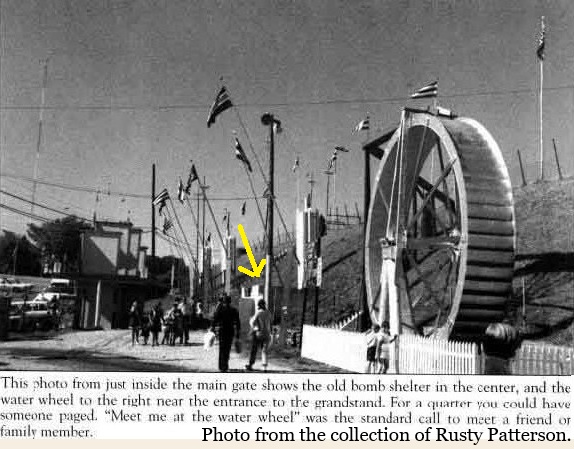
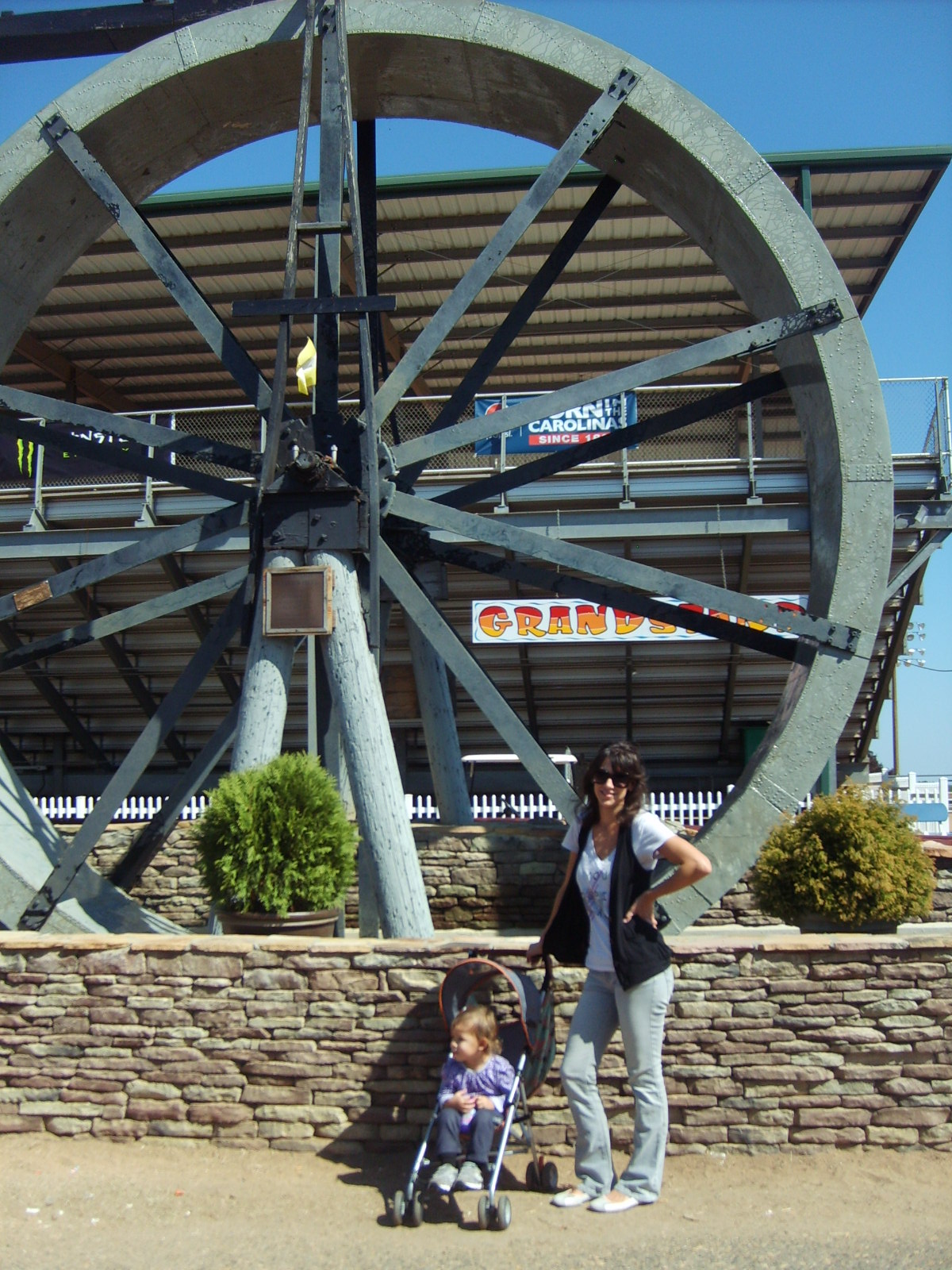
In 1963, the water wheel was installed near the grandstand. The water wheel came from Peeler’s Mill, located on Ward’s Creek, just west of Casar. It has become an icon of the Cleveland County Fair ever since.
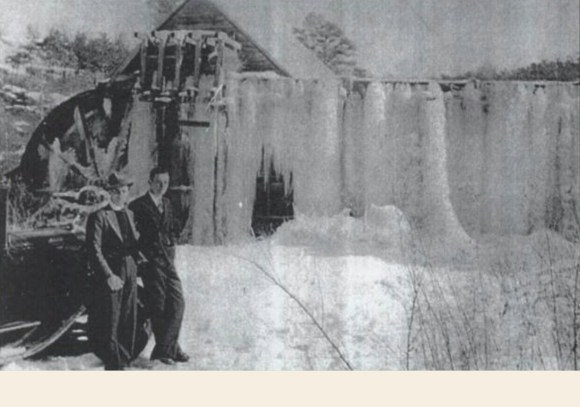
The water wheel at the Cleveland County Fairgrounds once provided power for Peeler’s Mill near Casar. This photo shows the mill and wheel on Ward’s Creek during a particularly cold 1940 winter.
Members of the Baby Boom generation and older remember the rides and animals of the fair were shipped into town by train in the 1950s and very early 1960s. People would go to watch the fair workers unload. The parade of elephants from the depot in Shelby along Marion Street all the way to the fair grounds was always a fan favorite. This Baby Boomer recalled her childhood memories of the fair in a chapter of her Storyworth book, Stories of My Life, by Paula Hord Dedmon:
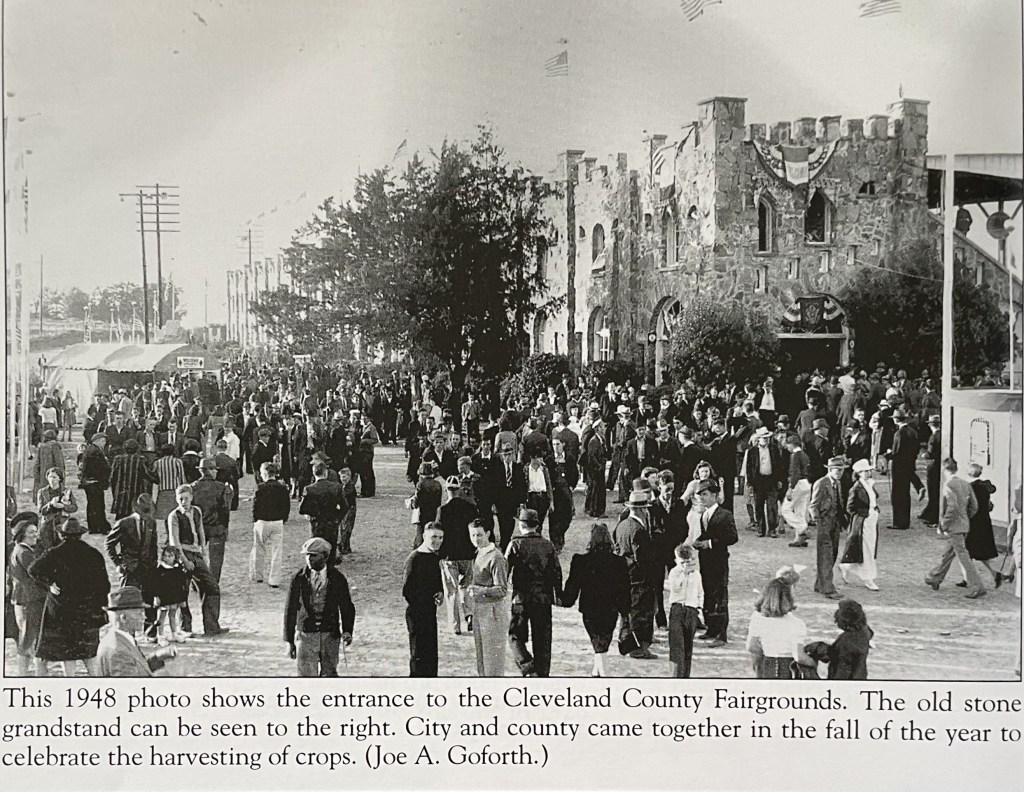
“In the fall, we always went to the Cleveland County Fair. There was so much excitement in Shelby when Strates Shows arrived for their week stay at the fair grounds. I remember at least one time going to watch them unload the animals and rides from the “fair train.” While most animals were trucked over, the elephants walked the four mile stretch of Marion Street from the Morgan Street depot to the fairgrounds. The school system always passed out two free passes to the fair, so everyone had the opportunity to go. Our family would usually go twice. I knew when I smelled the aroma of fresh baked bread as we passed the Bost Bakery on Marion, we were almost there! I absolutely loved the fair–the sights, sounds, and the aroma wafting from the various food trucks and open-air concession stands; the local eateries always had the best country ham biscuits. Daddy would always insist we do the educational stuff first, so as soon as we passed the water wheel near the front entrance, we turned right to go through the exhibit halls. I wasn’t that interested in the exhibits; I wanted to get on down to the sawdust-strewn midway and ride my favorite rides: the Tilt-a-Whirl, the Scrambler, and the Round Up. One year there was an organ grinder walking around with his trained capuchin monkey. I absolutely loved it when the little monkey would take a quarter from my hand. It was so cute and I wanted a monkey after that for a very long time.
The 1962 fair included a fallout shelter someone had built to educate the public about the potential for nuclear warfare during the cold war. I remember feeling fearful when we went inside of it; it was so tight and the walls were probably two feet thick. No one at the time realized how close our country would come to nuclear war while walking in and out of that fallout shelter. The Cuban Missile Crisis took place just two weeks after the carnival company left Shelby.”
Cleveland County Fair Managers
Dr. Joseph Dorton, 1924-1961
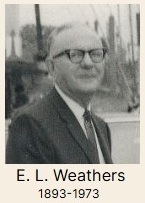
Elbridge Lee Weathers, 1961-1974
Sam Goforth, 1974-1977
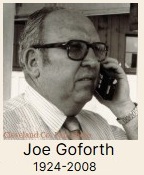
Joe Goforth, 1977-2004
Bobby Jenks, 2005-present
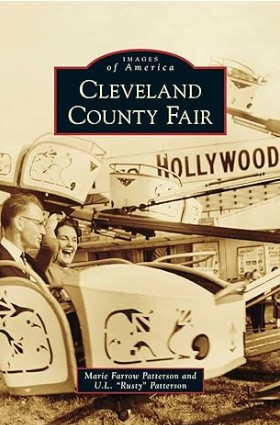
In 2012, Marie Farrow Patterson and U. L. “Rusty” Patterson published a book about the Cleveland County Fair. It is still currently available for purchase here.
Phil Combs is affectionately known as the keeper of Cleveland County Fair’s legacy. The Combs Family Museum houses an assortment of fair memorabilia.
The Cleveland County Fair remains North Carolina’s largest county fair and has been a community tradition since its inception. Read more. . .


 Cleveland County History