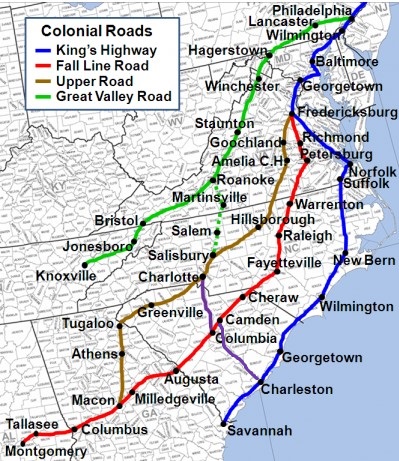
The earliest settlers to western North Carolina began arriving in the mid-18th century. Most of these settlers were German and Scots-Irish, as well as Irish, French, and numerous other nationalities. Their point of entry to the colonies was most frequently Philadelphia. Over time they began to migrate further west and south. The old colonial roads began as buffalo paths, then Native American paths, then wagon trails. The four main roads from the Pennsylvania area south are shown in the map below.
For other immigrants, the port of Charleston was their entry point. Those settling in our area probably took the Charleston-Camden route to the Occaneechi Path into North Carolina.
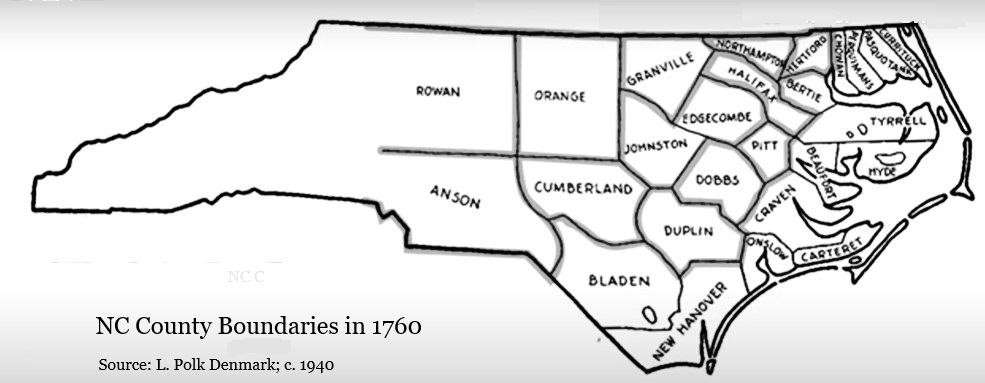
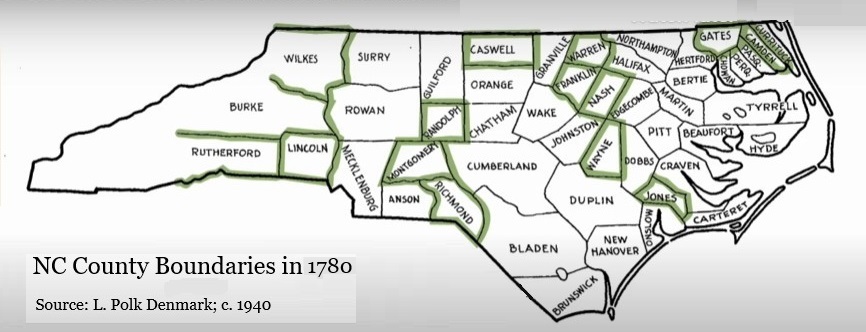
In 1760, the area that is now Cleveland County was part of Anson County. As the map below shows, it had no western boundary.
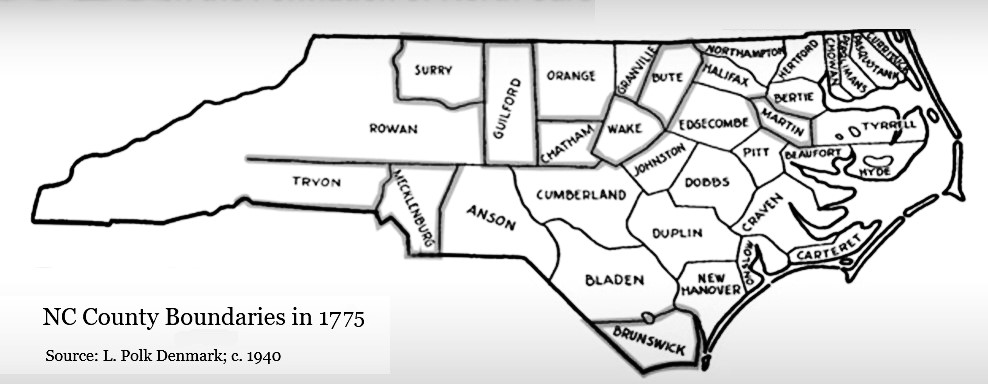
In 1762, part of Anson County was ceded to form the new county of Mecklenburg. Then in 1768, the portion of Mecklenburg County west of the Catawba River was ceded to form Tryon County. Due to surveying errors, parts of “upcountry” South Carolina were included within the boundaries of Tryon. Tryon County was dissolved as a county just 11 years later.
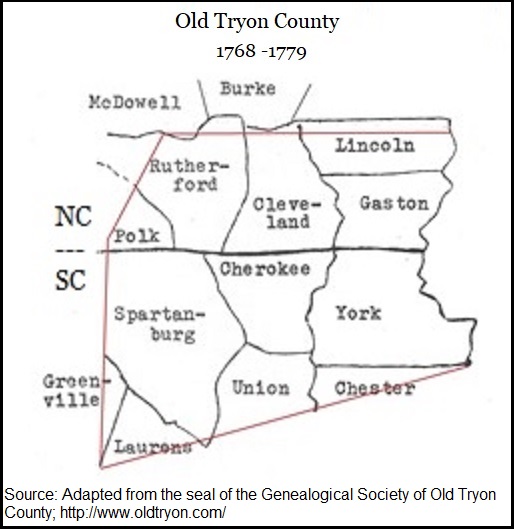
In its place, Rutherford and Lincoln Counties were created. Their north-south boundary line was drawn just west of Buffalo Creek.
By 1836, several more counties were created around Rutherford and Lincoln counties. The county seats in the two counties were very far apart. Travel by horseback or wagon would have been a burden for anyone living in the middle.
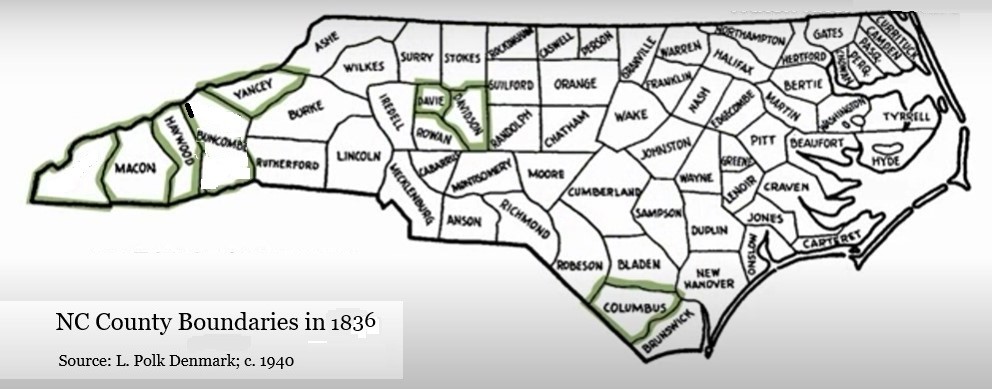
Many in the midst of this area began to recognize the need for more localized governance and representation for residents in this growing region. On September 22, 1836, several people met at the home of Teter Beam who was residing in the former home of his grandfather, John Teeter Beam. With this meeting, the campaign for a new county was launched.
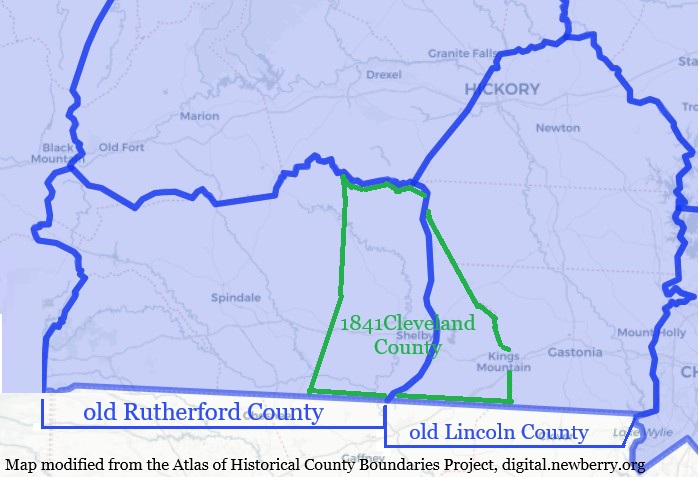
It took five years and two legislative rejections before the new county was finally approved by the North Carolina legislature. The bill to create a new county from an eastern portion of Rutherford County and a western portion of Lincoln County was introduced by Dr. W. J. T. Miller of Rutherford County on January 11, 1841. This time the bill passed. The new county was named for Col. Benjamin Cleveland, a formidable Patriot commander during the Battle of Kings Mountain.
The map below shows the new Cleveland County overlaying the old Rutherford and Lincoln Counties.
Cleveland County’s formation took place during a period of expansion and development in North Carolina. With the arrival of new settlers and the establishment of agriculture as the backbone of the economy, the area quickly began to thrive. The county’s landscape, characterized by rolling hills and lush valleys, provided ideal conditions for farming, which attracted more residents.
Today, Cleveland County is known for its rich history, charming communities, and natural beauty, making it a unique part of North Carolina’s tapestry. The creation of the county in 1841 marks a significant milestone in the region’s development, reflecting the larger narrative of American expansion and the pursuit of community representation.
| Additional Publications on the History of Cleveland County |
| The Living Past of Cleveland County: A History, by Lee Beam Weathers, 1956. |
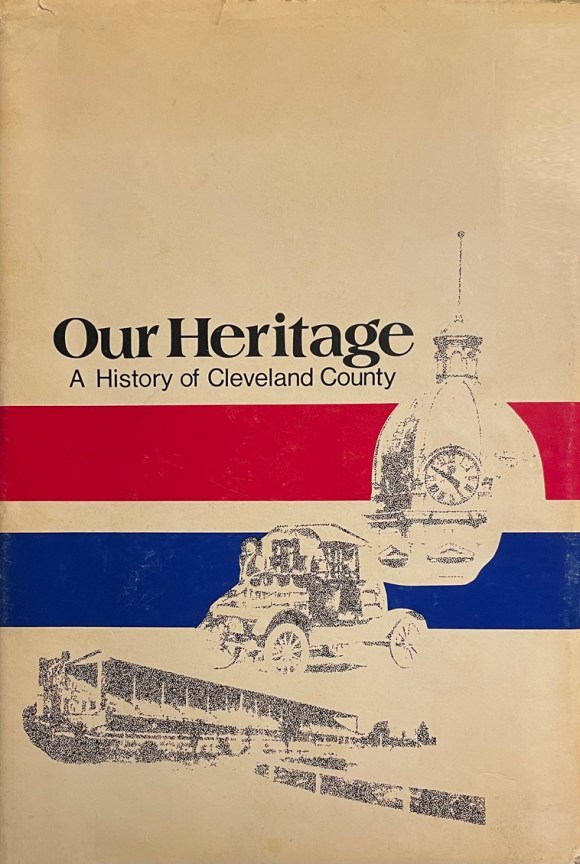
| Our Heritage: A History of Cleveland County, The Shelby Daily Star, 1976. |
| Heritage of Cleveland County, Vol. 1, by the Cleveland County Historical Association, 1982. |
| National Register of Historic Places, Multiple Property Documentation Form, by Brian Eades, 1998. |

Cleveland County Sesquicentennial. This 35-page booklet provides a brief history of the county from 1841-1991.

 Cleveland County History